
How to Choose an Oil Injected Screw Air Compressor?

Time:2026-10-23 Author:Ethan
0%

Choosing an Oil Injected Screw Air Compressor requires more than comparing motor power and purchase price. The correct choice begins with measured air demand, working pressure, operating hours, and installation conditions. A factory may advertise impressive airflow, but performance can change at high temperatures or in dusty workshops. Measure it.

Real operating experience shows that peak demand often matters more than average demand. A compressor serving CNC machines, packaging lines, or pneumatic tools may face sudden pressure drops. A receiver tank can reduce cycling, but it cannot fix an undersized compressor. That distinction is easy to miss. Do not guess.

Air quality also deserves careful attention. Check the required oil carryover level and select suitable filters, dryers, and drains. ISO 8573 classifications can help match air treatment to the application. Food processing, electronics, and general manufacturing do not share the same cleanliness requirements. The lubricant itself matters, especially where discharge temperatures rise.

A reliable evaluation should include verified factory data, independent test information, service records, and warranty conditions. Ask whether the quoted flow follows ISO 1217 testing methods. Confirm the compressor’s noise level, cooling method, controller functions, and maintenance access. Open the service panels if possible. Small details can shape years of ownership.

Energy consumption usually exceeds the initial equipment cost over its working life. Compare specific power, unload losses, variable-speed performance, and expected annual hours. Local technicians, spare-part availability, and oil replacement intervals deserve equal attention. This guide explains how to weigh these factors clearly, while recognizing one uncomfortable truth: no selection checklist is perfect. Real conditions can expose assumptions that looked reasonable on paper.
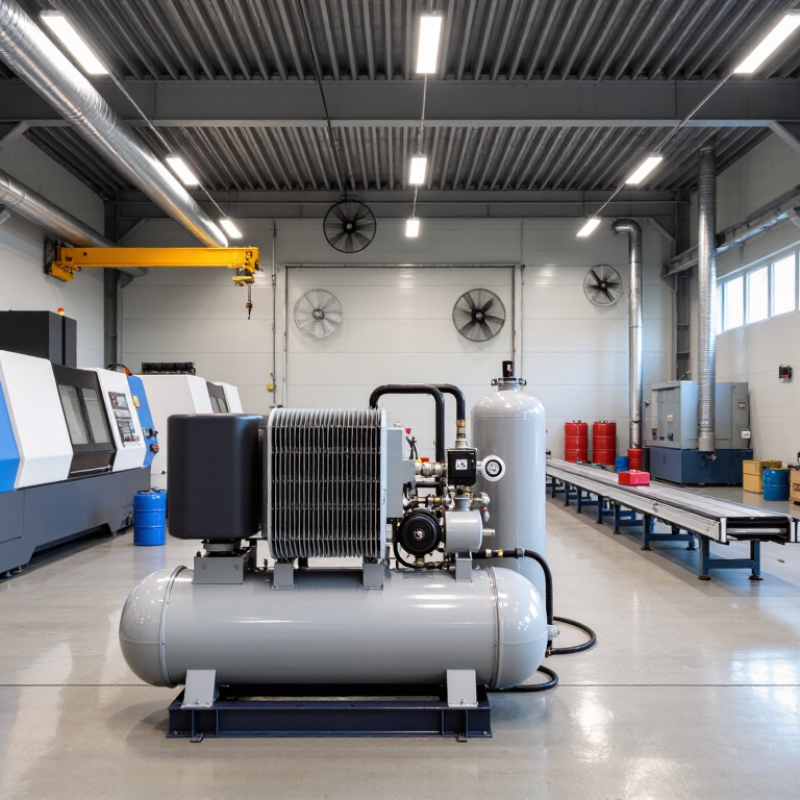
How to Choose an Oil Injected Screw Air Compressor?

Understanding Oil-Injected Screw Air Compressor Operation

How to Choose an Oil Injected Screw Air Compressor?

Understanding oil-injected screw air compressor operation starts inside the air end. Rotors compress air while injected oil lubricates bearings, seals clearances, and removes heat. The hot air-oil mixture then enters a separator vessel. Separated oil returns through a controlled circuit, while compressed air passes toward the aftercooler and receiver. It is a continuous process, not simply “air plus oil.”

The U.S. Department of Energy reports that compressed air can consume 10–30% of industrial electricity. Its compressed-air handbook also notes that leaks may waste 20–30% of compressor output. These figures make operating conditions important. Check actual flow, pressure, duty cycle, inlet temperature, and required air cleanliness. A compressor running at partial load may need efficient modulation, not a larger motor. Small details matter.

I would not trust catalog flow alone. Measure demand during production peaks, including short pressure drops and weekend idling. Monitor separator differential pressure, oil temperature, discharge temperature, and condensate drainage. ISO 8573-1 helps define air-quality requirements, especially for oil carryover and particles. The U.S. EPA also identifies leak repair as a practical efficiency measure. Still, maintenance assumptions are often too optimistic. A neglected filter or incorrect oil level can quietly increase energy use and shorten service life. The better choice balances measured demand, separation performance, service access, and lifetime operating cost.

Defining Air Demand, Pressure, and Operating Conditions

How to Choose an Oil Injected Screw Air Compressor?

Selecting an oil-injected screw air compressor starts with measured air demand, not motor size. Record flow in actual operating conditions, then convert it to a common reference such as SCFM or Nm³/min. The U.S. Department of Energy’s Compressed Air Sourcebook notes that compressed air can consume about 10% of industrial electricity. Oversizing therefore creates a costly, persistent mismatch.

Use production logs, receiver pressure data, and temporary flow meters. Include starting peaks, leaks, and future expansion. Average demand alone can mislead.

Pressure must be defined at the point of use. A machine rated at 8 bar may deliver less after filters, dryers, valves, and long piping.

The Compressed Air Challenge reports that leaks may waste 20–30% of compressor output in poorly maintained systems. Measure pressure during peak production, not during a quiet shift.

Every extra bar can increase energy use, although the exact penalty depends on control strategy and system design. That detail is often overlooked.

Operating conditions shape the final choice. High ambient temperature, altitude, humidity, dust, and frequent starts can reduce capacity and shorten service intervals.

ISO 11011 recommends evaluating the complete compressed-air system, including generation, treatment, distribution, and demand. Oil carryover limits also depend on the process, so confirm air-quality requirements before selecting filtration.

A practical assessment should compare full-load, part-load, and idle behavior. Real factories are rarely steady.

That is the uncomfortable part. A compressor selected from a neat spreadsheet may perform poorly beside a hot furnace, a leaking hose, or an undersized dryer.

Comparing Compressor Types, Features, and Performance Ratings

Choosing an oil-injected screw air compressor starts with the workload, not the catalog headline. In a workshop, steady pneumatic demand favors a screw design because it delivers continuous airflow with limited pulsation. Reciprocating compressors may cost less initially, but their cycling, noise, and vibration suit intermittent use better. Oil-free screw units protect air purity, yet they often require higher purchase budgets and stricter cooling control. Match the compressor type to the air-contact process.

Read the free air delivery rating, not only the motor power. A 10-bar pressure rating does not guarantee useful airflow at 10 bar. Check FAD, operating pressure, duty cycle, and inlet conditions together. Variable-speed control can reduce energy waste when demand changes, but savings depend on the actual load profile. Fixed-speed models may perform efficiently under stable demand. Ask for measured performance data under recognized test conditions.

In field inspections, I check oil separation, condensate drainage, filtration, and service access before comparing prices. A poorly placed drain can turn routine maintenance into a wet, dirty task. Small details matter. Oil carryover should match the application’s air-quality requirement, with filtration selected against the required ISO 8573 class. I have seen buyers trust peak ratings and overlook pressure drops through dryers and pipes. That mistake is easy to make, and sometimes expensive. Record the plant’s hourly demand, leakage rate, ambient temperature, and peak pressure before choosing the final specification.

Evaluating Oil Systems, Energy Efficiency, and Maintenance Needs

Choosing an oil-injected screw air compressor starts with the oil system, not the catalogue price. Oil cools the rotors, seals clearances, and reduces wear. However, poor separation can carry oil into dryers, filters, and production lines. Check the separator’s pressure drop, oil carryover rating, and drain design. ISO 8573-1 air-quality classes help match compressor treatment to the application.

ENERGY EFFICIENCY Energy efficiency deserves careful measurement. The U.S. Department of Energy reports that compressed air can consume about 10% of industrial electricity. It also notes that leaks may waste 20–30% of compressor output. A variable-speed drive can reduce unloaded running, but it is not automatically efficient. Oversizing remains a common mistake. Measure actual flow, pressure, and load variation for at least one production cycle.

The perfect selection is rarely obvious.

Tips: Inspect condensate drains monthly. Record oil temperature and separator pressure drop. Repair leaks with ultrasonic testing.

Compare specific power, usually expressed as kW per cubic metre per minute, at the required pressure. The Compressed Air Challenge recommends evaluating the whole system, including intake, piping, storage, and end-use controls.

Maintenance needs also depend on dust, ambient heat, and operating hours. A clean room may extend filter life, but assuming this without records is risky. Keep service intervals flexible, and revise them after real operating data.

Selecting the Right Compressor for Installation and Future Expansion

Choosing an oil-injected screw air compressor starts with the installation, not the catalogue. Measure actual demand across shifts, including leaks, peak tools, and standby equipment. A compressor running near full load continuously has little room for growth. Check the required pressure at the point of use, then allow for pipe friction, dryers, filters, and future pressure loss. The machine should fit the room, with clear access for oil changes, filter replacement, and safe ventilation.

Expansion planning deserves equal attention. Leave space for a second compressor, additional air treatment, and a larger receiver. A modular arrangement can improve reliability when production increases. Variable-speed control may reduce energy use during changing demand, but it should match the load profile. Oversizing is not always safer; a lightly loaded compressor can cycle inefficiently and increase maintenance concerns. I have seen layouts fail because the pipe route was treated as an afterthought.

Tips: Record pressure and flow data for at least one typical production week. Review the data with a qualified technician. Select dryers and filters according to air-quality requirements, such as ISO 8573-1 classes. Keep service clearance visible on the drawing. Plan electrical capacity, drainage, cooling airflow, and noise limits before delivery. Also question optimistic forecasts. Expansion rarely follows the original schedule. Your design should allow practical growth without forcing an expensive replacement.

How to Choose an Oil-Injected Screw Air Compressor?

Indicative, brand-neutral planning values for oil-injected screw compressors at approximately 7 bar(g). Select a compressor by required free air delivery (FAD), then allow practical capacity for leakage, peak demand, and future expansion.

A 20% expansion allowance is shown as a planning reference. Actual FAD depends on pressure, motor efficiency, inlet conditions, control mode, and ISO 1217 test conditions. Verify the final selection using the supplier’s certified performance data.

FAQS

When is an oil-injected screw compressor a suitable choice?

It suits workshops with steady air demand and long operating periods. Airflow stays fairly continuous. Noise and vibration are usually lower than with cycling reciprocating units.

How should I compare compressor performance?

Compare free air delivery, operating pressure, duty cycle, and inlet conditions. Motor power alone can mislead. A 10-bar rating does not guarantee useful airflow at 10 bar.

Is variable-speed control always the most efficient option?

No. It can reduce unloaded running when demand changes. Savings depend on the real load pattern. A fixed-speed unit may work better under stable demand.

What should I inspect in an oil system?

Check oil separation, separator pressure drop, oil carryover, and drain design. Poor separation can contaminate dryers, filters, and production lines. Small components matter.

How can I select suitable air treatment?

Match filtration and oil carryover limits to the required air-quality class. Use the application’s actual air-contact needs. Cleaner air usually requires more treatment.

How much energy can compressed air consume?

It may consume about 10% of industrial electricity. Leaks can waste 20–30% of compressor output. That waste is easy to overlook. Check pipes, fittings, and end-use equipment regularly.

What information should I collect before choosing a compressor?

Record hourly demand, leakage rate, ambient temperature, and peak pressure. Measure performance during a complete production cycle. A short test may miss important changes.

Which maintenance details deserve attention?

Inspect condensate drains monthly and record oil temperature. Track separator pressure drop and filter condition. Use ultrasonic testing for leaks. Service intervals should change with real operating data.

Can pipe and dryer pressure drops affect compressor selection?

Yes. Pressure losses reduce useful air at the production point. Measure pressure near the compressor and at the equipment. I have trusted peak ratings before. That was not enough.

Conclusion

Choosing the right Oil Injected Screw Air Compressor starts with understanding how it operates. The compressor uses oil to seal, cool, and lubricate the screw elements, helping deliver a steady supply of compressed air. Before selecting a model, assess your required air demand, working pressure, duty cycle, ambient conditions, and available installation space. These factors determine the appropriate capacity and operating configuration.

It is also important to compare compressor types, control features, performance ratings, and expected efficiency. Evaluate the oil separation and filtration system, cooling method, service intervals, and maintenance requirements to estimate total ownership costs. An energy-efficient unit with reliable monitoring and easy access for servicing can improve long-term productivity. Finally, choose equipment that fits your current installation while allowing room for future expansion, ensuring the compressor can adapt to changing production needs without unnecessary energy consumption or costly replacement.


Ethan

Ethan

Ethan is a seasoned marketing professional with a deep expertise in our company's innovative product line. With a passion for sharing knowledge and insights, he takes the lead in regularly updating our corporate blog, where he explores industry trends, product features, and effective marketing......