Primary Export Systems & Two-Stage Core Units
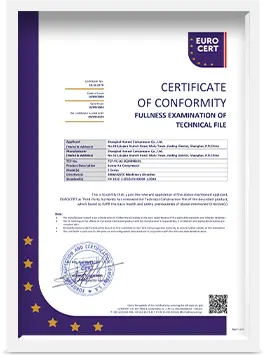
Explore our precision-machined two-stage rotary screw compressors and oil-free variable displacement systems engineered in our ISO 9001 and CE certified smart production facility.
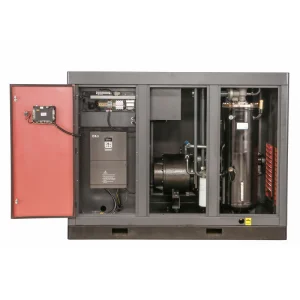
ODM Oil-cooled two-stage permanent magnet variable frequency screw air compressor Manufacturers, Suppliers
View Product Specs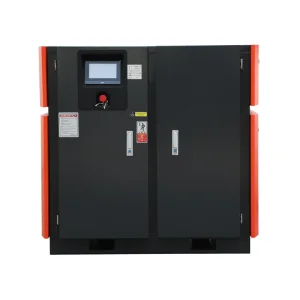
China Horizontal two-stage pressure screw air compressor Two Stage Screw Air Compressor Electric Screw Air Compressor Price Suppliers, Exporters
View Product Specs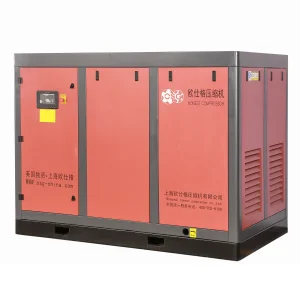
ODM IP55/54 55KW 75HP Factory Price Two Stage Industrial Screw Type Air Compressor Machine Factories, Exporters
View Product Specs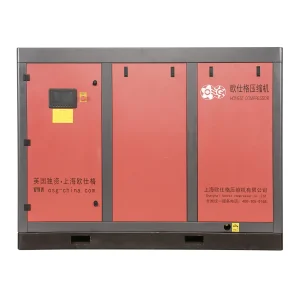
China 55KW 75HP 7-13bar air compressor two stage screw air compressor Direct Drive Screw Type Compressors with VSD PM motor and Inverter Factory, Factories
View Product Specs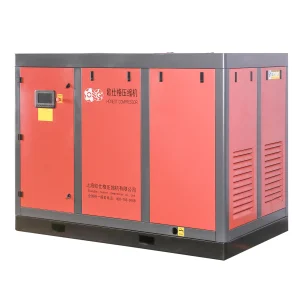
OEM Two-stage Screw air Compressor Chemical Factory Air Equipment Two-stage Screw air Compressor Manufacturer, Factory
View Product Specs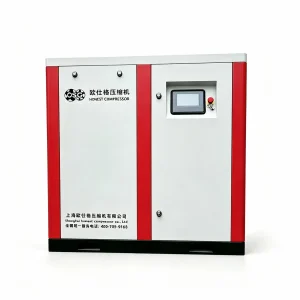
OEM Oil Free Water Lubricated Screw Air Compressor 37kW Supplier, Factories
View Product Specs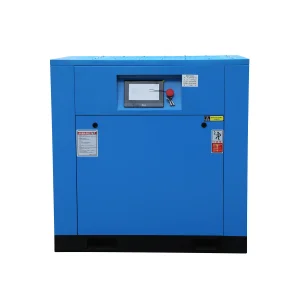
OEM Industrial 15kw/22kw/37kw/55kw/75kw Energy Saving Pm Motor VSD/VFD Rotary Screw Air Compressor Manufacturer, Exporters
View Product Specs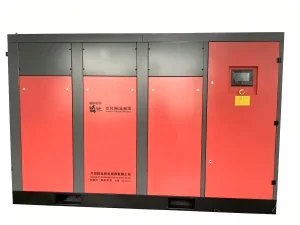
China EGV-132A-140 Oil-Free Permanent Magnet VFD Screw Blower Manufacturers, Exporters
View Product SpecsThe Engineering Imperative of Two-Stage Compression
In modern heavy industry, compressed air accounts for approximately 10% of total industrial electrical consumption globally. Transforming electrical energy into reliable mechanical pneumatic power requires overcoming inherent thermodynamic friction and heat losses.
Isothermal Compression Trajectory
Thermodynamic work required to compress air between initial pressure (P1) and discharge pressure (P2) is minimized when compression approaches an isothermal process rather than an adiabatic curve. In a single-stage rotary compressor, compression heat causes exponential temperature spikes, requiring higher shaft horsepower to overcome thermal expansion resistance.
- Divided pressure ratios: Stage 1 and Stage 2 each operate under a balanced compression ratio (r ≈ √rtotal).
- Inter-stage atomized oil curtain cooling lowers the inlet temperature of air entering the second stage.
- Net thermodynamic work reduction yields 15% to 22% net kilowatt savings under full load.
Differential Pressure & Internal Slippage Reduction
Volumetric efficiency in rotary screw air ends is dictated by internal air back-leakage across rotor contact lines, seal strips, and blow-hole areas. Internal leakage is proportional to the pressure differential (ΔP) across the stage. Two-stage architectures cut the pressure drop across each rotor set drastically.
- Stage 1 compresses intake atmospheric air (0.1 MPa) up to inter-stage intermediate pressure (~0.32 MPa).
- Stage 2 finishes compression from 0.32 MPa to target delivery pressure (0.8 - 1.3 MPa).
- Substantially reduced differential pressure prevents high-pressure back-slip, lifting volumetric efficiency to >96%.
Bearing Load Mitigation & Extended L10h Life
Shaft deflection and bearing axial/radial thrust loads directly determine the mechanical failure rate of industrial compressors. In a single-stage machine running at 1.0 MPa or higher, bearings experience massive concentrated hydrodynamic and mechanical loads.
- Rotor thrust force is split across two independent rotor pairs, reducing individual bearing loads by >50%.
- Heavy-duty SKF/FAG angular contact ball bearings and cylindrical roller bearings achieve calculated L10h bearing life >100,000 hours.
- Lower operational noise level (<70 dB(A)) due to distributed low-pitch speed rotor profiles.
Engineering Audit: Single-Stage vs. Two-Stage PM VFD
Data audited in accordance with ISO 1217:2009 Annex C displacement acceptance testing. Comparison benchmarked on 90 kW and 132 kW industrial units operating at 0.8 MPa (8 bar) discharge pressure under continuous full-load operating conditions.
| Performance Metrics | Conventional Single-Stage Screw | Honest Compressor Two-Stage PM VFD | Thermodynamic Advantage & Net Impact |
|---|---|---|---|
| Stage Pressure Ratio | 1 : 8.0 - 8.5 (Extreme thermal gradient) | Stage 1: 1 : 2.83 | Stage 2: 1 : 2.85 | Balanced Isothermal Path Minimal heat generation |
| Specific Power Input | 7.2 – 7.8 kW / (m³/min) | 5.4 – 6.1 kW / (m³/min) | 20% – 25% Energy Savings Lower specific fuel/kWh cost |
| Inter-Stage Cooling | None (Direct adiabatic curve) | Atomized oil spray inter-cooling | Suppresses second-stage suction temp by ~35°C |
| Internal Volumetric Efficiency | 84% – 88% (High internal slippage) | 95% – 97.5% | Minimal backflow across rotor contact sealing lines |
| Motor & Drive Technology | Asynchronous IE2 / IE3 Fixed Speed | IE4 / IE5 Ultra-Efficient Permanent Magnet | Near-zero rotor copper loss; sustained >96% efficiency |
| Turndown Ratio (VFD Range) | 60% – 100% (High idle power consumption) | 25% – 100% Vector Frequency Inverter | Eliminates off-load idling power losses entirely |
| Rotor Bearing Service Life | ~30,000 – 50,000 hours | >100,000 operating hours | Radial & axial loads distributed across 4 rotor shafts |
| Residual Oil Carryover Rate | 3 – 5 ppm | < 1 – 2 ppm (Multi-cyclone separation) | Downstream filter longevity tripled; cleaner process air |
The Shanghai Advantage: Precision, Scale & Cost Rigor
How Shanghai Honest Compressor Co., Ltd. combines British engineering heritage dating back to 2004 with China’s unmatched industrial ecosystem, high-precision CNC machining clusters, and rapid supply chain agility.
Micron-Tolerance CNC Rotor Grinding
The efficiency of a twin-screw rotor depends on profile geometry. Honest Compressor utilizes German Klingelnberg and UK Holroyd CNC thread grinding centers inside a climate-controlled Shanghai facility.
- Patented 5:6 asymmetric tooth rotor profiles maximize air intake volume while minimizing compression gap volume.
- Micron-level rotor clearances ensure an uninterrupted hydrodynamic oil-sealing film without metal-to-metal contact.
- Sub-micron coordinate measuring machines (CMM) ensure 100% dimensional batch repeatability before assembly.
Rare-Earth Permanent Magnet Synchronous Motors
Leveraging China's world-leading NdFeB (Neodymium Iron Boron) rare-earth magnet reserves and motor manufacturing base, our machines integrate proprietary oil-cooled and air-cooled PMSM drives.
- Exceeds IEC 60034-30-1 IE4 / IE5 Ultra-Premium Efficiency classes with thermal endurance up to 180°C demagnetization threshold.
- Integrated direct-drive coaxial rotor mounting eliminates transmission loss, gearboxes, belts, and coupling misalignments.
- IP55 and IP65 motor enclosures protect against airborne dust, cement powder, chemical fumes, and tropical humidity.
Complete Industrial Vertical Integration
From ductile iron structural castings, ASME/CE pressure vessel welding, cooler brazing to intelligent PLC controller coding, 85% of core system value is produced within a 50km radius in Shanghai.
- Delivery lead times reduced to 15–25 business days for standard OEM/ODM configurations.
- Unmatched aftermarket spare parts cost efficiency: separator filters, synthetic lubricants, and valving at direct factory price.
- Rigorous multi-point testing: Full-load thermal equilibrium testing, acoustic vibration spectra, and electrical safety audits.
Mission-Critical Industrial Application Engineering
Across continuous 8,760-hour annual production cycles, two-stage rotary screw compressors provide stable aerodynamic pressure, mitigating catastrophic pressure drops in high-demand automated plants.
Petrochemical & Chemical Processing
Continuous process air for chemical reactors, pneumatic instrumentation, nitrogen generation feeds, and hazardous vapor evacuation requires steady 0.8–1.3 MPa pressure without thermal shutoffs.
- Explosion-proof Ex d IIB / IIC motor integration and intrinsically safe PLC enclosures.
- Dual-stage inter-cooling prevents lubricant varnish breakdown under corrosive atmospheres.
- Continuous 24/7 unassisted duty cycle in ambient temperatures exceeding 45°C.
Lithium-ion Battery & EV Gigafactories
Electrode coating, pouch cell vacuum sealing, cleanroom robotics, and electrolyte injection demand massive air flows with ultra-low dew points (-40°C to -70°C) and zero oil contamination risk.
- High volumetric flow (20 to 60 m³/min per unit) powering high-speed cleanroom pick-and-place automation.
- Pairing with dry desiccant heat-of-compression dryers to capture inter-stage heat and cut drying energy to zero.
- Precision inverter pressure tracking holding line pressure stability within ±0.01 MPa.
Textile, Air-Jet Weaving & Non-Woven Plants
Textile mills operate hundreds of pneumatic air-jet looms running at 800–1200 picks per minute, consuming compressed air as their single largest utility line expense.
- A plant running 200 looms saves upwards of $120,000 annually when switching from 1-stage to 2-stage systems.
- Heavy-duty, washable air filtration pre-panels withstand high lint, cotton fiber, and airborne particle loads.
- Dual-stage compression keeps discharge temperatures low, extending mechanical sealing valve life across looms.
Mining, Cement, Metallurgy & Heavy Glass Works
In cement blast holes, metallurgical combustion enrichment, glass bottle mold blowing, and ore flotation columns, compressed air operates in brutal abrasive dust and ambient heat.
- Heavy-duty oversized aluminum plate-fin oil coolers designed for 50°C desert or tropical mine sites.
- High-efficiency centrifugal oil separation with residual oil carryover limited to under 2 ppm.
- Robust PLC communication modules (Modbus RTU, Profibus, Ethernet/IP) for remote DCS integration.
Plant Engineers’ Procurement Decision Matrix
When procuring industrial air equipment across cross-border markets, evaluating basic nameplate kilowatt ratings alone often results in improper sizing and excessive life-cycle electrical costs. Use this 5-point engineering audit checklist.
1. Free Air Delivery (FAD) vs. Theoretical Displacement
Never size equipment using theoretical swept volume displacement. Demand certified FAD test certificates verified per ISO 1217:2009 Annex C/E. Honest Compressor tests every machine under physical air mass flow meters to ensure that delivered Nm³/min reflects actual usable capacity at operating temperature.
Audit Standard: ISO 1217 Annex C2. Ambient Elevation & Temperature Derating
Compressor efficiency degrades when operating at high altitudes (>1,000 meters) or in high ambient temperatures (>40°C). Air density decreases, reducing the compressed mass flow. Our technical department calculates precise derating multipliers and recommends custom-enlarged airends and dual coolers.
Site Derating Correction Included3. Electrical Grid Harmonization (Voltage & Frequency)
Exporting to over 50 global territories requires multi-voltage engineering compliance. We supply complete electrical systems customized for destination grids: 380V/50Hz (Standard EU/Asia), 400V/50Hz, 415V/50Hz (Australia/UK), 460V/60Hz (North America), 220V/3Phase/60Hz, or 690V high-voltage mining duty.
Global Grid Compatibility4. Oil Carryover & Air Quality Target (ISO 8573-1)
Determine process purity requirements upfront: Oil-flooded two-stage systems with precision 3-stage filtration yield residual oil carryover under 0.01 mg/m³ (Class 1-2). For medical, beverage, and electronics fabrication, select our Class 0 certified dry or water-lubricated oil-free lines.
Class 0 & Class 1 StandardsFrequently Asked Questions: Two-Stage Screw Technology
In-depth technical answers addressing operational mechanics, thermodynamic principles, installation considerations, and financial ROI expectations.
Efficiency gains stem from thermodynamic physics. Splitting overall compression ratio into two stages lowers the pressure ratio per stage (e.g., instead of compressing 1 bar to 8 bar in one pass, each stage compresses by ~2.83 ratio). Between stages, an atomized lubricant mist absorbs heat, lowering the temperature of air entering the second stage. This shifts the cycle toward an isothermal compression line, cutting theoretical compression work by 15% to 22% while eliminating high-pressure back-leakage.
For continuous manufacturing facilities running 6,000 to 8,000 hours per year at industrial electricity costs ($0.12–$0.25/kWh), upgrading a 75 kW to 250 kW compressor delivers annual electric utility savings ranging between $12,000 and $45,000. These operating expense savings typically offset the purchase price difference between standard single-stage and two-stage units within 8 to 14 months of operation.
Conventional fixed-speed compressors constantly toggle between load and unload states, drawing 40% of rated power while producing zero air during idle. Our permanent magnet variable frequency system dynamically modulates motor RPM in real time to mirror plant air consumption. This eliminates mechanical shock from frequent start-stop cycles, prevents high-current inrush surges (soft start 0 to 100%), and keeps discharge pressure steady within ±0.01 MPa.
Two-stage compressors utilize identical consumable types as single-stage machines: air intake filters, oil filters, synthetic rotary screw lubricant, and oil separator elements. Standard preventative maintenance intervals occur every 3,000 to 4,000 hours. Because two-stage units generate lower operating temperatures, thermal stress on lubricating oil is reduced, preventing early oil degradation and extending fluid life up to 6,000+ hours.
Yes. We engineer bespoke packages tailored to destination country standards. This includes multi-voltage winding (380V, 400V, 415V, 460V, 480V, 690V, 50Hz or 60Hz), UL/CSA/CE certified control components, tropical-grade oversized coolers for 50°C ambient deserts, low-temperature cold-start heating kits for -30°C winter conditions, and multi-language PLC touch-screen interfaces.
Air-cooled units utilize axial cooling fans and aluminum plate-fin radiators, which are ideal for general industrial plants with sufficient room ventilation. Water-cooled units incorporate shell-and-tube or plate heat exchangers connected to a cooling tower system. Water-cooling is preferred for power ratings above 132 kW, confined compressor rooms with restricted airflow, or installations where heat recovery systems are utilized to produce plant hot water.
Specialty Systems: Oil-Free, Low-Pressure & Heavy PM Compressors
Select from our specialized line of oil-free water-lubricated screw compressors, energy-saving permanent magnet blowers, and heavy industrial two-stage compressors.
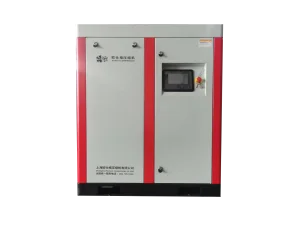
OEM 30kW Water Lubricated Oil Free VSD Screw Air Compressor 380V 400V 415V Industrial Air Compressor Suppliers, Factory
View Product Specs
ODM IP55/54 55KW 75HP Factory Price Two Stage Industrial Screw Type Air Compressor Machine Factories, Exporters
View Product Specs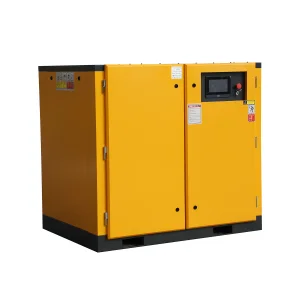
OEM 18.5kW 25HP Industrial VFD PM Screw Air Compressor Factory, Exporter
View Product Specs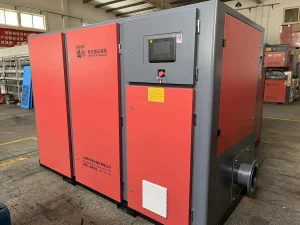
China 30kw Industrial Oil Free Vsd Screw Air Blower Vacuum Pump With Plc Inverter Pm Motor oil free screw blower Supplier, Suppliers
View Product Specs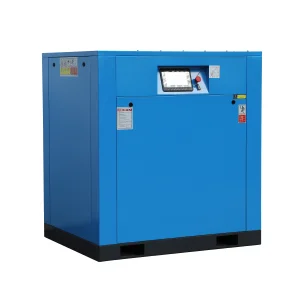
OEM 30kW 40HP Permanent Magnet VFD Air Compressor Manufacturers, Factories
View Product Specs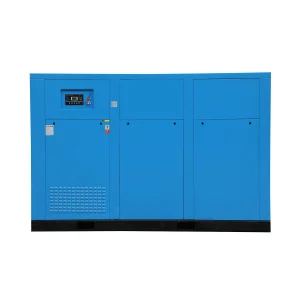
China 110Kw/150Hp Two-Stage Rotary Screw Air Compressor Permanent Magnetic Variable Frequency 380V Air Cooled Exporter, Exporters
View Product Specs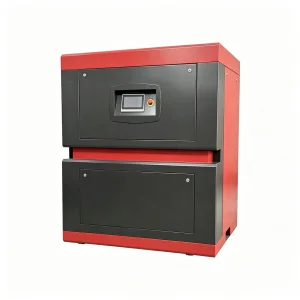
China Oil Cooled Screw Air Compressor 55kw 75hp Industrial Air Compressor Rotary Air Compressor Supplier, Exporter
View Product Specs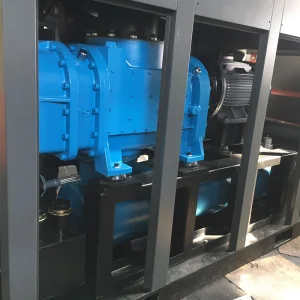
OEM Industrial Oil Free Vsd Screw Air Blower /Vacuum Pump With Inverter and Pm Motor Manufacturer, Exporter
View Product SpecsNeed an Engineered Sizing Audit for Your Plant?
Consult directly with Shanghai Honest Compressor application engineers. We evaluate your target mass flow rates (m³/min / CFM), operational bar pressures, environmental elevation, local electrical supply parameters, and existing pneumatic leaks to calculate guaranteed specific power (kW/m³/min) return on investment.