
How to Choose the Best Oil Flood Screw Air Compressor?
Choosing the right Oil Flood Screw Air Compressor begins with your production reality, not a glossy catalogue.
Air demand changes throughout the day. A packaging line may consume steady airflow, while a workshop uses short, sudden bursts. These patterns influence compressor size, control method, receiver capacity, and energy cost. As compressed-air specialist Hank Van Ormer states, “The best compressor is the one that matches your actual air demand, not the largest machine available.” His practical view remains highly relevant for modern facilities.
Look closely at free air delivery, working pressure, motor efficiency, and duty cycle. Do not compare horsepower alone. Two compressors with 75 kW motors may deliver noticeably different airflow at the same pressure. Ask suppliers for measured performance data under your operating conditions. Request sound levels, oil carryover figures, maintenance intervals, and service requirements. Small details matter. A poorly selected separator can increase pressure loss and operating expense.
Installation conditions also deserve attention. Dusty rooms need effective filtration and accessible cooling surfaces. Hot environments may require additional ventilation or a larger cooling system. Water quality can affect oil coolers and downstream equipment. These points are easy to overlook.
There is no perfect specification sheet. Real demand records may be incomplete, and operators sometimes estimate usage too generously. That uncertainty should encourage measurement, not guesswork. This guide explains how to assess compressor performance, lifecycle cost, reliability, controls, and after-sales support before making a confident purchase.
What Is an Oil-Flooded Screw Air Compressor?
How to Choose the Best Oil-Flooded Screw Air Compressor?
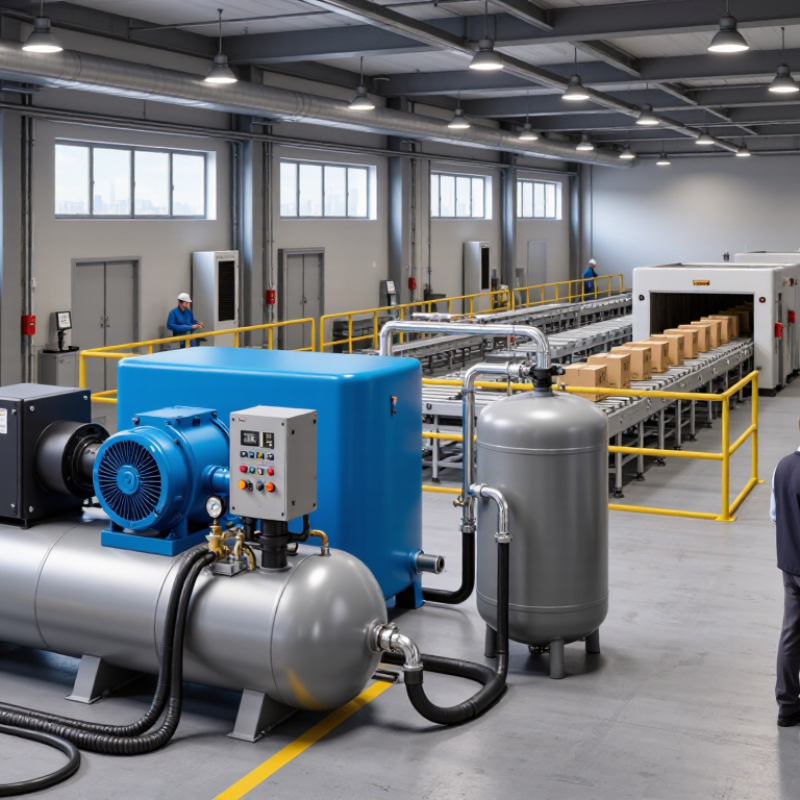
An oil-flooded screw air compressor injects lubricant into the compression chamber. The oil seals the rotor gaps, removes heat, and reduces friction. A separator then removes most oil from the compressed air. This design supports stable airflow during long operating cycles. It is common in workshops, factories, and pneumatic production lines.
The U.S. Department of Energy reports that compressed air can consume about 10% of industrial electricity. Its compressed air best-practice guide also notes that leaks may waste 20–30% of compressor output. These figures make efficiency more than a specification-sheet issue. Check the compressor’s actual flow, pressure, control method, and power input. Free Air Delivery is especially important. A higher motor rating does not always mean more usable air.
Air quality requires equal attention. ISO 8573-1 classifies particles, water, and oil levels in compressed air. Choose suitable filtration and drying equipment when air contacts products or sensitive valves. Check separator performance, oil carryover, service intervals, and ambient temperature limits. A dusty room can shorten filter life. A hot room can reduce output. That detail matters.
My practical caution is simple: laboratory efficiency may not match factory behavior. Demand changes. Leaks remain. Operators adjust pressure unnecessarily. The best selection combines measured plant data with supplier test results, not price alone. It is not perfect. A short air audit before purchase can prevent an expensive mismatch.
| Selection Dimension | Typical Data or Technical Range | What It Means for Compressor Selection |
|---|---|---|
| Operating Principle | Two intermeshing helical rotors compress air continuously while a controlled amount of oil is injected into the compression chamber. | Oil provides sealing between the rotors, removes heat, and lubricates the air end. This design delivers a steady flow with fewer pulsations than reciprocating compressors. |
| Oil-Flooded Air Quality | Oil remains in the compressed-air stream during compression and is subsequently removed by an oil separator, filters, and a moisture separator. | Choose an oil-flooded model when a small residual oil content is acceptable or when downstream filtration can achieve the required air quality. Oil-free technology is normally considered for applications with zero process-oil tolerance. |
| Common Motor Power | Approximately 5.5–315 kW for many industrial installations. | Select motor power according to the required flow, discharge pressure, duty cycle, altitude, ambient temperature, and starting conditions. The motor should not be sized only by horsepower or kilowatts. |
| Air Delivery Capacity | Approximately 0.5–55 m³/min, depending on motor size, pressure, and compressor configuration. | Compare the required free air delivery with the compressor’s rated flow at the actual working pressure. Leave a practical reserve for peak demand without creating excessive unloaded running. |
| Typical Working Pressure | Common nominal ratings include 7, 8, 10, 12, 13, and 16 bar. | Choose the lowest pressure that reliably supports the tools and process. Increasing pressure generally reduces delivered air volume and may increase energy consumption. |
| Variable-Speed Drive | Variable-speed models adjust motor speed to match changing air demand; fixed-speed models operate at a constant speed and use load/unload control. | A variable-speed drive can reduce energy waste in systems with fluctuating demand. Fixed-speed units may be more economical where demand is stable and the compressor runs close to full load. |
| Specific Power | Usually expressed as kW per m³/min or kW per 100 cfm at a stated pressure and operating condition. | Lower specific power generally indicates better efficiency. Compare test data at the same pressure, inlet condition, and measurement standard rather than comparing motor ratings alone. |
| Air End | Contains precision-machined male and female rotors, bearings, seals, and a compression housing. | A robust air end with suitable rotor geometry and bearing design supports long service life. Check the expected operating speed, maintenance requirements, and availability of replacement components. |
| Oil Separation System | Typically includes a separator vessel, separator element, minimum-pressure valve, thermostatic control, oil filter, and oil cooler. | Effective oil separation lowers carryover and protects downstream equipment. Ask for the stated oil carryover value and the recommended separator-element replacement interval. |
| Residual Oil Carryover | Often specified in milligrams per cubic metre; the actual value depends on operating pressure, temperature, oil condition, separator design, and maintenance. | Use the supplier’s tested value rather than assuming that every oil-flooded compressor provides the same air quality. Food, pharmaceutical, electronics, and medical applications may require additional treatment. |
| Lubricant Type | Mineral, synthetic, or application-specific compressor lubricant; service intervals commonly range from several thousand operating hours, subject to the lubricant and conditions. | Use only lubricant approved for the compressor. High ambient temperature, dust, moisture, frequent cycling, and poor ventilation can shorten oil life and increase maintenance frequency. |
| Cooling Method | Air-cooled and water-cooled configurations are common. Discharge temperatures are controlled by an oil cooler and an air aftercooler. | Air cooling is simpler where ventilation is adequate. Water cooling may suit facilities with available cooling water and stable water quality, but it requires additional monitoring and maintenance. |
| Noise Level | Many enclosed industrial units operate in approximately the 65–80 dB(A) range, measured under specified conditions. | Check the measurement distance and operating mode before comparing models. Consider acoustic treatment if the compressor is installed near occupied work areas. |
| Duty Cycle | Rotary screw compressors are designed for continuous or high-duty operation when correctly sized and maintained. | They are generally suitable for factories, workshops, and process systems with sustained compressed-air demand. Short, intermittent demand may favor a smaller receiver or a different compressor type. |
| Air Receiver Sizing | Receiver capacity is commonly evaluated in litres relative to compressor flow, demand variation, and control strategy; no single size fits every system. | A receiver smooths demand peaks, reduces rapid cycling, stabilizes pressure, and allows condensate separation. Size it using demand patterns rather than applying a fixed volume rule. |
| Air Treatment Requirements | Typical downstream equipment includes an aftercooler, water separator, particulate filter, coalescing filter, dryer, and drain system. | Specify treatment according to the required ISO 8573-1 air-quality class, including particles, water, and oil. The compressor alone does not define the final air quality. |
| Installation Environment | Recommended conditions commonly include a clean, dry, well-ventilated room protected from freezing, excessive dust, corrosive vapors, and direct heat sources. | Ambient conditions affect capacity, oil life, cooling performance, and service intervals. Provide sufficient clearance for airflow, inspection, filter replacement, and safe maintenance access. |
| Electrical Supply | Industrial units commonly use three-phase power, with voltage and frequency selected for the installation site. | Verify available voltage, frequency, short-circuit capacity, motor starting method, harmonic requirements, and cable sizing before purchase. Variable-speed drives may require additional electrical considerations. |
| Control System | Common functions include pressure monitoring, load/unload control, automatic stop/start, alarm logging, service reminders, and protective shutdowns. | A clear controller helps operators track pressure, temperature, running hours, oil condition, and service status. Remote monitoring can improve maintenance planning in multi-compressor systems. |
| Maintenance Items | Routine items include lubricant, oil filter, air filter, separator element, coolers, belts or couplings, drains, hoses, and safety devices. | Evaluate total cost of ownership, not only purchase price. Easy access to service parts and clear maintenance intervals can reduce downtime and operating costs. |
| Best-Fit Applications | General manufacturing, pneumatic tools, metalworking, packaging, assembly, automotive workshops, textiles, and continuous process support. | Oil-flooded screw compressors are a practical choice for reliable, continuous compressed air where the specified air-quality class can be achieved with suitable downstream filtration. |
| When to Consider Another Technology | Applications may require certified oil-free air, very small intermittent flows, extremely high pressure, or special process conditions. | Consider oil-free screw, centrifugal, reciprocating, scroll, or other compressor designs when air-quality, flow profile, pressure, or operating requirements do not match an oil-flooded screw compressor. |
| Recommended Selection Method | Define flow profile, working pressure, air-quality class, operating hours, ambient conditions, electrical supply, cooling method, and future demand. | The best compressor is the one that meets the required air quality and pressure at the lowest reliable life-cycle cost—not necessarily the unit with the largest motor or lowest purchase price. |
FAQS
It injects lubricant into the compression chamber. The oil seals rotor gaps, removes heat, and reduces friction. A separator removes most oil from the compressed air. This supports stable airflow during long operating cycles.
Measure pressure at the equipment, not only at the compressor outlet. A tool may need 7 bar, while pipes and filters create losses. Excessive pressure can increase energy use without improving production. Pressure readings can mislead.
Free Air Delivery shows the usable airflow under defined conditions. A larger motor does not always provide more usable air. Compare measured demand, pressure, and operating hours. Laboratory results may differ from factory behavior.
It can reduce power waste when demand changes during the day. Check motor efficiency, cooling, starting current, and protection systems. Record current and loaded running hours during inspection. It is helpful, not magical.
ISO 8573-1 classifies particles, water, and oil levels in compressed air. Add suitable filtration and drying equipment for sensitive valves or products. Check oil carryover and separator performance. Clean air matters.
A dusty room can shorten filter life. A hot room can reduce output and increase cooling stress. Keep air intakes away from exhaust, dust, and chemical vapors. Small details matter.
Use a level, rigid foundation with enough support. Leave clearance around service panels and cooling outlets. Check voltage balance, cable size, grounding, and pipe layout. Drain low points where condensation may collect.
Inspect oil, filters, separators, coolers, fittings, and hoses regularly. Record temperature, pressure, running hours, noise, and pressure drop. A quiet hiss still wastes energy. Do not trust schedules blindly.
Conduct a short air audit before purchase. Measure demand changes, leaks, pressure losses, and working temperatures. Compare site data with supplier test results, not price alone. The choice may still need review after installation.
Conclusion
Choosing the best Oil Flood Screw Air Compressor starts with understanding how its oil-injected screw mechanism delivers a continuous, stable supply of compressed air while helping control heat, sealing, and lubrication. Begin by evaluating your actual air demand, including average consumption, peak usage, operating hours, and future expansion. Select a compressor capacity that meets peak requirements without excessive oversizing, and choose a pressure rating that matches the tools and production equipment in your system.
Motor efficiency, variable-speed control, oil separation performance, and lubrication quality can significantly affect energy use and operating costs. Compare the compressor’s expected efficiency under real working conditions rather than relying only on maximum specifications. You should also review maintenance access, filter and separator replacement intervals, cooling requirements, noise levels, ventilation, electrical needs, and installation space. A reliable maintenance schedule, correct piping, effective moisture management, and proper commissioning will help extend service life, reduce unexpected downtime, and maintain consistent performance.