
Choosing an Oil Flood Air Compressor is not simply a matter of comparing horsepower and purchase price. The right decision affects energy bills, product quality, maintenance time, and production stability. A practical assessment begins with real demand: pressure requirements, airflow patterns, duty cycles, ambient temperature, and the consequences of oil carryover.
The U.S. Department of Energy reports that compressed air can consume about 10% of industrial electricity. It also notes that system leaks may waste 20–30% of compressor output. Those figures make efficiency important, but efficiency alone can mislead. A compressor with excellent rated performance may perform poorly when oversized, poorly controlled, or installed beside a hot, dusty machine.
Ron Marshall, a compressed-air energy specialist, puts it plainly: “The cheapest compressed air is the compressed air you do not use.” His observation supports a wider review of leaks, storage, controls, filtration, and operating pressure. The Compressed Air and Gas Institute also emphasizes verified performance and consistent testing, rather than relying only on marketing claims.
An Oil Flood Air Compressor may suit workshops, factories, and heavy-duty applications requiring reliable continuous airflow. However, its lubricant system demands disciplined filtration, separator replacement, and oil monitoring. ISO 8573-1 classifications should guide air-quality decisions, especially where food, pharmaceuticals, electronics, or clean assembly are involved.
The choice is rarely perfect. Real operating conditions change. This guide will examine compressor technology, lifecycle cost, air quality, maintenance needs, controls, and supplier support, helping buyers connect technical data with the compressor’s actual working environment.
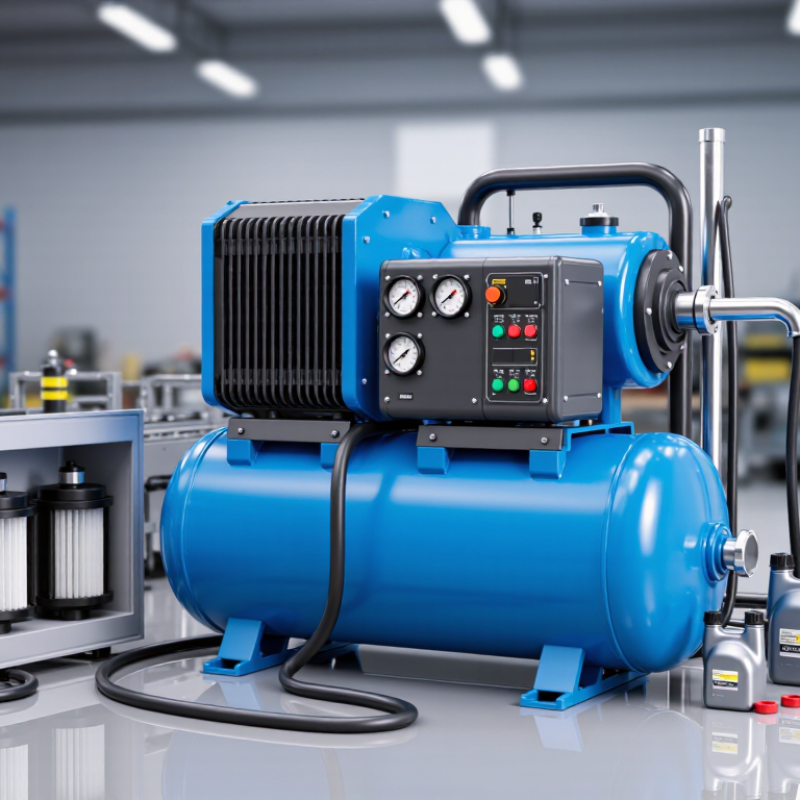
An oil-flooded air compressor injects oil into the compression chamber while air is compressed. The oil seals tiny internal clearances, reduces friction, and carries away heat. A screw rotor turns inside a metal housing. Air enters, becomes denser, and mixes with oil during compression.
The mixture then reaches a separator vessel. Most oil falls into the sump, while a separator element removes remaining oil droplets. The cleaned air passes through an aftercooler before entering the plant’s piping. The recovered oil returns to the compression chamber. This circulation explains the system’s efficiency, but it also creates maintenance responsibilities. Oil filters, air filters, separators, and coolers cannot be treated as minor parts.
The U.S. Department of Energy reports that compressed air may consume 10% of industrial electricity. Its guide also notes that leaks can waste 20–30% of compressor output. These figures make pressure control and leak testing practical selection criteria, not optional extras. Oil carryover also matters when air contacts paint, food, pharmaceuticals, or sensitive instruments. ISO 8573-1 provides the common framework for specifying compressed-air purity classes. In field inspections, I would check the required air class before comparing motor power. A cheaper compressor can become expensive after unsuitable filtration, oil changes, and downtime. My earlier assumption was that a larger receiver solved most problems. It did not. Demand patterns, temperature, duty cycle, and service access often matter more.
An oil-flooded rotary screw compressor injects oil into the air end to lubricate moving parts, seal internal clearances, and remove heat generated during compression. The oil is then separated from the compressed air, cooled, filtered, and recirculated. The chart shows representative specific-power values for common industrial discharge-pressure classes. Higher pressure generally requires more energy.
Specific power is shown as an indicative engineering benchmark in kW per m³/min of delivered air. Actual performance varies with compressor size, inlet conditions, control method, cooling system, and operating load. When choosing a compressor, compare the required pressure, free air delivery, energy efficiency, oil carryover specification, maintenance requirements, and duty cycle.
How to Choose an Oil Flood Air Compressor?
Which Performance Requirements Should You Define Before Choosing One?
Start with the air profile, not the compressor catalogue. Record peak flow, average flow, pressure, operating hours, and demand changes. A workshop needing 8 bar continuously differs from a plant needing 10 bar for short bursts. The U.S. Department of Energy reports that compressed air may consume 10–15% of industrial electricity. Therefore, efficiency at your actual load matters more than the headline motor rating. Define free air delivery at the required pressure, not only nominal capacity. Check specific power in kW per m³/min, part-load behavior, and restart frequency. These details often expose an unsuitable selection.
Air quality also needs a precise definition. ISO 8573-1 classifies particles, water, and oil concentration. Specify the required class before choosing filtration, drying, and oil separation equipment. Ask for measured oil carryover, outlet temperature, sound level, and service intervals. Ambient heat, dust, altitude, and limited ventilation can reduce performance. The DOE also identifies leakage as a major loss, often wasting 20–30% of compressor output in poorly maintained systems. That figure may vary, but it deserves verification on site. A perfect specification rarely exists.
Tips: Measure pressure at the point of use with production running. Compare demand data for several shifts. Leave reasonable capacity for growth, but avoid excessive oversizing. It can increase unloaded running and energy waste. Request test conditions with every efficiency claim. Then challenge your own assumptions; the first draft is usually incomplete.
Choosing an oil-flooded air compressor starts with the demand profile, not the motor nameplate.
The U.S. Department of Energy reports that compressed air can consume about 10% of industrial electricity. In some facilities, the share exceeds 30%. I have seen machines run at full load while production used only half their airflow. That is expensive and easy to miss.
Compare compressor types by duty pattern. Reciprocating compressors suit intermittent use and high pressure, but their pulsation and maintenance increase in continuous service. Rotary screw compressors usually fit steady, medium-to-high demand. Centrifugal units become practical at very large, stable flow rates.
For sizing, use measured free air delivery, not advertised horsepower. Review peak demand, base load, shift changes, receiver volume, and pressure drops across dryers and filters. The CAGI Performance Verification Data Sheets provide useful benchmarks for airflow, power, and specific energy.
Pressure needs closer attention. ISO 1217 supports standardized compressor performance testing, while ISO 8573-1 classifies compressed-air purity. An oil-flooded screw compressor may require qualified filtration when air contacts sensitive products.
“Higher pressure is safer” is usually poor engineering.
DOE guidance indicates that a 2-psi pressure reduction can save roughly 1% of compressor power in suitable systems. That figure is not universal. Test the real network first, then compare control methods, turndown behavior, service access, and lifecycle cost.
Choosing an oil-flood air compressor requires more than comparing flow rate and motor power. Oil management directly affects maintenance, product safety, and operating cost. Examine the separator’s rated oil carryover, expected service life, and pressure drop at full load. A reliable scavenge line should return separated oil efficiently without restricting airflow.
Check whether the compressor includes oil temperature control, filtration, and clear level monitoring. Stable oil temperature reduces varnish, sludge, and premature bearing wear. Accessible filters also make routine servicing faster. Small design details matter. I would inspect drain points and hose connections in person, because minor leaks can become expensive over time.
Air quality must match the application, not a generic specification. Review ISO 8573-1 performance data for particles, water, and oil. Food, pharmaceutical, electronics, and painting processes may require downstream coalescing filters, refrigerated or desiccant dryers, and automatic drains. Measure pressure loss across every treatment stage. It is easy to achieve cleaner air while quietly wasting energy through excessive restriction. Ask for test conditions, sampling methods, and maintenance intervals, rather than trusting a single laboratory number. No separator performs perfectly forever. Contamination levels can rise when filters are neglected, oil breaks down, or operating temperatures fluctuate. Include oil carryover testing and dew-point verification in the acceptance plan. That evidence is more useful than attractive brochure claims.
| Evaluation Dimension | What to Check | Practical Benchmark or Target | Why It Matters |
|---|---|---|---|
| Oil-Separator Performance | Confirm the oil separator design, rated separation efficiency, pressure-drop data, and oil carryover measurement method. | A well-designed oil-flooded screw compressor commonly specifies approximately 1–3 ppm oil carryover at rated operating conditions; verify the exact value in the technical documentation. | Lower oil carryover reduces contamination of downstream filters, dryers, storage tanks, pipework, and production equipment. |
| Oil Return System | Look for a dedicated oil scavenging line, check valve, sight glass or indicator, and protection against blocked or incorrectly adjusted return lines. | The system should return separated oil continuously to the air end without causing excessive oil consumption or unstable operation. | Reliable oil return helps maintain lubrication, cooling, and sealing while preventing oil accumulation in the compressed-air network. |
| Oil Filter and Oil Condition Monitoring | Evaluate oil-filter filtration rating, differential-pressure monitoring, oil-temperature control, and service indicators. | The controller should provide a clear warning for high oil-filter differential pressure, high oil temperature, and scheduled oil or filter service. | Clean oil supports bearing and rotor protection, stable efficiency, and predictable maintenance intervals. |
| Oil Type and Compatibility | Check the recommended lubricant type, viscosity, food-contact requirements where applicable, material compatibility, and oil-change interval. | Use only the lubricant specified for the compressor design. For sensitive applications, evaluate an approved low-volatility or food-grade lubricant where required. | Incorrect oil can increase deposits, foaming, seal wear, oxidation, carryover, and warranty or maintenance risks. |
| Air Quality Classification | Define the required ISO 8573-1 classes for particles, water, and oil rather than selecting equipment based only on “clean air” claims. | For oil content, ISO 8573-1 Class 1 is ≤0.01 mg/m³, Class 2 is ≤0.1 mg/m³, Class 3 is ≤1 mg/m³, and Class 4 is ≤5 mg/m³. | A clearly defined air-quality class connects the compressor package to the actual requirements of the process and product. |
| Coalescing Filtration | Assess filter grades, rated flow, pressure drop, automatic condensate drains, drain reliability, and differential-pressure indicators. | Use a properly sized coalescing filter downstream of the compressor; the filter grade should be selected according to the required ISO 8573-1 oil and particle class. | Coalescing filters remove liquid water and oil aerosols, but they do not by themselves remove oil vapor. |
| Oil-Vapor Control | Determine whether the application needs an activated-carbon or other oil-vapor adsorption filter after coalescing filtration. | For stringent oil requirements, use coalescing filtration followed by oil-vapor adsorption and verify performance through representative testing. | Oil vapor can pass through conventional particulate and coalescing filters and may affect taste, odor, coatings, electronics, or sensitive products. |
| Dryer Selection | Compare refrigerated and desiccant dryers based on pressure dew point, ambient conditions, flow profile, and allowable regeneration energy. | Refrigerated dryers commonly provide about +3°C pressure dew point. Desiccant dryers are typically selected when approximately −20°C to −40°C or lower is required. | Water removal prevents corrosion, product defects, instrument malfunction, and freezing in exposed pipework. |
| Air Receiver and Condensate Management | Check receiver volume, internal corrosion protection, safety compliance, automatic drains, and condensate collection and treatment arrangements. | Provide reliable zero-loss or controlled drains where appropriate, and manage oil-contaminated condensate in accordance with local regulations. | Receivers stabilize demand, reduce compressor cycling, and provide a location for bulk water and oil separation. |
| Load Profile and Control | Review variable-speed control, minimum operating pressure, unloaded power, start frequency, and the site’s hourly demand pattern. | Select the control strategy from measured demand data; avoid sizing solely for peak flow if peak demand is brief or infrequent. | Correct sizing reduces unloaded running, pressure fluctuations, energy waste, and excessive oil-temperature cycling. |
| Monitoring and Verification | Look for pressure, temperature, dew-point, filter differential-pressure, service, and oil-carryover monitoring options. | Use ISO 8573-1 sampling and laboratory testing when the application has critical air-quality requirements; do not rely only on controller readings. | Measurement confirms that air quality remains within specification under actual flow, temperature, and maintenance conditions. |
| Maintenance Accessibility | Evaluate access to the oil separator, oil filter, air filter, coolers, drains, and sampling points, as well as replacement-part availability. | Routine service points should be accessible without removing major assemblies, and maintenance intervals should be documented by operating hours and conditions. | Simple maintenance improves compliance with service schedules and helps preserve oil separation and air quality over the compressor’s life. |
Assess energy use before comparing purchase prices. The U.S. Department of Energy reports that compressed air can consume about 10% of industrial electricity. Its compressed-air guidance also notes that leaks may waste 20–30% of compressor output. Measure flow, pressure, operating hours, and unloaded running time. A compressor running at 7 bar may still waste power when production needs only 5.5 bar. Small details matter.
Maintenance affects energy and reliability. Check the oil separator, inlet filter, oil filter, and cooler access. A blocked filter increases pressure loss and raises motor demand. The Compressed Air and Gas Institute states that lifecycle energy costs can represent 70% or more of total ownership cost. Therefore, compare specific power, expressed in kilowatts per cubic metre per minute. Ask for test conditions, not only catalog values. Laboratory numbers can look better than factory reality.
Build a five-year ownership model. Include electricity, oil, filters, separator elements, service labor, condensate treatment, and downtime. ISO 11011 recommends evaluating compressed-air systems through measurement and documented analysis. I would not trust one week of data. Production changes can distort it. Record demand across shifts, including weekends. An oil-flood compressor may offer practical durability, but poor oil management can shorten component life and contaminate downstream air. The cheapest quotation can become expensive quietly. Check the uncomfortable numbers.
Record peak flow, average flow, pressure, operating hours, and changing demand.Measure free air delivery at the required pressure.An 8-bar workshop differs from short 10-bar bursts.Include room for growth, but avoid excessive oversizing.Oversizing can waste energy.
A large motor rating does not guarantee efficient operation.Compare specific power in kilowatts per cubic metre per minute.Review part-load behavior and unloaded running time.Efficiency should match real production conditions.The catalogue number may mislead.
Define acceptable particle, water, and oil levels before selecting treatment equipment.Match the air quality to the application.Food, pharmaceutical, electronics, and painting processes may need additional filtration.Do not rely on a generic cleanliness claim.The required quality may be stricter than expected.
Check rated oil carryover, separator service life, and pressure drop at full load.A dependable scavenge line should return separated oil efficiently.Inspect oil filters, level indicators, drain points, and hose connections.Small leaks can become costly.Inspect them yourself.
Look for oil temperature control, effective filtration, and clear level monitoring.Stable temperature helps reduce varnish, sludge, and bearing wear.Temperature changes may increase contamination or shorten oil life.The maintenance plan should include oil-condition checks.Perfect stability is unlikely.
Heat, dust, altitude, and poor ventilation can reduce output and reliability.Check room temperature during production, not only during inspection.Make sure cooling air can move freely around the equipment.A clean room photograph proves little.Real conditions matter.
Inspect the distribution system for leaks during normal production.Poorly maintained systems may lose a substantial share of compressor output.Measure pressure at the actual point of use.Also measure pressure loss across filters and dryers.Every restriction adds cost.
Request test conditions for efficiency, oil carryover, and dew point.Confirm sampling methods and maintenance intervals.Verify performance at the required pressure and operating load.Compare measured results with production needs.The first specification may be incomplete.
Choosing an Oil Flood Air Compressor begins with understanding how it works. In this design, oil is injected into the compression chamber to seal clearances, reduce heat, and lubricate moving components. Before selecting a unit, define the required air flow, pressure, duty cycle, installation environment, and application needs. Then compare compressor types, capacity ranges, control methods, and operating pressures to ensure the system can meet demand without excessive oversizing or performance limitations.
Oil management and air quality are also essential considerations. Evaluate separation efficiency, filtration, oil carryover control, monitoring functions, and compatibility with downstream equipment. Finally, compare energy consumption under actual operating conditions, maintenance intervals, service accessibility, spare-part requirements, and expected operating life. A reliable choice should balance output, air quality, efficiency, and long-term ownership cost rather than focusing only on the initial purchase price.