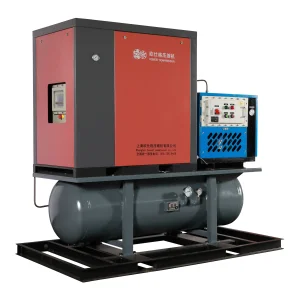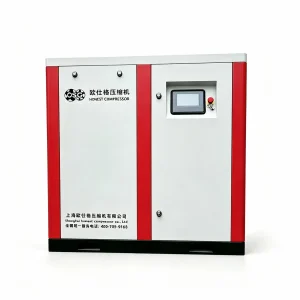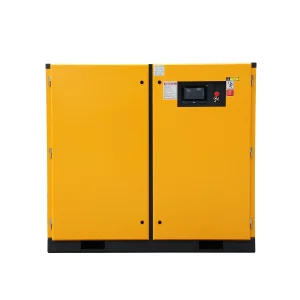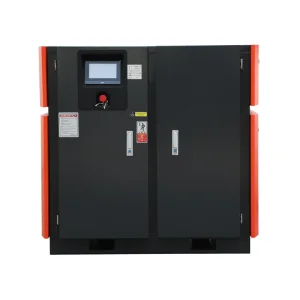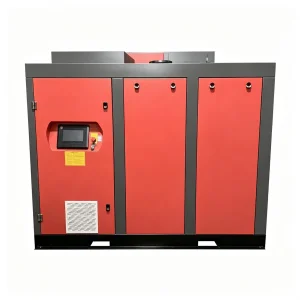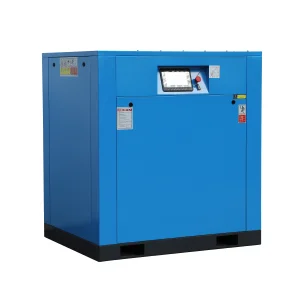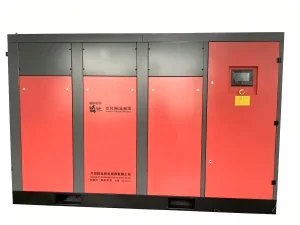
Featured Industrial Compressor & Air Treatment Units
Direct-drive permanent magnet variable speed systems, zero-contamination water lubricated compressors, and high-efficiency air management skids engineered to European standard DIN EN 1012-1.
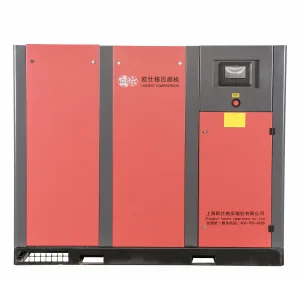
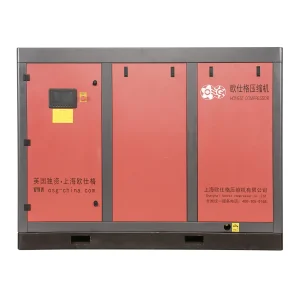
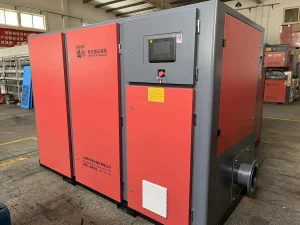
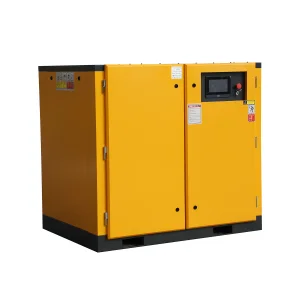
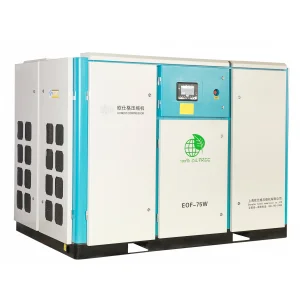
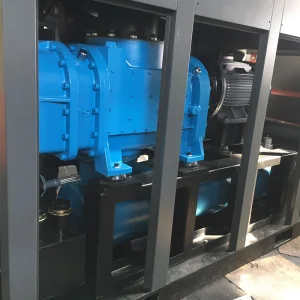
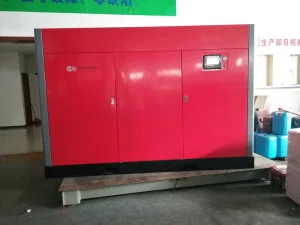
The Strategic Convergence of Compression & Air Drying Technologies
In heavy modern manufacturing, compressed air represents the "Fourth Utility" — accounting for roughly 10% of total industrial electricity consumption across North America, the European Union, and Asia-Pacific. However, mechanical compression is fundamentally thermodynamic work that concentrates ambient atmospheric moisture by 700% to 1200%. For enterprise procurement teams and mechanical project engineers, sourcing a rotary screw compressor without evaluating the synchronized air drying system is a fatal design oversight that results in pipe scaling, micro-valve corrosion, pneumatic actuator failure, and unscheduled plant outages.
Thermodynamic Dew Point Physics
When atmospheric air is compressed from ambient pressure (1.013 bar) to 8 bar, its volume decreases exponentially while vapor capacity plummets. At 25°C and 70% relative humidity, a 55 kW compressor draws in over 60 liters of water daily. Downstream air dryers must lower the Pressure Dew Point (PDP) below zero condensation thresholds to prevent catastrophic pneumatic system breakdown.
ISO 8573-1:2010 Air Purity Standards
Procurement specifications are legally defined by ISO 8573-1 air purity classes. Achieving Class 1 (-40°C PDP) or Class 0 (oil concentration <0.003 mg/m³) requires an integrated system architecture where oil-free rotary screw airends mate directly with twin-tower adsorption desiccant dryers or micro-channel cycling refrigerated dryers without thermal throttling.
Lifecycle Specific Energy (SER)
Modern tier-1 Chinese manufacturers focus rigorously on Specific Energy Requirement ($kW / [m^3/min]$). Utilizing ultra-efficient IE4/IE5 permanent magnet synchronous motors (PMSM) paired with two-stage compression cuts base electrical load by 20% to 35%, while low-pressure-drop drying skids prevent the common penalty where 1 bar of excess system delta-P forces a 7% motor power spike.
Technical Sizing Matrix: Matching Air Dryers to Compressors
Procurement directors and plant engineering teams must align drying technologies with application severity. The chart below details the technical trade-offs between refrigeration cycles, heatless desiccant, heated blower purge, and Heat-of-Compression (HOC) recovery.
| Drying Technology | Achievable PDP | Purge Air Loss (%) | Energy Index | Ideal Application Profile | System Integration Note |
|---|---|---|---|---|---|
| Direct-Expansion Refrigerated | +3°C to +7°C (Class 4) | 0% (Zero loss) | Low (0.2 kW/m³/min) | General shop air, assembly lines, basic CNC tooling | Standard with particulate & coalescing oil filters |
| Cycling Thermal Mass Refrigerated | +3°C (Class 4) | 0% (Zero loss) | Ultra-Low (Modulating) | Variable-load automotive stamping, packaging, injection molding | Directly couples with VFD PM screw compressors |
| Heatless Pressure Swing Adsorption (PSA) | -40°C to -70°C (Class 1-2) | 12% – 18% Compressed Air | High Parasitic Load | Outdoor sub-zero piping, cryogenic air separation, dry rooms | Requires compressor over-sizing by at least 20% |
| Blower-Purge Externally Heated Desiccant | -40°C (Class 2) | 1.5% – 3% Compressed Air | Medium (Thermal Heater) | Pharmaceutical synthesis, semiconductor wet benches, electronics | Eliminates continuous pneumatic purge losses |
| Heat of Compression (HOC) Drum / Desiccant | -20°C to -40°C (Class 2-3) | 0% (Zero parasitic air) | Theoretical Zero Energy | Continuous chemical base-load, 24/7 gigawatt-scale air skids | Requires non-aftercooled oil-free two-stage discharge (>140°C) |
Inlet Flow & Temperature Derating Calculations
Catalogue dryer ratings universally cite reference conditions of 20°C ambient, 35°C compressed air inlet, and 7 bar(g) pressure. When deploying in tropical industrial hubs (Middle East, Southeast Asia, Texas Gulf Coast) where ambient temperatures regularly surpass 45°C and inlet air reaches 55°C, dryer capacity degrades by up to 48%. Chinese suppliers provide thermal sizing correction factors: $C_F = f_t \times f_p \times f_a$, preventing condensation breakthrough downstream.
Aerodynamic Pressure Drop ($\Delta P$) Constraints
Poorly configured filter-dryer packages impose significant internal drag. A cumulative differential pressure drop exceeding 0.5 bar between the discharge valve and the distribution header consumes excessive energy. Honest Compressor's integrated drying skids optimize flow paths via large-radius stainless manifolds and oversized desiccant beds, guaranteeing a total packaged drop under 0.15 bar throughout standard maintenance intervals.
Mission-Critical Sector Solutions
From gigafactory battery electrode deposition to hazardous chemical processing, our customized compressor and air dryer solutions guarantee compliance with strict international production criteria.
Lithium-ion Battery Dry Rooms
Lithium chemistry is violently sensitive to moisture. Electrolyte filling rooms mandate extreme dry air conditions with a Pressure Dew Point between -50°C and -70°C (moisture content <0.5 ppm). We integrate Class 0 oil-free dry screw compressors with closed-loop blower-purge molecular sieve desiccant dryers, eliminating moisture ingress during battery cell formation.
Semiconductor Wafer Fabrication
In sub-7nm photolithography and wafer handling, micro-contaminants or aerosolized lubricant droplets ruin cleanroom yields. Utilizing water-lubricated oil-free screw compressors alongside multi-stage stainless steel membrane and sub-micron ceramic air dryers delivers zero hydrocarbon vapors and continuous -40°C PDP instrument gas.
Aseptic Food, Dairy & Pharma
Under FDA 21 CFR and European EC 1935/2004 regulations, compressed air directly contacting product packaging must be sterile and free from condensed water where bacteria proliferate. Our dual PM VFD oil-free screw compressors feature zero-loss condensate traps, catalytic converter stages, and integrated bacteriological filtration.
Petrochemical & Hazardous Zones
Refineries, LNG transfer terminals, and offshore platforms operate within combustible environments requiring Zone 1 / Zone 2 certification. We engineer 4-in-1 explosion-proof skids certified under ATEX and IECEx (Ex d IIB / IIC T4), combining heavy-duty screw airends with explosion-proof refrigerated drying units and spark-proof instrumentation.
Technological Roadmap: Next-Gen Compressed Air Generation
The global compressed air landscape is transitioning from isolated mechanical machinery toward interconnected, self-optimizing cyber-physical power plants. Below is the multi-year development trajectory driving our Shanghai engineering team.
AI-Modulated Dynamic Dew Point Tracking
Conventional desiccant dryers cycle towers on rigid mechanical timers, discarding valuable purge air even during partial factory shifts. Our newest architecture integrates dynamic hygrometer feedback with PLC algorithmic sequencing: towers regenerate only when the desiccant bed is fully saturated, slashing average annual parasitic purge consumption by 42%.
Low-GWP Eco-Refrigerants & Heat Recovery
In accordance with EU F-Gas regulations and the Kigali Amendment, our direct-expansion refrigerated dryers are transitioning entirely to ultra-low Global Warming Potential (GWP) refrigerants like R1234ze and R513A. Furthermore, integrated thermal recovery exchangers harness up to 94% of compression reject heat to produce 75°C boiler make-up water directly on site.
Industrial Cloud Telemetry & IIoT Diagnostics
Modern Honest Compressor units are equipped with standard Modbus RTU, Profinet, and OPC UA cloud gateway architecture. Plant managers remotely track real-time differential pressure across filter banks, dew point drift, vibration harmonics on rotor bearings, and specific power consumption through a unified dashboard interface.
Why International EPCs & Industrial Plants Source from China
The global commercial supply chain for heavy rotating machinery has shifted permanently. China's Yangtze River Delta manufacturing ecosystem offers unmatched advantages in precision machining, rare-earth magnet integration, and rapid lead-time execution.
Integrated Component Ecosystem
Operating from Jiading District, Shanghai, Honest Compressor harnesses a 50,000 m² state-of-the-art facility situated within a two-hour radius of tier-1 rotor casting foundries, automated precision CNC milling centers, and world-leading permanent magnet motor manufacturers. This vertical integration reduces manufacturing lead times from 16 weeks to under 4 weeks.
Total Cost of Ownership Parity
While legacy European and American brands charge a massive markup on replacement parts (air filters, oil separators, and desiccant cartridges), our global program delivers OEM-certified components at fair commercial pricing. The result is a 40% reduction in five-year operating expenses without compromising rotor longevity or air quality.
Global Engineering Customization
Western conglomerate assembly lines enforce rigid, inflexible catalogue matrices. In contrast, Chinese OEM/ODM engineering teams configure machines specifically to target site voltages (such as 380V 50Hz, 400V 50Hz, 415V 50Hz, 460V 60Hz, or 480V 60Hz), dual-language PLC human-machine interfaces, and specialized offshore corrosion coatings (C5-M marine paint systems).
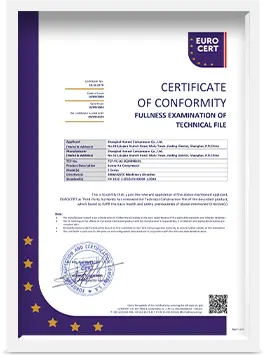
Full International Regulatory Certification Matrix
Smooth import clearance, site safety audits, and factory acceptance tests (FAT) depend on rigorous international certification. Honest Compressor systems conform strictly to the mandatory codes of every destination continent.
Pressure Vessels: ASME & PED
All air receivers, oil separator vessels, and desiccant drying columns carry dual compliance certification: the European Pressure Equipment Directive (PED 2014/68/EU, Module H/H1) and the American Society of Mechanical Engineers (ASME Section VIII, Div 1 with U-Stamp registration).
Electrical: CE, UL & CSA
Integrated electrical cabinets, PM inverters, and switchgear comply with Low Voltage Directive 2014/35/EU, EMC Directive 2014/30/EU, and North American UL 508A / CSA C22.2 No. 14 standards. Complete Schneider Electric and ABB low-voltage architectures guarantee dependable field maintenance.
Management: ISO 9001 / 14001
Manufacturing processes undergo comprehensive ISO 9001:2015 quality management and ISO 14001:2015 environmental auditing. Rotor pairs are measured on German Leitz coordinate measuring machines (CMM) down to sub-micron tolerances, maintaining complete material lot traceability.
Global Commissioning Support
Supported by authorized distributor channels in over 50 export markets across Europe, South America, the Middle East, and Southeast Asia, clients receive localized commissioning support, emergency response agreements, and dedicated consignment parts inventory within their regional timezone.
Frequently Asked Engineering Questions (FAQ)
Direct answers to the most common thermodynamic, commercial, and operational questions posed by plant engineers, EPC consultants, and equipment buyers.
The decision is dictated solely by your application's minimum ambient piping temperature and the ISO 8573-1 air purity requirements. Refrigerated dryers lower the compressed air temperature to approximately +3°C (Class 4 water vapor), preventing condensation in indoor factories where distribution lines remain above 10°C. However, if compressed air lines route outdoors where freezing occurs, or feed sensitive processes like lithium battery assembly, powder transport, or pharmaceutical processing, a Desiccant Dryer is mandatory to achieve a Pressure Dew Point (PDP) of -40°C (Class 2) or -70°C (Class 1).
Two-stage compression divides the overall pressure ratio across two separate rotor pairs with inter-stage cooling between them. This approaches isothermal compression, cutting theoretical mechanical work by 15% to 20% compared to a single-stage airend. When coupled with an IE4/IE5 permanent magnet motor and an inverter that dynamically regulates motor RPM to match plant demand variations, total plant electricity savings frequently reach 30% to 40% over fixed-speed load/unload machinery.
Class 0 designates absolute air purity with zero allowable oil contamination (liquid, aerosol, and vapor combined) below 0.003 mg/m³. While high-efficiency coalescing and carbon bed filtration downstream of oil-lubricated compressors can theoretically capture bulk oil, this setup introduces a catastrophic single point of failure: an elevated temperature excursion, separator bypass, or saturated filter matrix instantly floods the distribution piping with hydrocarbon sludge. Water-lubricated or dry screw Class 0 compressors eliminate oil completely from the compression chamber, ensuring contamination-free operation.
Traditional heatless PSA desiccant dryers consume 15% to 18% of the compressor's total rated dry air output to regenerate the saturated desiccant bed in the offline tower. Over a 5-year operating window, this discarded air costs thousands of dollars in wasted electrical energy. For systems above 30 kW, switching to an Externally Heated Blower-Purge Dryer or a Heat-of-Compression (HOC) dryer cuts parasitic air losses to under 2% (or 0% for HOC), yielding an investment payback period under 14 months.
As a standard rule of thumb in pneumatic thermodynamics, every 1 bar (14.5 psi) of unnecessary pressure drop across pipes, pre-filters, dryers, and after-filters requires the compressor to generate an extra 7% in motor electrical input to maintain downstream terminal pressure. Selecting an oversized, low-pressure-drop dryer with an engineered manifold system maintains system $\Delta P$ below 0.15 bar, protecting annual production margins.
Every export shipment includes a complete Factory Acceptance Test (FAT) dossier: ASME / PED hydrostatic pressure test certifications for pressure vessels, rotor dynamic balancing reports, ISO 1217 Annex C full-load Free Air Delivery (FAD) measurement sheets, motor dielectric test records, electrical wiring schematics, and an official Certificate of Origin for customs clearance.
Integrated Air Generation & Vacuum Pumping Packages
Heavy-duty explosion-proof skid units, variable-displacement screw vacuum pumps, and high-volume dry screw air blowers engineered for continuous 24/7 industrial duty.