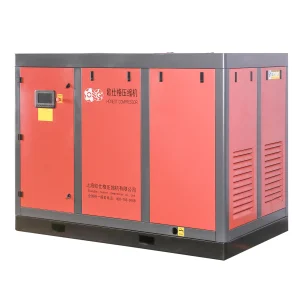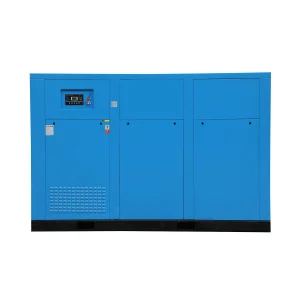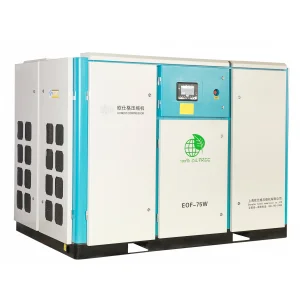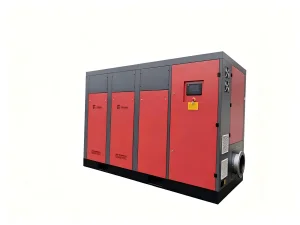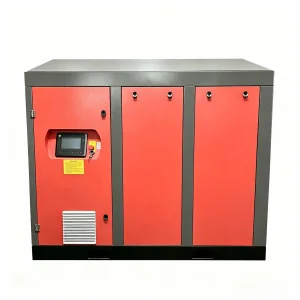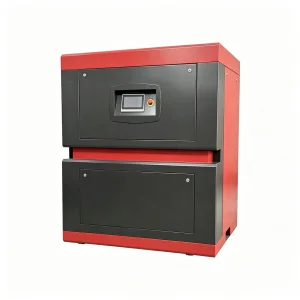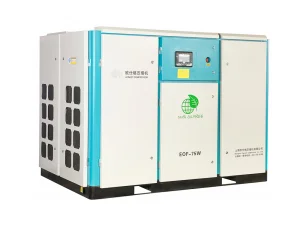
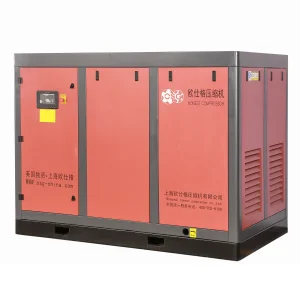
ODM Oil-Cooled Two-Stage PM VFD Screw Compressor - Denmark Industrial Grade
View Specifications
Engineered for low ambient footprint and extreme duty cycles across Scandinavian production sites.
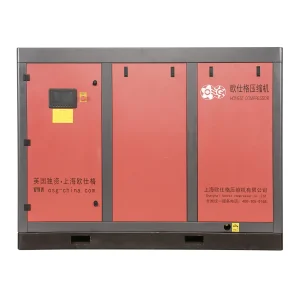
Aligning air compression performance with Denmark's aggressive 70% greenhouse gas reduction target and rigorous energy audit directives.
Denmark enforces some of Europe's strictest energy performance codes for industrial machinery. Under Danish Energy Agency guidelines, industrial plants running heavy utilities like compressed air must minimize specific energy consumption (kW/m³/min) to qualify for operational incentives and meet ESG benchmarks.
From the Medicon Valley cluster to major life sciences facilities in Kalundborg and Copenhagen, Danish processors demand continuous baseline air delivery without pressure drops or heat degradation. Two-stage compression ensures stable isothermal efficiency essential for sterile air trains.
Danish dairy, brewing, and enzyme production plants emphasize extreme sanitation and lowest total cost of ownership (TCO). Our ODM air packages integrate inter-stage cooling and advanced moisture separation to shield downstream processing from thermal instability.
Why splitting the compression ratio between two distinct air ends delivers unparalleled volumetric and thermal efficiency.
In standard single-stage rotary compressors, gas is compressed from ambient (1 bar) directly to discharge pressure (e.g., 8-10 bar) in one step. This results in high compression ratios (~8:1 to 10:1), excessive internal discharge temperatures, and significant back-leakage past rotor clearances.
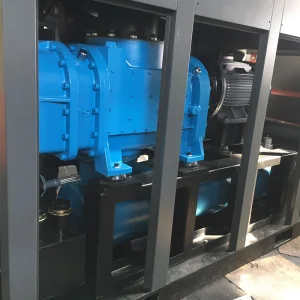
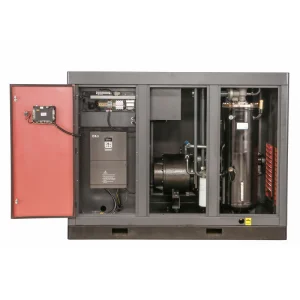
Our Two-Stage rotary screw units split the compression process across two rotor pairs. Stage 1 compresses ambient air to an intermediate pressure (approx. 2.5–3.2 bar), followed by targeted interstage oil-injection cooling. Stage 2 finishes compression to line pressure. This lowers the individual pressure ratio per stage down to approximately 2.8:1, bringing the process far closer to ideal isothermal compression.
Because each rotor pair only experiences a fraction of the total pressure differential, radial and axial thrust loads on bearings are drastically reduced. Bearings operate within conservative stress envelopes, yielding calculated L10h lifespans exceeding 100,000 operational hours.
Furthermore, reduced differential pressure translates to lower volumetric slippage across rotor sealing lines. This delivers up to 15% higher Free Air Delivery (FAD) per kilowatt consumed compared to single-stage equivalents of the same motor rating, directly cutting Denmark plant electricity bills.
Bridging tier-1 manufacturing capabilities in Shanghai with European compliance, telemetry, and service standards.
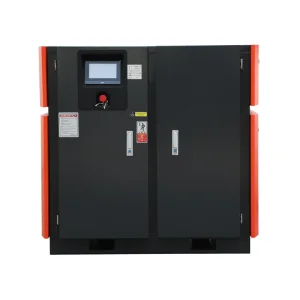
Denmark runs standard 400V 50Hz grid systems, with specialized offshore or maritime facilities requiring 440V/690V 60Hz. We configure high-tier control cabinets incorporating Schneider or ABB electrical components, certified EMC filters, and high-frequency shielding.
Danish plant managers prioritize predictive maintenance. Our ODM controllers integrate seamlessly into centralized facility management architectures via native Modbus-RTU, Profibus, or OPC-UA over Industrial Ethernet, providing live telemetry on dew point, delta-P, and bearing temperature.
Strict Danish working environment legislation (Arbejdstilsynet) limits allowable sound pressure levels inside indoor plant rooms. Our cabinets use multi-density acoustic dampening foam and optimized centrifugal cooling paths to ensure noise levels remain below 65–72 dB(A).
Developing next-generation compression hardware tailored for thermal recovery and integration into Danish district heating grids.
Up to 94% of electrical energy consumed by a screw compressor turns into heat. Our engineering roadmap includes factory-integrated plate heat exchangers capable of supplying 70°C–80°C hot water directly into municipal district heating schemes (Fjernvarme) common across Danish cities.
Replacing traditional load/unload cycles with dynamic motor speed variation synchronized to real-time process demand curves. By maintaining an ultra-narrow ±0.01 MPa pressure band, our permanent magnet motors prevent over-compression and eliminate wasteful idling power draw.
Using proprietary 5:6 tooth ratios finished on precision German milling centers, we minimize inter-lobe leakage lines while maximizing volumetric intake. Surface passivation techniques further protect rotors against corrosion from marine Scandinavian coastal air.
Full conformance to European Union machinery directives, pressure equipment regulations, and customs clearance protocols.
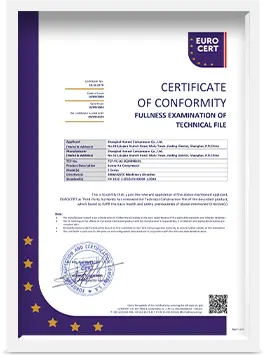
Every oil separator, heat exchanger, and internal pressure vessel is designed and certified according to the European Pressure Equipment Directive (PED). Complete Technical Construction Files (TCF) and declarations of conformity accompany every shipment destined for Danish ports.
With decades of export experience, we manage containerized shipments from our factory in Shanghai directly to Port of Aarhus or Port of Copenhagen. Units are vacuum-sealed in moisture-barrier bags and crated in heavy-duty fumigated ISPM-15 plywood boxes.
We work directly with Danish compressed air equipment distributors and engineering firms, offering white-label manufacturing, custom corporate RAL colors, multi-language controller interfaces (including Danish and English), and localized spare parts kits.
Detailed insights addressing thermodynamic performance, selection criteria, and maintenance considerations for Danish industrial buyers.
Explore our complete export line: heavy two-stage compressors, 100% oil-free dry systems, blowers, and precision vacuum pumps.