
High-Efficiency Two-Stage Air Compressors for Brazilian Plants
Engineered to handle severe duty cycles across São Paulo's manufacturing hubs, Minas Gerais mining complexes, and the expanding ethanol and agro-industrial corridor.
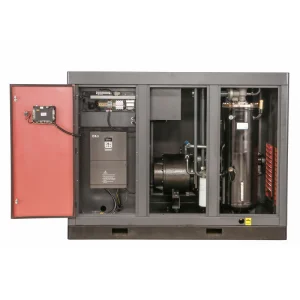
ODM Oil-Cooled Two-Stage PM VFD Screw Compressor (Brazil Heavy Fleet)
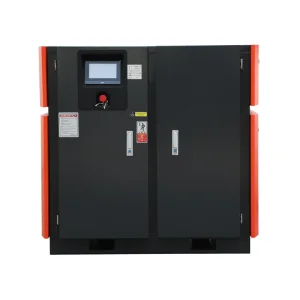
Horizontal Two-Stage Pressure Screw Air Compressor for Industrial Mills
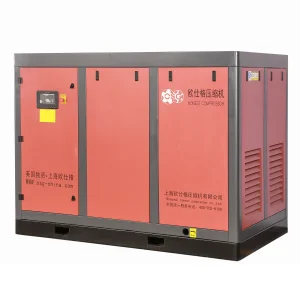
ODM IP55/54 55kW 75HP Two-Stage Industrial Compressor for Severe Duty
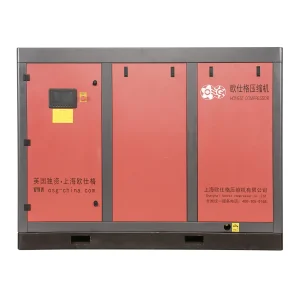
55kW Direct-Drive Two-Stage Screw Compressor with Dual Inverter
The Compressed Air Reality in Brazil: Mitigating High Tariffs with Two-Stage Engineering
Brazil represents Latin America's largest industrial powerhouse, driven by aggressive production clusters in São Paulo, Minas Gerais, Rio Grande do Sul, and Paraná. However, Brazilian industrial plant operators face persistent operational headwinds: volatile industrial electricity tariffs regulated under the ANEEL tariff flag system (*Bandeiras Tarifárias*), aggressive ambient humidity, and strict regulatory oversight under Brazilian Labor Ministry norms (NR-12 and NR-13).
In Brazilian heavy industry—ranging from sugar and bioethanol distillation (*usinas sucroalcooleiras*) and iron ore processing to automotive assembly and chemical processing—compressed air accounts for approximately 10% to 25% of total plant electrical consumption. Single-stage screw air compressors operating under continuous full-load demand incur immense energy penalties over a standard 10-year lifecycle.
As an established OEM/ODM manufacturer, we bridge this critical technological divide by delivering engineered two-stage rotary screw air compressors tailored directly for the Brazilian market. By dividing total compression ratio across two discrete rotor pairs with intermediate oil-spray cooling, our systems slash specific power consumption (kW/m³/min), ensuring rapid capital amortization under Brazil’s peak and off-peak (*ponta e fora de ponta*) power schedules.
ANEEL Tariff Flags & Base Load Costs
During dry seasons when hydroelectric output falls, Brazil activates yellow and red tariff flags (*Bandeira Vermelha Patamar 1 e 2*), substantially increasing per-MWh charges. A 15% reduction in compressor kilowatt draw translates directly into tens of thousands of USD in preserved operational margin annually.
Tropicalized Plant Resilience
Brazilian plants often run in high ambient temperatures (up to 45°C) and elevated humidity. Conventional single-stage machines suffer from elevated discharge temperatures, oil emulsification, and thermal shutdowns. Two-stage compression reduces mechanical thermal stress and stabilizes air delivery.
Why Two-Stage Compression Outperforms Single-Stage in Tropical Climates
A technical breakdown of compression physics: approaching the isothermal ideal, mitigating volumetric back-leakage, and lowering rotor thermal stress.
Approaching the Isothermal Ideal
Thermodynamically, compressing ambient air generates heat. Single-stage compression operates along a steep polytropic curve close to adiabatic compression, where a substantial portion of electrical energy input is converted into waste heat rather than pressure. In a two-stage air end, the total pressure ratio is distributed across two stages:
$$\Pi_{total} = \Pi_1 \times \Pi_2$$
For an 8-bar working pressure system, the first stage compresses air to approximately 2.5–3.0 bar. Before entering the second stage, an atomized oil-curtain injection cools the intermediate compressed air, significantly lowering its temperature. The second stage then compresses this cooled air to the target discharge pressure. This inter-stage cooling shifts the compression cycle closer to the theoretical **isothermal curve**, cutting thermodynamic work by 12% to 18%.
Drastic Reduction of Volumetric Clearance Leakage
Internal leakage across the rotor mesh line and housing clearances (blow-by) is directly driven by the pressure differential ($\Delta P$) across the compression chamber. In a single-stage machine discharging at 10 bar, the sealing lines must resist a 9-bar pressure gradient against atmospheric pressure.
In our two-stage architecture, each rotor set experiences a reduced pressure differential (typically 2.5 to 3.5 bar per stage). Consequently, internal back-leakage drops significantly. This structural advantage increases volumetric efficiency up to **95–98%**, maintaining rated volumetric free air delivery (FAD) even after years of continuous round-the-clock service in harsh Brazilian environments.
| Performance Parameter | Standard Single-Stage Screw | Honest OEM Two-Stage PM VFD | Direct Operational Benefit in Brazil |
|---|---|---|---|
| Specific Power (8 bar) | 7.2 – 8.1 kW / (m³/min) | 5.8 – 6.6 kW / (m³/min) | Direct 15% – 20% lower electricity bill per m³ delivered |
| Pressure Ratio per Stage | High (~8.0:1) | Low (~2.8:1 per stage) | Minimized rotor blow-by; superior volumetric efficiency |
| Discharge Airend Temp | 88°C – 98°C | 72°C – 80°C | Prevents lubricant oxidation; extends bearing life past 60,000h |
| Rotor Load & Bearing Stress | High concentrated thrust load | Balanced split radial/axial loads | Greatly reduces bearing fatigue and mechanical downtime |
| Motor Architecture | Standard Induction (IE2/IE3) | Ultra-Premium IE4/IE5 PMSM | Full efficiency retention across 25%–100% modulating loads |
Engineering for Brazil: NR-12, NR-13, and Tropicalized Specifications
Importing industrial equipment into Brazil requires more than just performance; it demands strict adherence to federal safety and pressure vessel legislation.
NR-12 Machine Safety Standard
Brazilian Regulatory Standard NR-12 mandates fail-safe operator protection. Our machines feature category 4 safety relays, dual-channel emergency stop circuits, physical protective guards over rotating components, electrical disconnects with lockout/tagout (LOTO) provisions, and interface controls localized into Portuguese.
NR-13 Pressure Vessel Dossiers
All air-oil separation tanks and inter-stage vessels comply with ASME Section VIII Div 1 or European PED standards, engineered to facilitate Brazilian NR-13 certification. We furnish complete mechanical calculation books, hydrostatic test certificates, weld inspection reports, and verified data plates ready for local professional engineer (*Engenheiro Habilitado*) validation.
INMETRO & Electrical Grid Adaptability
Brazilian industrial grids present varied voltage standards depending on the concessionaire (380V/440V, 3-phase, 60Hz). Our machines are engineered specifically with 60Hz dual-voltage switchable transformers, INMETRO-compliant low-voltage control cabinets, Schneider or ABB switchgear, and high thermal capacity wiring.
Tropicalized Heat Exchanger Packages
Brazilian industrial facilities—such as steel mills in Volta Redonda or fertilizer plants in Cubatão—frequently face high summer ambient conditions. Standard European or Asian package coolers sized for 35°C ambient air suffer chronic thermal tripping when ambient temperatures hit 42°C.
Honest Compressor equips all Brazil-bound two-stage units with **oversized aluminum bar-plate heat exchangers** engineered for continuous full-capacity running at up to 50°C ambient temperatures. Utilizing hydrophilic and anti-corrosive fin coatings, our coolers resist sulfurous atmospheres common in petrochemical refineries and pulp & paper mills.
Ex-Tarifário Procurement Optimization
Brazilian corporate procurement teams often leverage the Brazilian federal government’s *Ex-Tarifário* regime, which reduces the Import Duty (*Imposto de Importação - II*) from standard rates (typically 14% to 16%) down to 0% or 2% for capital equipment without an identical domestically produced equivalent (*sem similar nacional*).
Because of our specialized ultra-high-efficiency dual-stage airend geometry and permanent-magnet dual-inverter topology, Brazilian importers frequently qualify for customized Ex-Tarifário exemptions under NCM codes (8414.80.19 / 8414.80.32). Our export documentation office provides full technical catalogues, functional descriptions, and thermodynamic flow charts required for SECEX and MDIC submittals.
Macro-Industry Applications Across Key Brazilian Segments
Targeted solutions developed for Brazil's primary export manufacturing and processing sectors.
Sugar, Ethanol & Biomass Cogeneration
Mills in Ribeirão Preto and Piracicaba operate continuous 240-day crushing cycles (*safra*). Our two-stage compressors provide uninterrupted pneumatic control for bagasse handling, juice clarifying valves, and packaging. Heavy-duty particulate air pre-filtration handles high ash and sucrose dust without premature element blinding.
Open-Pit Mining & Mineral Beneficiation
In the *Quadrilátero Ferrífero* of Minas Gerais and Carajás in Pará, iron ore processing plants demand rugged, dust-resistant air compressors. Our IP55/NEMA 4 dual-stage units feature dual-stage heavy-duty cyclonic air intake filters, sealed electrical enclosures, and vibration-resistant chassis built for severe operating environments.
Meat Packing, Poultry & Agro-Food
Brazil is the world's leading poultry and beef exporter. Facilities across Paraná and Santa Catarina require high air quality for robotic cutting, carcass washing, and vacuum packaging lines. Our Class 0 water-lubricated and oil-cooled configurations with downstream refrigeration packages eliminate oil contamination risks entirely.
Next-Generation Technology: Dual PM Motors and Cloud Telemetry
From custom branding and Portuguese PLC touch-screens to dual-motor synchronous vector control, discover our technological roadmap.
Dual-Inverter Synchronous Speed Modulation
While basic two-stage air compressors connect both stages using internal gear reducers driven by a single motor, our premium roadmap introduces **Independent Dual-Motor Dual-Inverter Control**. Each compression stage is driven by its own dedicated oil-cooled permanent-magnet synchronous motor.
Using real-time pressure transducers between stages, our proprietary PLC dynamic algorithm computes the optimal speed ratio between Stage 1 and Stage 2 under any partial-load demand (from 25% to 100% capacity). This ensures that inter-stage pressure is dynamically optimized, eliminating over-compression losses and providing industry-leading off-peak energy savings.
Industry 4.0 Telemetry & Remote Fleet Tracking
For Brazilian machinery distributors and industrial conglomerates with geographically dispersed installations, physical equipment oversight is complex. Honest Compressor equips every OEM two-stage cabinet with an **IoT-enabled 4G/LTE Gateway** and Modbus-TCP/RS485 connectivity.
Maintenance teams monitor real-time compressor discharge temperatures, inter-stage pressure profiles, motor winding temperatures, vibration signatures, and lubrication hours via smartphone or DCS dashboards. Automated alarm trip notifications prevent catastrophic failures and streamline preventative maintenance across Brazil.
Engineered Compressors, Blowers & Vacuum Systems for OEM Distribution
Explore our complete industrial portfolio available with custom voltages (380V/440V 60Hz), custom livery, private-label badging, and full compliance documentation.
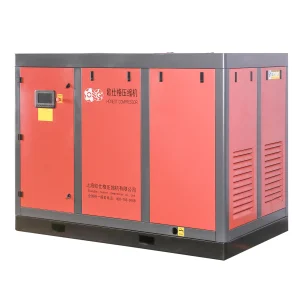
OEM Two-Stage Chemical Plant Compressed Air System (Heavy Industrial)
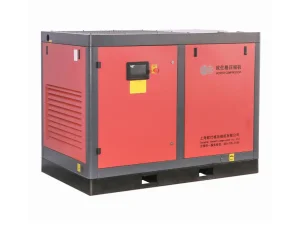
OEM Energy-Saving Direct-Driven Two-Stage Air-Cooled Compressor

ODM Industrial Oil-Free VSD Screw Air Blower & Vacuum Pump with PM Inverter
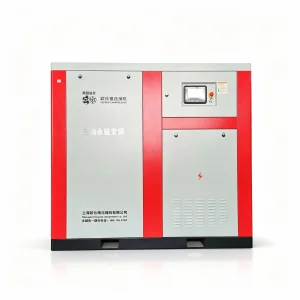
Oil-Free Water Lubricated Screw Air Compressor EOWV-45A/W (Clean Process)
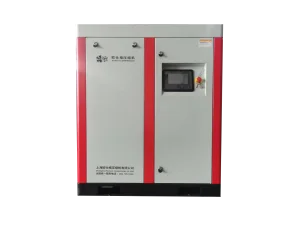
OEM 30kW Water-Lubricated Oil-Free VSD Screw Compressor (380V/440V)
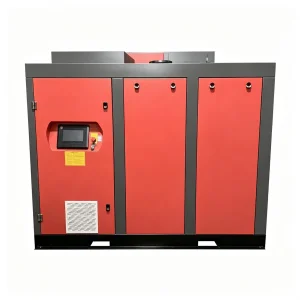
OEM Industrial Screw Vacuum Pumps – Oil-Injected & Oil-Free Series
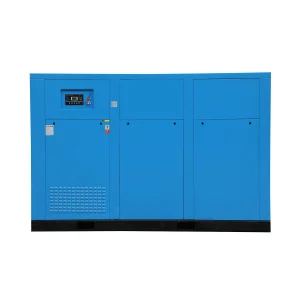
110kW/150HP Two-Stage Rotary Screw Compressor Permanent Magnetic 380V
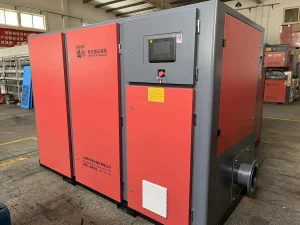
30kW Industrial Oil-Free VSD Screw Air Blower with PLC & PM Motor
Frequently Asked Questions for Brazilian Importers & Plant Engineers
Comprehensive answers regarding technical specifications, electrical grid compatibility, import documentation, and warranty coverage.