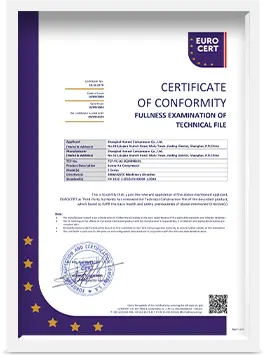
OEM Two Stage Screw Air Compressor Suppliers & Factories for India
Precision Thermodynamic Compression, Dual Permanent-Magnet Inverter Drives, and 50°C Tropicalized Resilience Engineered for India's Heavy Manufacturing Corridors.
High-Efficiency Two-Stage Compressor Series for Indian Industry
Engineered for uninterrupted 24/7 duty under severe tropical ambients. Each unit incorporates dual-rotor compression stages, reducing mechanical load and minimizing internal air slippage.
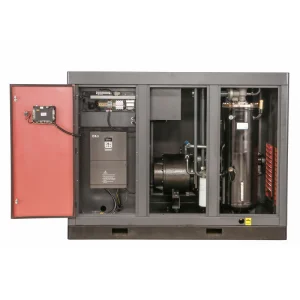
ODM Oil-cooled two-stage permanent magnet variable frequency screw air compressor Manufacturers, Suppliers
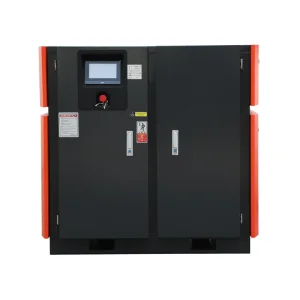
China Horizontal two-stage pressure screw air compressor Two Stage Screw Air Compressor Electric Screw Air Compressor Price Suppliers, Exporters
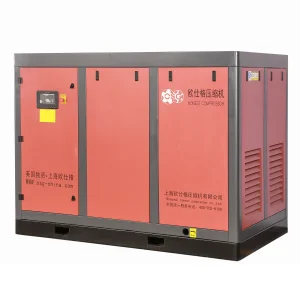
ODM IP55/54 55KW 75HP Factory Price Two Stage Industrial Screw Type Air Compressor Machine Factories, Exporters
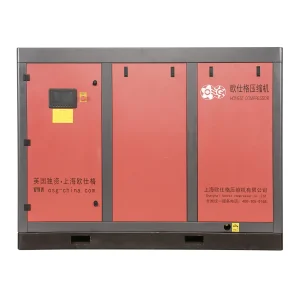
China 55KW 75HP 7-13bar air compressor two stage screw air compressor Direct Drive Screw Type Compressors with VSD PM motor and Inverter Factory, Factories
Compressed Air Economics in Modern Indian Manufacturing
Analyzing the collision of Make in India industrial expansion, surging electricity tariffs, and severe subcontinent operating environments.
India's transformation into a global manufacturing nexus—bolstered by the central government's Production Linked Incentive (PLI) schemes and aggressive infrastructure investment—has placed unprecedented stress on industrial utility infrastructures. Across high-output manufacturing belts such as Gujarat (Sanand, Dahej, Surat), Maharashtra (Pune, Chakan, Aurangabad), Tamil Nadu (Coimbatore, Sriperumbudur), and the National Capital Region (NCR), industrial electricity tariffs range between INR 7.50 to upwards of INR 11.00 per kilowatt-hour (kWh). In continuous-process environments, compressed air systems account for 20% to 40% of total plant electrical consumption, making energy efficiency a critical survival metric rather than a mere sustainability goal.
However, importing standard generic rotary screw air compressors into the Indian subcontinent often yields severe performance degradation. The operating realities of Indian industry present three distinct engineering challenges:
Extreme Subcontinent Ambient Heat
During the northern and western summer months, internal factory ambient temperatures routinely exceed 45°C to 48°C. Single-stage compressors experience severe oil thinning, frequent high-temperature trip faults, and thermal expansion mismatch inside the airend housing.
Airborne Particulates & Humidity
From cement clinker dust in central India to cotton micro-lint in Tirupur weaving sheds and monsoon relative humidity exceeding 95%, air intake systems face intense clogging and aggressive condensate formation within oil circulation loops.
Grid Voltage Fluctuations
Despite ongoing grid modernizations, heavy industrial feeders experience frequent line voltage sag, brownouts, and harmonic distortions (±10% to ±15% deviation from nominal 415V 50Hz), demanding heavy-duty reactor protection for sensitive inverter drives.
To overcome these subcontinent-specific hurdles, Indian plant directors and OEM machinery integrators are systematically abandoning legacy single-stage compressors. The transition toward Two-Stage Rotary Screw Air Compressors with Permanent Magnet Variable Speed Drives represents a fundamental engineering evolution—delivering unmatched thermodynamic stability, reduced mechanical wear, and lower specific energy consumption (kW/m³/min).
Thermodynamic Roadmap: Why Two-Stage Compression Outperforms
Splitting the pressure ratio across two distinct rotor sets approaches the ideal isothermal compression curve, eliminating parasitic thermal waste.
In standard gas compression physics, compressing air from ambient atmospheric suction pressure (1 bar absolute) up to typical workshop pressure (8 to 10 bar absolute) in a single rotor set forces an aggressive pressure ratio exceeding 8:1 to 10:1. This steep gradient induces intense adiabatic heat generation, pushing internal air temperatures past 100°C within fractions of a second. High temperature forces thermal air expansion, creating massive back-leakage (volumetric slip) across the narrow tolerances between the male and female screw lobes, wasting valuable kilowatt-hours.
The Two-Stage Solution: By dividing compression into a low-pressure stage (Stage 1) and a high-pressure stage (Stage 2), the overall compression ratio is split symmetrically according to the geometric mean formula: Pressure Ratio per Stage = √(Total Pressure Ratio). For an 8-bar final delivery, each stage only operates at a gentle ratio of approximately 2.8:1.
Inter-Stage Oil Curtain Cooling
Between Stage 1 and Stage 2, finely atomized oil is injected directly into the compressed air transition chamber. This creates an immediate intercooling effect, stripping sensible heat from the partially compressed air before it enters the second rotor cavity. The compression cycle bends away from wasteful adiabatic curves and moves toward isothermal compression, reducing shaft work demand by 12% to 18% outright.
Drastic Bearing Load Reduction
Because the pressure differential (ΔP) across each rotor profile is substantially lower than single-stage architectures, axial and radial mechanical thrust forces on rotor bearings are cut by up to 50%. This lower mechanical stress extends SKF/FAG explorer-grade bearing design lives past 100,000 operational hours—a critical reliability safeguard for continuous Indian process plants.
Engineering Comparison: Single Stage vs. Two-Stage Under Indian Ambient Conditions
Field test data collected across industrial installations in western and central India demonstrates significant efficiency deltas between single-stage and two-stage units running at equal delivery capacities under identical 42°C summer ambients:
| Engineering Metric | Standard Single-Stage Compressor | Honest Two-Stage PM VFD Compressor | Operational Impact for Indian Plants |
|---|---|---|---|
| Specific Power Consumption (SER) | 7.2 – 8.1 kW / (m³/min) | 5.4 – 6.1 kW / (m³/min) | Direct 20–28% reduction in plant power billing |
| Airend Discharge Temperature | 95°C – 108°C | 72°C – 82°C | Eliminates high-temp trips; prevents oil carbonization |
| Rotor Volumetric Efficiency | 82% – 85% | 94% – 97% | Maximum compressed air delivery per shaft rotation |
| Internal Differential Pressure (ΔP) | 0.7 – 0.9 MPa per rotor | 0.3 – 0.4 MPa per rotor | Halves rotor deflection and internal gas bypass slip |
| Bearing Operating Lifespan (L10h) | ≈ 40,000 – 50,000 Hours | > 100,000 Hours | Double the operational life before major airend overhaul |
| Noise Emission Level | 78 – 82 dB(A) | 66 – 72 dB(A) | Complies with Indian Factory Act occupational safety norms |
Engineered Compressed Air Packages for India's Core Industries
Custom-tuned solutions engineered to meet the operational demands, duty cycles, and environmental realities of key manufacturing sectors.
Textile Spinning & Air-Jet Looms
Clusters: Surat, Coimbatore, Tirupur, Bhilwara.
Operational Profile: Continuous 24/7/365 baseload operation demanding constant 5.5 to 7.0 bar pressure. Air-jet weaving looms consume massive air volumes where pressure dips cause automated loom shutdowns and fabric defects. Two-stage direct-drive units deliver rock-solid header pressure with lowest Specific Power Consumption.
Automotive Component Manufacturing
Clusters: Pune-Chakan, Chennai-Oragadam, Gurugram-Manesar.
Operational Profile: Highly volatile air demand curves driven by pneumatic stamping presses, robotic welding fixtures, and paint finish booths. PM VFD variable speed tracking adjusts motor RPM instantly to demand drops, preventing wasteful off-load power consumption during shift changeovers.
Chemical, Petrochem & Fertilizers
Clusters: Dahej PCPIR, Ankleshwar, Visakhapatnam.
Operational Profile: Corrosive coastal ambients containing sulfur dioxide, chlorine, and high sea-salt aerosol. Honest provides stainless steel inter-stage piping, 316SS oil separator vessels, C5-M rated heavy marine anti-corrosion cabinet coatings, and explosion-proof Ex-d motor options.
Pharmaceutical & API Formulation
Clusters: Hyderabad Genome Valley, Baddi, Vapi.
Operational Profile: Zero tolerance for oil contamination in cleanroom environments, tablet coating, and pneumatic powder conveying. Paired with water-lubricated oil-free or dry-screw options delivering ISO 8573-1 Class 0 certified zero hydrocarbon air with high-efficiency dew point desiccant dryers.
Steel Forging & Foundry Metallurgy
Clusters: Jamshedpur, Raipur, Bellary, Ludhiana.
Operational Profile: High ambient furnace radiant heat, heavy airborne iron oxide scale dust, and shock mechanical vibration. Employs IP55 enclosed heavy-gauge structural skid frames, dual-stage heavy cyclone air pre-cleaners, and high-margin oversized plate-fin oil coolers.
Cement & Pneumatic Silo Conveying
Clusters: Rajasthan, Andhra Pradesh, Madhya Pradesh.
Operational Profile: Non-stop conveying of abrasive raw meal and finished cement powder. Low-pressure two-stage configurations operating at 3.5 to 5.0 bar provide ultra-high CFM flow rates without the throttling losses of high-pressure machines, drastically cutting bagging plant operating costs.
China Factory 4.0: Supply Chain Resilience & OEM Advantages
How Shanghai Honest Compressor Co., Ltd. leverages vertical manufacturing integration, British engineering heritage, and precision robotics to deliver superior OEM solutions for Indian buyers.
Headquartered in Malu Town, Jiading District, Shanghai, Shanghai Honest Compressor Co., Ltd. operates a state-of-the-art 50,000 square meter manufacturing complex founded in 2004 with British engineering origins. Unlike regional assemblers who purchase off-the-shelf third-party components and assemble them in small workshops, Honest Compressor controls the entire mechanical value chain under ISO 9001 and CE certified rigorous protocols.
Precision Rotor Machining & Profiling
The efficiency of a screw compressor depends entirely on rotor profile tolerances. Honest utilizes imported German Klingelnberg rotor grinding machinery and Japanese Mazak 5-axis horizontal machining centers to maintain rotor clearances within 3 to 5 microns (0.003–0.005 mm). Our proprietary 5:6 asymmetrical lobe profile maximizes enclosed air pocket volume while minimizing seal contact friction.
In-House Pressure Vessel & Motor Fabrication
From automated submerged-arc welding of ASME/CE-compliant air-oil separation vessels to precision stator coil insertion for oil-cooled permanent magnet synchronous motors (PMSM), complete in-house fabrication insulates Indian procurement clients from third-party supply chain bottlenecks, guaranteeing consistent batch-to-batch quality.
OEM & Private Label Customization for Indian Machinery Brands
Honest Compressor acts as the strategic manufacturing backbone for major Indian machinery distributors, compressor brands, and turnkey EPC contractors. Our comprehensive OEM/ODM customization services include:
- Electrical Grid Adaptation: Native factory winding and testing for 415V ±10%, 50Hz, 3-phase Indian power specifications, complete with built-in input line AC reactors to suppress voltage spikes and harmonics.
- Tropicalized Oversized Heat Exchangers: Radiators, intercoolers, and oil heat exchangers expanded by 35% to 45% surface area compared to European standard sizing, ensuring discharge temperatures remain safe even when ambient room temperatures peak at 50°C.
- Bilingual AI IoT Smart Controllers: High-resolution touchscreen microcomputer controllers featuring dual English and Hindi user interfaces, integrated RS485 Modbus RTU communication for DCS integration, and 4G cloud remote monitoring telemetry.
- Full Private Label Brand Packaging: Custom enclosure sheet metal fabrication, RAL electrostatic powder coat color matching, silkscreen laser client branding, and export-compliant treated seaworthy wooden crating designed for Mumbai (Nhava Sheva), Chennai, or Mundra port clearance.
Indian Regulatory Compliance & Life-Cycle Cost (LCC) Economics
Aligning global manufacturing standards with the Bureau of Indian Standards (BIS) and Bureau of Energy Efficiency (BEE) guidelines for maximum procurement assurance.
Industrial procurement engineers know that the initial capital expenditure (CAPEX) of an industrial air compressor accounts for barely 10% to 12% of its total Life-Cycle Cost over a 10-year operating horizon. General maintenance, consumable filter replacements, and lubricants constitute approximately 8% to 10%. An overwhelming 78% to 82% of the total 10-year financial footprint is purely electrical energy consumption.
Regulatory Compliance: BIS & BEE Star Ratings
Our motors and electrical control panels are engineered in strict alignment with IS/IEC 60034 standards, qualifying for high-tier Bureau of Energy Efficiency (BEE) ratings. Every two-stage compressor undergoes strict Free Air Delivery (FAD) performance testing in accordance with ISO 1217:2009, Annex C / Annex E, guaranteeing that the kW/m³/min power guarantees quoted on data sheets match actual field instrumentation on Indian plant floors.
10-Year Life Cycle Cost (LCC) Optimization
By shifting an Indian manufacturing plant consuming 30 m³/min (approx. 1060 CFM) from a legacy single-stage fixed-speed unit to an Honest Two-Stage PM VFD compressor, annual electricity savings average between 110,000 kWh and 165,000 kWh. At an industrial tariff rate of INR 8.50/kWh, this translates to annual operational savings of INR 935,000 to INR 1,402,500—delivering full CAPEX payback within 11 to 14 months.
Specialized Compressors, Oil-Free Packages & Vacuum Systems
Complete air solution spectrum certified for Indian industrial applications—from petrochemical refineries to pharmaceutical cleanrooms.
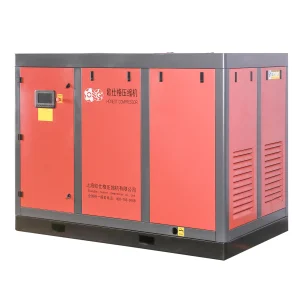
OEM Two-stage Screw air Compressor Chemical Factory Air Equipment Two-stage Screw air Compressor Manufacturer, Factory
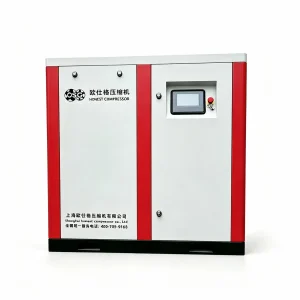
OEM Oil Free Water Lubricated Screw Air Compressor 37kW Supplier, Factories
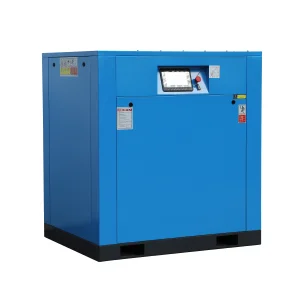
OEM 30kW 40HP Permanent Magnet VFD Air Compressor Manufacturers, Factories
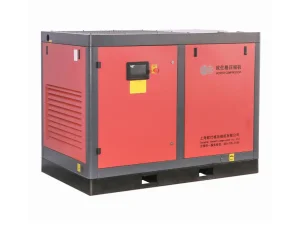
OEM Energy Saving Air Cooling Screw Compressor Two Stage Direct Driven Screw Air Compressor Manufacturers, Exporters
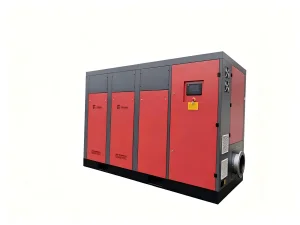
ODM Industrial Screw Vacuum Pump Oil Free High Efficiency Vacuum Pump for Semiconductor & Chemical Industry Manufacturer, Factories
ODM Oil-cooled two-stage permanent magnet variable frequency screw air compressor Manufacturers, Suppliers
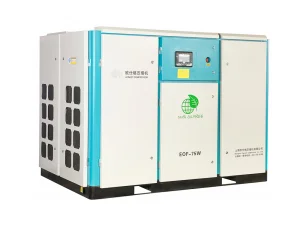
China 55kw to 315kw Oil free screw air compressor with dry type fixed speed or VSD PM type Suppliers, Exporters
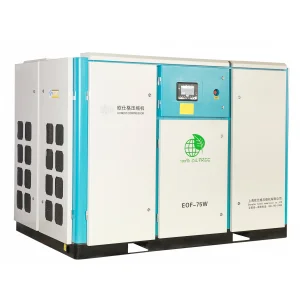
China Honest Compressor -EOF series Oil-Free Dry Type Screw Compressor | 100% Oil-Free PM VFD Manufacturer, Exporter
Enterprise Procurement Sizing Protocol for Subcontinent Ambients
A step-by-step engineering calculation guide to prevent thermal derating and undersizing in high-temperature regions.
When selecting rotary screw compressors for installation across northern and central India, plant engineering teams must account for critical thermodynamic de-rating factors. Sizing a machine based purely on nominal catalogue data generated under ISO standard conditions (20°C, 1 bar, 0% relative humidity) results in severe air deficits during peak summer.
Step 1: Atmospheric Density Derating
At an ambient summer temperature of 45°C, air density drops by approximately 8.5% compared to 20°C baseline conditions. The actual mass flow of air ingested by the compressor decreases proportionately. Sizing engineers must apply an ambient temperature correction factor: FAD_actual = FAD_required × (T_ambient_Kelvin / 293.15) to maintain process CFM requirements.
Step 2: Electrical Derating Safeguards
Standard induction motors suffer severe winding insulation thermal stress when operated in switchgear rooms exceeding 40°C. Honest utilizes Class H insulated motor windings rated up to 180°C with Class F temperature rise margins, paired with oil-cooled stator cooling jackets that keep motor winding temperatures below 85°C regardless of external ambient spikes.
Step 3: Intercooling Condensation Purge
Under monsoonal high humidity (RH > 90%), substantial moisture condenses out of the air stream during inter-stage cooling between Stage 1 and Stage 2. Honest integrates an automated centrifugal water separator and zero-loss solenoid drain between stages, preventing liquid water droplets from entering the second-stage rotor cavity and compromising lubricating oil integrity.
Frequently Asked Questions on Importing & Operating Two-Stage Compressors
Direct engineering answers addressing Indian electrical grid compatibility, BIS compliance, thermal reliability, and logistics.
How does Honest adapt electrical systems for Indian grid voltage fluctuations?
Standard machines are built for 415V, 3-Phase, 50Hz electrical supply. Because Indian industrial grids frequently experience ±10% to ±15% voltage deviations along with harmonic spikes, our control cabinets incorporate heavy-duty AC input reactors, EMC/EMI filters, and high-tolerance Schneider/Inovance variable frequency drive modules protected with surge suppressors.
What is the actual payback period of a Two-Stage PM VFD over a Single-Stage machine?
For an average 75kW (100HP) air compressor running 6,000 hours per year at an industrial tariff rate of INR 8.50 per kWh, a 25% energy reduction generates annual power savings of approximately INR 950,000. Considering the incremental purchase price of a two-stage PM VFD machine over a single-stage unit, full capital expenditure payback is typically achieved within 10 to 14 operational months.
How do Two-Stage compressors prevent high-temperature trips during Indian summers?
In single-stage compressors, high pressure ratios drive discharge temperatures near the safety cutoff limit (105°C). In Honest two-stage systems, the pressure ratio is divided, and inter-stage oil mist cooling lowers intermediate air temperature before final compression. Furthermore, our tropicalized cooling heat exchangers are oversized by up to 40%, ensuring steady operation in 48°C+ ambients.
Can you provide custom private label (OEM) configurations for Indian distributors?
Yes. Over 40% of our export production is dedicated to OEM and ODM clients. We provide custom-colored powder-coated enclosures, specialized structural footprints, customer-branded touchscreens, custom user interfaces (English/Hindi), and full technical documentation kits ready for local market distribution.
What is the residual oil carryover in Honest oil-injected two-stage units?
Through our multi-stage cyclonic mechanical pre-separation and high-efficiency borosilicate micro-glass separator elements, residual lubricating oil carryover is maintained below 2 parts per million (ppm or mg/m³). For pharmaceutical, API, or electronics cleanroom requirements, we provide 100% Class 0 dry-screw and water-lubricated options.
What are the sea shipping transit times and customs documentation protocols?
Shipments depart directly from Shanghai Port to major Indian container ports including Nhava Sheva (JNPT Mumbai), Mundra (Gujarat), and Chennai Port. Standard ocean transit times range from 14 to 22 days. We issue comprehensive export documentation including Certificate of Origin, Form AI (where applicable), Bill of Lading, and pre-shipment FAT test logs for customs clearance.
Request Sizing Consultation & OEM Pricing for India
Connect directly with our senior application engineers in Shanghai. Get customized technical data sheets, FAD calculations adjusted for your plant's ambient conditions, and FOB/CIF quotation schedules within 24 hours.