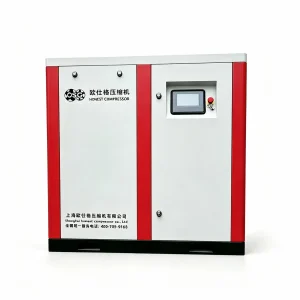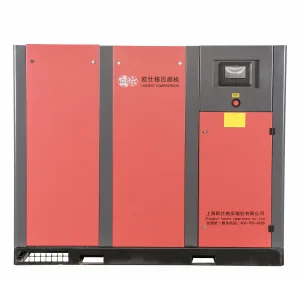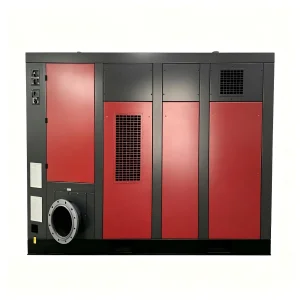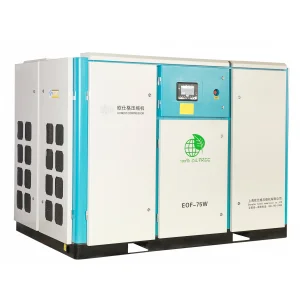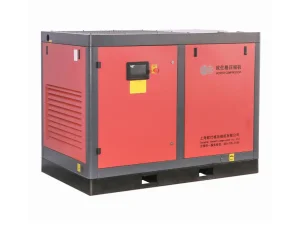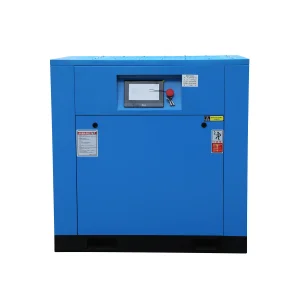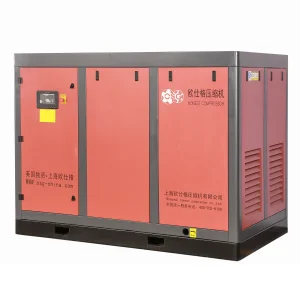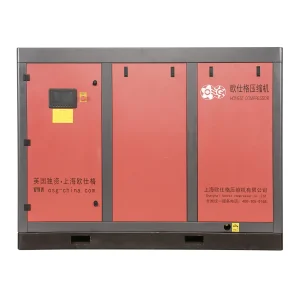
High-Efficiency Rotary Screw & Oil-Free Systems
Engineered for intensive 24/7 continuous manufacturing duty, certified under ISO 9001 and ISO 1217 standards with verified low specific energy consumption (SER).
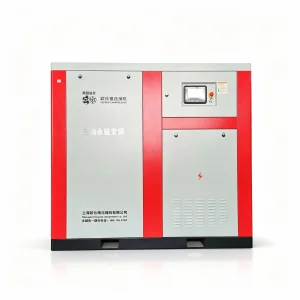
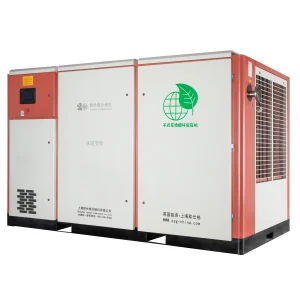
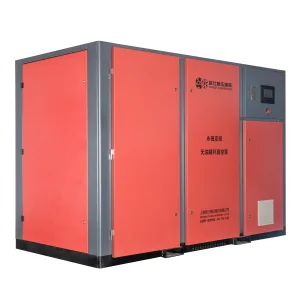
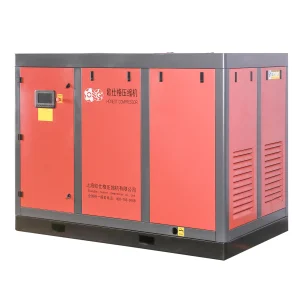
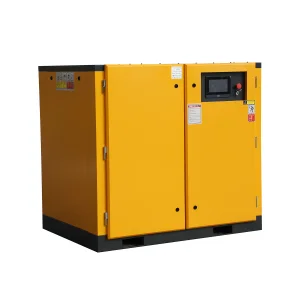
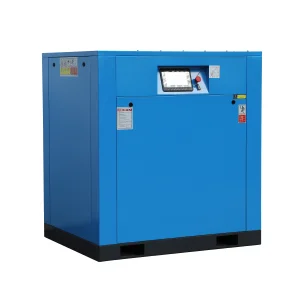
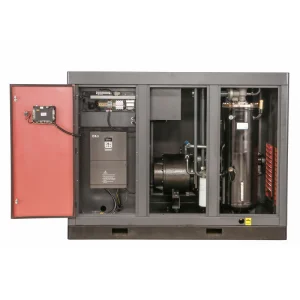
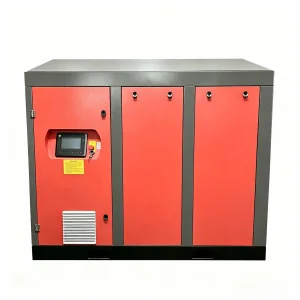
The 75kW Air Compressor Industrial Ecosystem in China
In global industrial manufacturing, the 75kW (100 horsepower) rotary screw air compressor holds a unique thermodynamic and economic position. Generating free air delivery (FAD) typically ranging from 11.5 m³/min to 14.8 m³/min (406 to 522 CFM) across pressure ranges of 7.0 to 13.0 bar gauge, the 75kW envelope forms the backbone of mid-to-large tier pneumatic operations. From Tier-1 automotive welding cells and automated glass-forming machines to bulk pharmaceutical powder conveyance and chemical crystallization plants, selecting the optimal 75kW air compression topology dictates operational expenditure for decades.
Over the last decade, China has transitioned from a high-volume component producer into the epicenter of high-precision aerodynamic screw profile engineering and rare-earth motor integration. Headquartered within world-class engineering clusters such as Malu Town, Jiading District, Shanghai, premier manufacturers like Honest Compressor (established in 2004 as a British-invested enterprise spanning over 50,000 square meters) have led the convergence of Western rotor profile tolerances with China’s formidable supply chain efficiencies. The integration of domestic Klingelnberg and Kapp Niles rotor grinding centers, high-vacuum casting lines, and direct access to state-controlled NdFeB (Neodymium-Iron-Boron) permanent magnet supplies has radically shifted total cost of ownership (TCO) benchmarks for international procurement teams.
Supply Chain Density
Concentrated raw materials, localized casting foundries, and in-house rotor precision milling drastically compress lead times and production overheads compared to European operations.
NdFeB Magnet Supremacy
Direct access to China's domestic rare-earth supply chain allows cost-effective deployment of ultra-high coercivity permanent magnet synchronous motors (PMSM) rated to 180°C demagnetization safety.
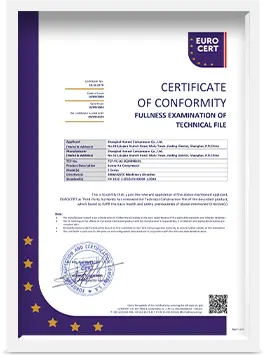
Export Certification
Full conformance with CE Directive 2006/42/EC, ASME Section VIII Division 1, ISO 8573-1 air purity standards, and global grid electrical standards (380V/400V/460V @ 50/60Hz).
OEM & ODM Flexibility
From bespoke packaging dimensions, dual PLC controls, explosion-proof Ex d IIB enclosures to private branding for multinational machinery distributors across 50+ export jurisdictions.
Thermodynamic Deep-Dive: 75kW System Engineering
Evaluating internal aero-mechanical losses, specific energy requirements, and the thermodynamic shift from single-stage to two-stage compression cycles.
1. Two-Stage Compression Mechanics vs. Single-Stage Isothermal Gap
In a standard single-stage 75kW oil-injected compressor operating at 8.0 bar gauge (approx. 9.0 bar absolute), the pressure ratio across a single rotor set exceeds 8.8:1. This aggressive compression curve induces elevated discharge temperatures ($>90^\circ\text{C}$), generating internal thermal gas expansion, elevated radial bearing loads, and significant back-leakage along the rotor sealing lines. Consequently, the polytropic compression cycle diverges sharply from the ideal isothermal curve, wasting electrical input as rejected heat.
To overcome this, modern Chinese manufacturing centers deploy dual-stage 75kW compressors. By dividing the compression cycle into a low-pressure stage (LP) and high-pressure stage (HP), the total pressure ratio is distributed as:
Between the LP and HP rotor chambers, atomized cooling oil is introduced to cool the compressed medium. Lowering the intake temperature of the second stage reduces gas volume and compression work. This intercooling approach brings the operational curve dramatically closer to the theoretical isothermal ideal, saving between 8% to 15% specific power consumption ($kW/(m^3/min)$) under sustained 100% full-load regimes.
2. 5:6 Asymmetric Rotor Profile Geometry & Dynamic Clearance
The core of modern 75kW airends utilizes an advanced asymmetric 5:6 tooth profile (5 lobes on the male drive rotor, 6 flutes on the female driven rotor), replacing legacy 4:6 configurations. The 5:6 design achieves several critical structural and fluidic objectives:
- Reduced Contact Stress: Higher bending strength on the male rotor teeth allows higher torque delivery with zero plastic deformation under transient pressure spikes.
- Minimization of Blow-Hole Area: The contact line geometry forms a tighter hydrodynamic seal, diminishing internal fluid slip back to the suction port and maintaining volumetric efficiencies upwards of 95%.
- Optimized Tip Speeds: Machined to exact clearances (under 30 to 45 microns), tip peripheral velocity is preserved in the sweet spot between 28 m/s and 34 m/s, mitigating ultrasonic turbulence losses.
3. Variable Speed Drives (VFD) and IE4/IE5 Synchronous PM Motors
Conventional fixed-speed compressors operate via mechanical inlet valve throttling or repetitive "load/unload" cycles. During the unload state, an idling 75kW induction motor still draws 25% to 40% of its rated electrical power without producing any useful air. In contrast, variable frequency direct-drive systems eliminate unload waste entirely by modulating motor rotational speed from 1,200 RPM up to 3,600 RPM based on high-frequency pressure sensor inputs.
Chinese factories utilize oil-cooled Permanent Magnet Synchronous Motors (PMSM) featuring high-grade neodymium magnets (grades N42SH to N38UH) with temperature thresholds exceeding 180°C. Coupled with specialized vector frequency converters running closed-loop PID control algorithms, system pressure is held within a ultra-tight band of ±0.01 MPa (0.1 bar), eliminating the unnecessary over-pressurization energy penalty (where every 1 bar excess pressure corresponds to an approximate 7% surge in electrical consumption).
Class 0 Water Lubrication
Using purified reverse-osmosis water as the cooling and sealing medium. Delivers absolute zero-hydrocarbon ISO 8573-1 Class 0 air, utilizing ceramic polymer composite bearings to resist scaling.
Direct-Coupled 1:1 Drive
Eliminating transmission belts and reduction gearboxes. The motor shaft couples directly or shares an integrated shaft with the male rotor, eliminating mechanical transmission losses by 3% to 5%.
Thermostatic Heat Recovery
Integrated counter-flow plate heat exchangers capture up to 78% of the 75kW thermal rejection, feeding industrial boiler feed-water preheating or facility space heating circuits with zero fuel burn.
Engineering Matrix: 75kW Air Compressor Configurations
Comparative thermodynamic, acoustic, and electrical parameters across standard single-stage, premium two-stage PM VFD, and oil-free water-lubricated topologies.
| Performance Parameter | Standard Single-Stage Screw | Premium Two-Stage PM VFD | Oil-Free Water-Lubricated (EOWV) | Dry Screw Oil-Free (EOF) |
|---|---|---|---|---|
| Nominal Shaft Power | 75 kW (100 HP) | 75 kW (100 HP) | 75 kW (100 HP) | 75 kW (100 HP) |
| Free Air Delivery (FAD @ 8 bar) | 12.2 - 12.8 m³/min | 13.8 - 14.5 m³/min High Output | 11.8 - 12.4 m³/min | 12.0 - 12.6 m³/min |
| Specific Energy Requirement (SER) | 6.6 - 7.1 kW/(m³/min) | 5.4 - 5.8 kW/(m³/min) Optimal | 6.8 - 7.3 kW/(m³/min) | 6.9 - 7.4 kW/(m³/min) |
| Motor Energy Class | IE3 Premium Efficiency | IE4 / IE5 Ultra-Premium PMSM | IE4 PM Synchronous | IE4 PM Synchronous |
| Air Purity Class (ISO 8573-1) | Class 2-3 (Oil aerosol < 3ppm) | Class 2-3 (Oil aerosol < 2ppm) | Class 0 (100% Oil-Free) | Class 0 (100% Oil-Free) |
| Acoustic Emission Level | 75 ± 3 dB(A) | 68 ± 2 dB(A) Low Noise | 66 ± 2 dB(A) | 72 ± 2 dB(A) |
| Turndown Modulation Ratio | Fixed / Load-Unload (0% or 100%) | 25% to 100% Continuous Flow | 30% to 100% Continuous Flow | 35% to 100% Continuous Flow |
| Initial Capex vs. TCO Balance | Lowest upfront, highest power cost | Moderate upfront, lowest TCO | High upfront, pristine purity | Highest upfront, zero moisture/oil |
Life Cycle Cost (LCC) Dynamics for 75kW Deployments
Understanding why electricity accounts for 77% of a compressor's 10-year total expenditure, and how Chinese engineering mitigates financial risk.
In industrial plant equipment procurement, the capital expenditure (the invoice purchase price) represents merely the visible tip of an economic iceberg. When sizing a 75kW continuous duty air compressor over a standard 10-year operating horizon (assuming 8,000 running hours annually, equating to a typical 24/7 tri-shift manufacturing schedule), the aggregate Life Cycle Cost follows a stringent distribution:
Electrical Energy Costs
Over 10 years, power consumption costs dwarf all other factors. A 75kW machine running at nominal load consumes approximately 600,000 kWh per annum.
Initial Capital Purchase
The factory invoice, shipping freight, customs clearance, electrical switchgear installation, and plant room ducting infrastructure.
Preventive Maintenance
Consumables, semi-synthetic or synthetic polyalphaolefin (PAO) lubricants, air/oil separator filter elements, valve rebuilds, and labor overhaul cycles.
Quantitative Financial Simulation: Standard Fixed-Speed vs. Chinese Two-Stage PM VFD
To demonstrate the economic divergence, consider an industrial casting facility operating a continuous pneumatic network with an average 70% duty cycle, electrical tariffs pegged at $0.14 per kWh, running 8,000 hours per year:
This empirical calculus underscores why enterprise procurement managers prioritize China-based manufacturers with validated PM VFD platforms. The total machine investment of an advanced Chinese 75kW compressor is routinely amortized through verified electricity savings within 8 to 14 months of initial factory commissioning.
Industrial Applications for 75kW Air Compressors
Engineered solutions deployed across international manufacturing centers, harsh operational environments, and cleanroom facilities.
Automotive & Stamping Lines
75kW two-stage units power high-cycle robotic spot welding clamps, pneumatic laser-cutting sheet lifters, and electrostatic paint applicator guns requiring rock-solid 8.5 bar stability without pressure droop.
Precision Cleanrooms & Optics
Oil-free water-lubricated (EOWV) models supply Class 0 air for wafer blowing, surface mount technology (SMT) pick-and-place nozzle feeds, and thin-film coating where zero oil molecules are tolerated.
Chemical & Polymer Production
Equipped with Ex d IIB explosion-proof rated motors and electrical controls. Units ensure safe, non-sparking instrumentation air for pneumatic valve actuators and continuous purging of volatile chemical reactors.
Pharmaceutical Packaging
Supplying clean compressed air for tablet blister packaging, aerosol purge chambers, and sterile container blow-cleaning under strict FDA and GMP cleanliness validations with desiccant drying chains.
Glassware & PET Blow Molding
Continuous base-load 75kW two-stage configurations interface directly with high-pressure booster compressors, supplying consistent 10-13 bar pre-forming air for high-speed beverage bottle filling lines.
Heavy Mining & Sandblasting
Robust, heavy-duty skid-mounted 75kW packages engineered with specialized heavy-particulate nano-fiber intake filters, operating reliably in abrasive, dust-laden ambient quarry environments.
Buyer's Roadmap: Auditing a Chinese 75kW Compressor Factory
Key quality assurance checkpoints, factory acceptance testing (FAT) requirements, and electrical specifications for global plant integration.
When procuring industrial machinery from overseas exporters, engineering managers and procurement agents must verify compliance across mechanical, electrical, and operational quality control gates. Below are standard criteria enforced during on-site inspections at premier Shanghai manufacturing plants:
1. Airend In-House Machining
Verify whether the manufacturer precision-grinds their own male and female rotors or purchases third-party airends. Premier builders employ Klingelnberg rotor profile grinders with Zeiss Coordinate Measuring Machine (CMM) inspection.
2. Dynamic Balancing & ISO 1940
Rotor shaft assemblies and motor couplings must be dynamically balanced to ISO 1940 Grade G2.5 or better to prevent high-frequency bearing chatter, radial runout, and premature seal destruction.
3. FAT Calibrated Testing
Require a certified Factory Acceptance Test (FAT) based on ISO 1217 Annex C/E nozzle flow meter setups. Insist on real-time data logs recording electrical input, FAD flow, discharge pressure, oil temperature, and vibration amplitude.
4. Global Voltage Harmonization
Specify input voltage requirements early: 380V/50Hz (Standard Asia/EU), 400V/50Hz (UK/EU), 460V/60Hz (USA), or 220V/60Hz (Americas). Inverter choke filters must comply with IEEE 519 harmonic standards.
The Next Horizon: Smart Connected Compression (2025–2030)
How edge artificial intelligence, predictive spectral diagnostics, and green grid integration are transforming industrial air generation.
Edge AI & Vibration Spectrum Analytics
Next-gen 75kW units integrate multi-axis accelerometer sensors and edge processors. Fast Fourier Transform (FFT) algorithms continuously detect bearing raceway micro-pitting weeks before catastrophic mechanical lockup occurs.
Integration with Industrial Microgrids
Air compressor controllers directly interface with rooftop solar PV inverters and battery energy storage systems (BESS). Variable frequency modulation adjusts air generation rates based on real-time on-site renewable power availability.
Low-GWP & Biodegradable Lubricants
Shifting to non-toxic, bio-synthetic polyol ester lubricants featuring operating lifespans over 10,000 running hours. Formulated to minimize carbon lacquering at high thermal thresholds and simplify end-of-life disposal.
Frequently Asked Technical Questions (FAQ)
Direct answers to the critical engineering, selection, and commissioning inquiries raised by global procurement and plant engineering specialists.
Specialized Industrial Rotary & Two-Stage Compressors
Explore our extended portfolio of water-lubricated units, two-stage direct-drive packages, vacuum systems, and variable frequency compressors.