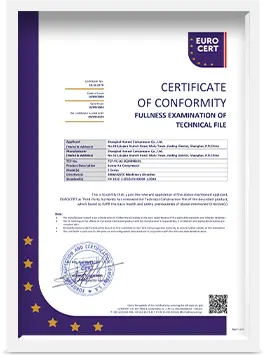
Precision Compressed Air Systems & OEM Equipment
Engineered for high thermodynamic efficiency, continuous 24/7 duty, and seamless coupling with heavy-duty buffer air receivers.
The Critical Engineering Role of Air Tanks in Heavy Industrial Infrastructure
In modern industrial pneumatic circuits, the compressed air storage vessel—commonly designated as an air receiver tank—serves far beyond a passive containment cylinder. It functions as an indispensable thermodynamic damper, mass-capacitance energy reservoir, and moisture separator.
Thermodynamic Equilibrium & Fluid Momentum Mitigation
Positive displacement compression systems, particularly high-output twin-screw and reciprocating compressors, release compressed air characterized by cyclic velocity surges, temperature gradients, and turbulent pressure pulsations. When an air tank is integrated downstream of the compressor discharge manifold, it functions as a primary momentum dissipator and expansion volume. By expanding into an expansive plenum, the fluid flow velocity plummets instantly, causing high-frequency pressure waves to equalize before entering distribution headers.
Simultaneously, this fluid deceleration induces passive thermodynamic cooling. As the elevated air temperature drops toward ambient conditions inside the large metal vessel shell, significant moisture vapor condenses out of the gas stream. Up to 40% to 55% of total airborne condensate and aerosolized lubrication droplets precipitate out of suspension within the receiver tank's quiescent bottom zone, relieving the operational load on downstream refrigerated or desiccant air dryers.
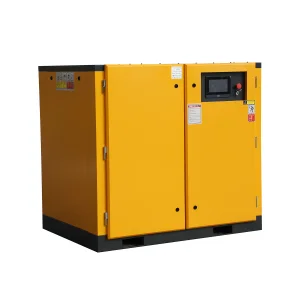
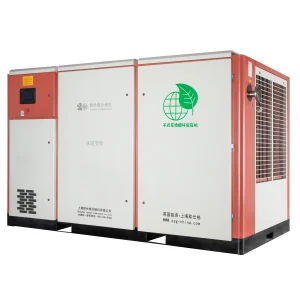
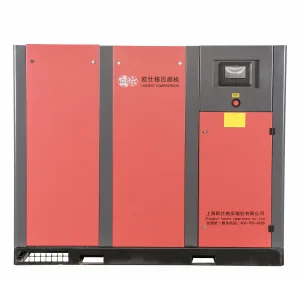
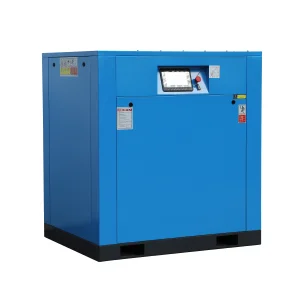
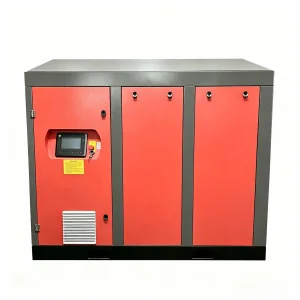
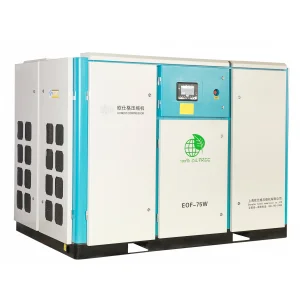
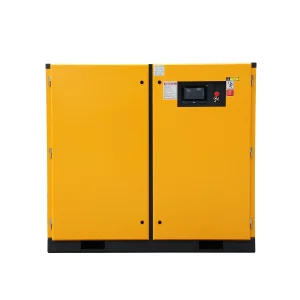
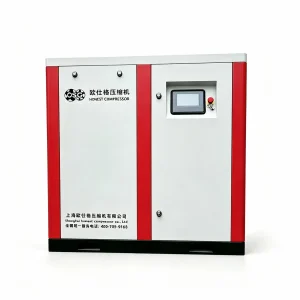
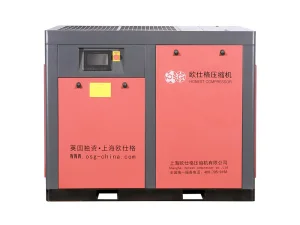
At Shanghai Honest Compressor Co., Ltd. (OSG), our British engineering pedigree since 2004 dictates that our rotary screw compressor packages—spanning PM VFD units, Class 0 dry-screw machinery, and two-stage high-efficiency platforms—are engineered with coordinated air capacitance. Our 50,000 m² automated manufacturing facility designs and configures air vessels that optimize system duty cycles, mitigate rapid motor restart penalties, and eliminate cycle hunting.
Pressure Spike Dampening
Dampens extreme pneumatic pulsations, evening out mass flow distribution across downstream laser cutters, robotic tooling, and instrumentation manifolds.
- Stabilizes plant header pressure to ±0.1 bar
- Eliminates pneumatic valve chatter
Primary Condensate Separation
Expands fluid volume and decreases velocity, forcing airborne moisture and oil aerosols to coalesce against inner walls and drain via auto-purge valves.
- Reduces dryer thermal workload by 35%
- Prevents desiccant bed premature saturation
Energy & Cycling Optimization
Creates a volumetric capacitance cushion that protects electric drive motors from destructive short-cycling, directly lowering monthly peak kW billing.
- Extends PM VFD drive and motor lifespan
- Supports short intermittent surge demands
Enterprise Procurement Shifts: Trends Reshaping Air Tank Sourcing
Procurement teams, plant engineers, and EPC contractors across North America, Europe, Southeast Asia, and the Middle East are re-evaluating air receiver acquisition strategies around total cost of ownership (TCO), safety compliance, and decarbonization.
Moving Beyond "Commodity Steel" to System-Engineered Vessels
Historically, air tanks were treated by procurement specialists as passive, interchangeable carbon-steel drums sourced from localized boiler works. However, the global emergence of permanent magnet variable frequency drives (PM VFD) and ultra-pure Class 0 oil-free compressor requirements has radically transformed technical procurement criteria.
Modern buyers now mandate Dual-Code Vessels (ASME Section VIII Div 1 & CE/PED) with verified fatigue cycle tolerances, internal polymer anti-corrosion barrier coatings, and calibrated nozzle dimensions that match variable airflow kinematics without generating parasitic delta-P (pressure drop).
Global Sourcing Priority Shift (2024-2030)
Analysis of enterprise RFP requisites across 500+ multinational industrial tenders:
Macro Industry Solutions: Strategic Receiver Placement & Architecture
Configuring compressed air containment requires thorough pneumatic flow mapping. The placement of air tanks fundamentally governs moisture containment, dew point stability, and peak air availability.
"Wet" Receiver Tank Architecture
Positioned immediately downstream of the rotary screw compressor's aftercooler and upstream of the desiccant or refrigerated air dryer.
- Dynamic Cooling: Allows hot discharge air to undergo thermal radiative dissipation, condensing water vapor before reaching air dryers.
- Dryer Protection: Absorbs turbulent pulsation velocities, safeguarding delicate desiccant beads from mechanical attrition and thermal shock.
- Condensate Collection: Serves as a sediment basin for micro-oil emulsions and heavy particulates.
"Dry" Receiver Tank Architecture
Installed downstream of refrigerated or adsorption dryers, directly before the plant distribution piping network.
- Instantaneous Demand Buffer: Supplies ultra-pure, dry air at a stable static pressure during sudden heavy pneumatic tool operations.
- Dryer Isolation: Prevents intermittent high-velocity air rushes from overwhelming dryer contact time limits and spiking pressure dew points.
- Stable Dew Point: Maintains constant instrument-grade air purity per ISO 8573-1 Class 1.2.1 standards.
Engineering Calculation: Volumetric Receiver Sizing Protocol
Undersized air receiver tanks trigger excessive compressor load/unload transitions, elevated contactor wear, and pressure hunting. Oversized tanks, while physically safe, incur unnecessary capital cost and extended initial system pressurization delays. Professional pneumatic sizing is calculated using the thermodynamic capacitance equation:
Where: V = Receiver volume required (m³ or ft³); t = Allowable discharge duration during peak excursion (minutes); C = Peak transient demand flow (m³/min); Q = Rated free air delivery output of operating compressor (m³/min); P_a = Atmospheric ambient pressure (1.013 bar absolute); P_1 = Initial header operational pressure; P_2 = Minimum allowable equipment pressure setpoint.
For variable demand applications driven by PM VFD compressors, standard design engineering mandates minimum capacitance between 10 to 15 liters per rated m³/min of compressor capacity, whereas fixed-speed units require 25 to 50 liters per m³/min to maintain energy-saving hysteresis bands.
Metallurgy, Automated Fabrication & Global Code Assurances
Pressure vessels endure cyclic fatigue stresses with every load cycle. Reliable manufacturing demands uncompromised metallurgy, robotic submerged-arc welding (SAW), and stringent non-destructive examination (NDE).
| Vessel Parameter | Carbon Steel Heavy-Duty Series | Stainless Steel Clean-Room Series (SS304/SS316L) | High-Pressure Nitrogen/Air Series |
|---|---|---|---|
| Base Metallurgy | Q345R / SA-516 Grade 70 (Normalized Boiler Plate) | AISI 304 / 316L Austenitic Stainless Steel | 16MnIV / High-Yield Alloy Steel (ASME SA-372) |
| Working Pressure Scope | 0.7 MPa to 1.6 MPa (100 to 232 PSI) | 0.8 MPa to 2.0 MPa (116 to 290 PSI) | 3.0 MPa to 40.0 MPa (435 to 5,800 PSI) |
| Internal Protective Lining | Heavy-build Epoxy-Phenolic Ceramic Polymer Lining | Passivated & Electropolished (Ra < 0.4 µm) | Anti-Oxidation Phosphate Conversion Coating |
| Welding Methodology | Dual-Torch Automatic Submerged Arc Welding (SAW) | Automated Orbital GTAW / TIG with Argon Purge | Multi-Pass SAW with Pre-Heat & Post-Weld Heat Treatment (PWHT) |
| Non-Destructive Testing (NDE) | 100% Radiographic Testing (RT) + Magnetic Particle | Radiographic Testing (RT) + Liquid Penetrant Inspection (PT) | 100% RT + Ultrasonic Testing (UT) + Hydrostatic at 1.5× WP |
| Target Industrial Sectors | Automotive Stamping, Foundries, General Manufacturing | Pharmaceutical, Food & Beverage, Semiconductor Class 0 | Laser Cutting, PET Bottle Blowing, Aerospace Gas Storage |
ASME Boiler & PV Code
Full compliance with ASME Section VIII Division 1. Registered with the National Board of Boiler and Pressure Vessel Inspectors (U/UM Stamp availability).
North America StandardCE / PED 2014/68/EU
Conforms to the European Pressure Equipment Directive (PED). Complete conformity assessment modules (B+D, H/H1) for unrestricted EU and UKCA export.
European Union ComplianceMOM & DOSH Certified
Engineered to meet statutory pressure vessel registrations under Singapore's Ministry of Manpower (MOM) and Malaysia's Department of Occupational Safety & Health (DOSH).
Southeast Asia ReadyCanadian CRN & TSG
Canadian Registration Numbers (CRN) validated across all provinces, alongside China TSG 21 Special Equipment Safety Technical Supervision standards.
Global JurisdictionsNext-Generation Air Receivers: Intelligence, IoT & Metallurgy
The convergence of Industry 4.0 and advanced mechanical metallurgy is elevating static air tanks into active, smart industrial nodes.
Ultrasonic IoT Shell Telemetry
Embedded acoustic wave and ultrasonic sensors continuously monitor shell thickness degradation, internal pitting, and stress fractures in real time.
- Modbus / OPC-UA digital cloud synchronization
- Eliminates surprise hydro-test shutdowns
Zero-Air-Loss Smart Purge Systems
Capacitive level sensors trigger motorized discharge manifolds only when liquid is detected, eliminating compressed air waste associated with timed solenoid valves.
- 100% zero purge air consumption
- Continuous clog detection & alarm reporting
Advanced Composite & Alloy Linings
Nanostructured graphene-polymer internal baked coatings prevent galvanic cell formations, delivering up to 30 years of design service life in harsh chemical environments.
- High resistance to acidic condensates
- Zero micro-scale coating flaking
Frequently Asked Questions: Industrial Air Tank Sourcing & Operation
In-depth technical answers addressing sizing, statutory certification, installation location, and maintenance protocols.
What is the fundamental difference between an ASME-coded air tank and a non-code vessel?
Should an air receiver tank be installed before ("wet") or after ("dry") the compressed air dryer?
How does proper air tank sizing prevent short-cycling in PM VFD and fixed-speed screw compressors?
What maintenance and periodic inspection protocols are required for heavy-duty industrial air tanks?
Can Shanghai Honest Compressor Co., Ltd. provide custom OEM and ODM air tanks?
Complete Compressed Air & Process Gas Solutions
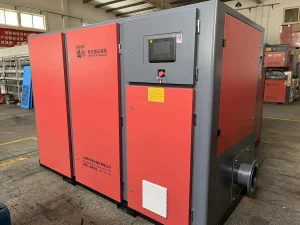
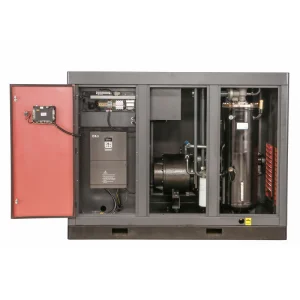
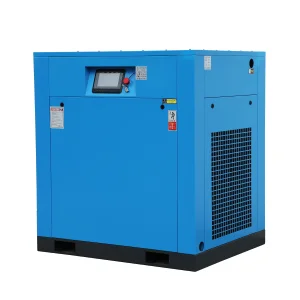
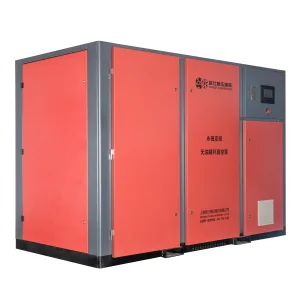
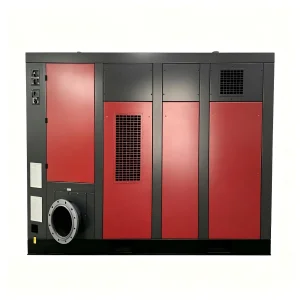
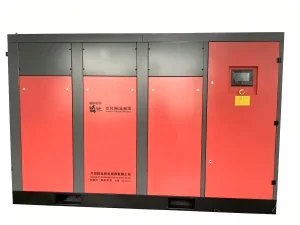
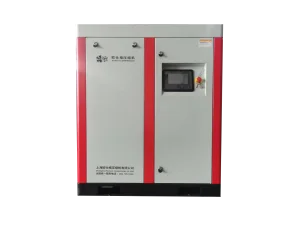
Explore our heavy-duty industrial product line engineered to pair with high-integrity pressure vessels for mission-critical applications.
Ready to Integrate High-Integrity Air Tanks with Your Compressed Air Systems?
Connect directly with the application engineering division at Shanghai Honest Compressor Co., Ltd. We provide comprehensive pneumatic network analysis, custom ASME Section VIII calculation sheets, and multi-voltage compressor packages tailored to your project requirements.