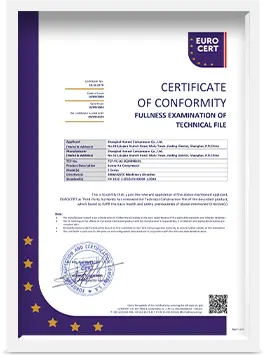
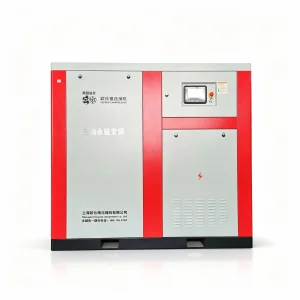
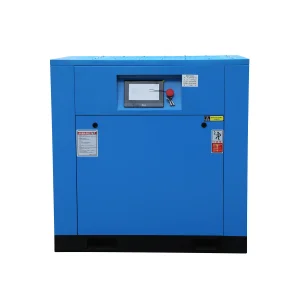
Primary Industrial Lineup for Sri Lankan Manufacturing
Engineered for high continuous uptime, zero oil aerosol contamination, and minimal power consumption per cubic meter of clean air delivered.
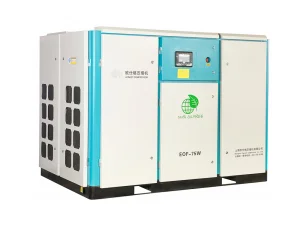
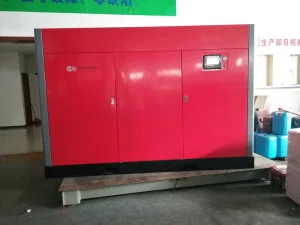
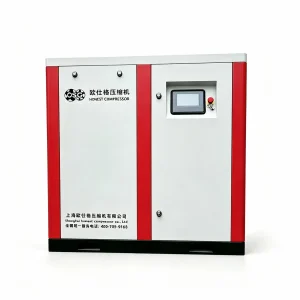
Oil-Free Compressed Air Infrastructure in Sri Lanka: Macro Trends & Challenges
An engineering analysis of industrial air demand across Sri Lanka’s export-oriented economic landscape.
Sri Lanka’s Energy Realities & The CEB Tariff Impact
Sri Lankan manufacturers operate under challenging commercial circumstances where industrial electricity tariffs revised by the Ceylon Electricity Board (CEB) make energy efficiency the single highest factor in operational profitability. In standard industrial plants running 6,000 to 8,000 hours per annum, the electrical consumption of a compressed air system accounts for up to 76% of its total lifecycle cost (TCO), outstripping the capital expenditure within 14 to 18 months.
Conventional oil-flooded screw air compressors reliant on inline downstream filtration fail to mitigate energy penalties because coalescing filter elements create continuous differential pressure drops (0.3 to 0.7 bar). By transitioning to direct dry-type or water-lubricated oil-free rotary screw platforms equipped with Permanent Magnet Variable Frequency Drives (PM VFD), industrial facilities in Western, Central, and Southern Provinces directly eliminate this parasitic pressure loss while matching air volume to demand curves in real-time.
Global Decarbonization & Export Quality Compliance
Globally, stringent ESG mandates and consumer protection directives (such as the EU Corporate Sustainability Due Diligence Directive and FDA CFR Title 21) have placed manufacturing supply chains under severe scrutiny. Sri Lanka's leading economic contributors—high-end apparel, premium Ceylon tea, rubber derivatives, and export pharmaceuticals—are subject to unannounced supply chain audits.
Standard coalescing filters in lubricated systems are vulnerable to catastrophic failure modes such as temperature-induced oil bypass, emulsion formation under high tropical moisture, and mechanical membrane degradation. True ISO 8573-1:2010 Class 0 certification eliminates the presence of oil in the compression chamber altogether, preventing product batch quarantine, costly brand recalls, and non-compliance penalties in international export markets.
Engineering Truth: The Difference Between "Technically Oil-Free" and True Class 0
Many systems marketed across South Asia utilize standard oil-injected screws bundled with multi-stage activated carbon absorption towers, claiming "Class 0 equivalent" air. However, when ambient temperatures in Colombo exceed 32°C, oil vapor pressure increases exponentially, shortening carbon filter lifespans from 1,000 hours to less than 200 hours. Authentic dry-screw and water-lubricated technologies do not introduce a single hydrocarbon drop into the air pathway, guaranteeing immutable Class 0 purity independent of maintenance variance.
Sector-Specific Deployments Across Sri Lankan Industrial Hubs
Targeted engineering solutions customized for the operational environments of Sri Lanka’s major export industries.
High-End Apparel & Textiles (Katunayake & Biyagama EPZ)
Sri Lanka’s apparel industry manufactures performance sportswear and intimate apparel for global fashion houses. High-speed pneumatic sewing systems, automated fabric spreading tables, and laser cutters cannot tolerate microscopic oil mists. A single oil vapor event can contaminate entire bolts of hydrophobic or breathable fabrics, causing irreversible bonding failures in waterproof taped seams and staining sensitive dyes.
Pure Ceylon Tea & Spice Value Addition (Kandy, Nuwara Eliya, Galle)
The organoleptic profile of orthodox Ceylon tea and high-grade Ceylon cinnamon is susceptible to aromatic hydrocarbon taint. In modern packaging lines, tea bag forming, vacuum conveying, and fluid-bed drying, air comes into direct contact with finished food-grade product. Oil-free screw compressors ensure the distinct sensory profile and export phytosanitary compliance of Sri Lankan teas remain uncompromised.
Dipped Rubber Gloves & Polymer Production (Western & Sabaragamuwa)
As one of the world's primary exporters of surgical and industrial protective latex gloves, Sri Lankan dipping plants operate pneumatic stripping systems, automated ceramic mold conveying, and continuous packaging tunnels. Oil traces in the compressed air lines coat ceramic formers, generating pinhole structural defects in ultra-thin medical gloves, resulting in rejected lots and regulatory FDA flags.
Pharmaceutical Manufacturing (Horana & Mirigama Zones)
Under Sri Lanka’s National Medicines Regulatory Authority (NMRA) and WHO-GMP audit rules, compressed air utilized in tablet coating, blister packaging, sterile dry vial blowing, and active ingredient agitation is classified as an active process gas. Water-lubricated oil-free screw compressors provide the baseline cleanliness required to pass microbiological and particulate validation protocols without risk.
Coconut Derivatives, Dairy & Bottling (Kurunegala & Gampaha)
Desiccated coconut processing, aseptic coconut water packaging, and PET bottle blow molding demand massive volumetric air flow free of aerosol oils. Hydrocarbon residues inside dairy or beverage containers trigger premature shelf spoilage and packaging seal delamination. Our 100% oil-free systems preserve microbiological stability and clean-in-place (CIP) pneumatic integrity.
Port Marine Logistics & Bulk Pneumatic Conveying (Colombo Port)
Colombo’s strategic transshipment port requires high-volume, reliable low-to-medium pressure pneumatic systems for dry cement offloading, grain silos, and chemical vessel nitrogen-air purges. In coastal environments where maritime salt air combines with industrial particulates, our marine-grade epoxy-coated oil-free compressors prevent rotor seizure and internal line contamination.
Thermodynamic Comparison: Dry-Type Screw vs. Water-Lubricated Oil-Free Systems
Evaluating the mechanical architectures, heat transfer behaviors, and operating characteristics suitable for Sri Lanka’s climate.
1. Dry-Type Two-Stage Rotary Screw
Dry-type oil-free screw compressors utilize precision-engineered male and female rotors synchronized through high-precision timing gears, operating with zero fluid in the compression chamber. To compensate for the lack of oil cooling and prevent thermal rotor expansion, dry-screw units split compression into two distinct stages with an intermediate intercooler.
- Specialized Rotor Coatings: Dual-layer PTFE / Molybdenum Disulfide or UltraCoat ceramic coatings guarantee corrosion resistance and constant gap sealing across 10+ years.
- Precision Mechanical Seals: Multi-labyrinth dynamic carbon ring seals vented to atmosphere ensure gear lube oil cannot cross the shaft boundary into the compression chamber.
- High-Temperature Tolerant: Handles stage discharge temperatures up to 220°C prior to intercooling, delivering stable thermodynamic efficiency in continuous 24/7 heavy base-load operations.
2. Single-Stage Water-Lubricated Oil-Free Screw
Water-lubricated screw compressors utilize purified industrial water injected directly into the compression chamber. The water serves three simultaneous thermodynamic functions: lubricating high-precision ceramic/polymeric rotors, dynamically sealing rotor clearances, and directly absorbing the heat of compression.
- Near-Isothermal Compression: The high specific heat capacity of water limits discharge air temperature to below 50°C, drastically lowering the theoretical work of compression compared to dry systems.
- Stainless Steel & Engineered Polymers: Rotors manufactured from austenitic stainless steel (SUS304/SUS316) or PEEK composites eliminate corrosion risks and eliminate timing gear complexity.
- Integrated Reverse Osmosis (RO) Purification: Onboard RO self-cleaning water conditioning modules maintain optimal electrical conductivity, preventing scale buildup on rotor profiles.
| Evaluation Parameter | Dry-Type Oil-Free Screw (2-Stage) | Water-Lubricated Oil-Free Screw | Conventional Oil-Flooded + Carbon Tower |
|---|---|---|---|
| ISO 8573-1 Air Purity | Certified Class 0 (Zero Contamination) | Certified Class 0 (Zero Contamination) | Class 1–2 (Risk of Oil Breakthrough) |
| Compression Process | Near-Adiabatic (Two-Stage Intercooled) | Near-Isothermal (Single-Stage Injection) | Polytropic (Oil Flooded) |
| Discharge Air Temperature | Stage 1: ~180°C | Final: 30°C–45°C | Direct: < 48°C (No Aftercooler Stress) | Direct: 75°C–90°C |
| Specific Energy Consumption | Low at full load (Two-stage efficiency) | Exceptional (Near-isothermal curve) | Moderate (Degrades with filter pressure drop) |
| High Tropical Humidity Tolerance | Excellent (Condensate drained at interstage) | Inherently self-regulating (Recycles condensate) | Poor (High risk of water emulsifying in oil) |
| Timing Gear Requirement | Precision Synchronized Gearbox Required | Direct-Drive / No Timing Gears Needed | Rotor-to-Rotor Contact Drive |
| Maintenance Consumables | Air filter, gearbox lube, shaft seals | Air filter, RO water cartridge, water filter | Lube oil, oil filter, air-oil separator, carbon beds |
Engineering Adaptations for Sri Lanka’s High-Humidity Coastal Operations
Standard off-the-shelf air compressors designed for temperate European climates face high thermal trips and motor failure rates when deployed in Sri Lanka without specific climate modifications.
46°C Tropicalized Heat Exchanger Dimensioning
Sri Lanka’s coastal industrial zones regularly sustain wet-bulb temperatures above 28°C and ambient dry-bulb heat reaching 38°C inside plant utility rooms. Our tropicalized configurations integrate oversized plate-fin aluminum or cupronickel water-coolers offering a 30% safety margin in thermal rejection capacity, preventing thermal trips during peak midday shifts.
Anti-Corrosive C5-M Marine Coating Systems
With industrial centers such as Colombo Port, Katunayake, and Galle located within proximity to the Indian Ocean, atmospheric salinity accelerates structural oxidation. Machine chassis, internal structural piping, and electrical enclosures receive multi-coat polyurethane C5-M marine-grade epoxy coatings with tin-plated electrical terminals to resist salt-fog degradation.
Wide Voltage Range Motors & Line Reactor Protection
Industrial plants outside primary Colombo corridors occasionally encounter voltage fluctuations (380V ±15%) and power surges during monsoon lightning activity. Our IE4/IE5 permanent magnet motors are wound with Class H vacuum pressure impregnated (VPI) insulation and protected by dedicated input AC line reactors and transient surge suppression modules.
Macro Compressed Air System Solutions: From Intake to Point of Use
A compressed air station is a comprehensive thermodynamic chain. Our engineering team designs entire utility ecosystems to ensure sustained pressure stability across your factory.
Centralized Smart Sequencers & IoT Monitoring
For large production installations operating multiple compressor units (e.g., three 75kW units in Katunayake EPZ), running separate machines without coordinated control leads to wasteful cycling and artificial demand. Our intelligent IoT central controllers continuously balance running hours, automatically modulate PM VFD trim units against fixed-speed base-load machines, and maintain line pressure within a narrow ±0.1 bar band, preventing unnecessary system over-pressurization.
Integrated Waste Heat Recovery Systems (HRS)
Over 90% of the electrical energy supplied to an air compressor is converted into mechanical heat. In tea processing facilities requiring hot air for leaf withering and drying, or textile dye houses requiring continuous boiler feed water preheating, our factory-integrated Heat Recovery modules harness hot oil or interstage water to supply clean water at 70°C–80°C without consuming additional bunker fuel or biomass pellets.
Specialized PM VFD, Two-Stage & Vacuum Solutions for Exporters
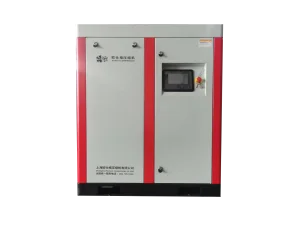
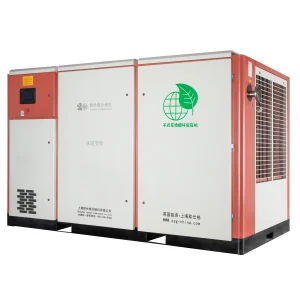
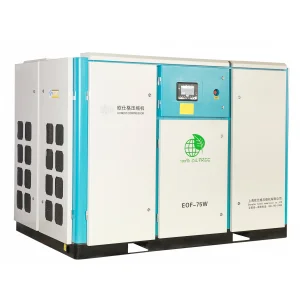
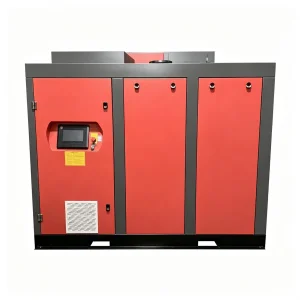
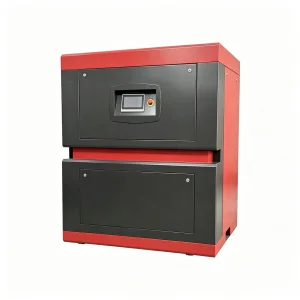
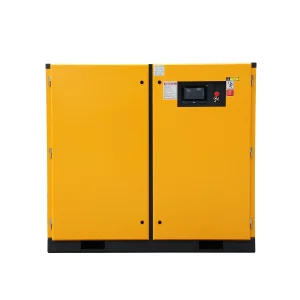
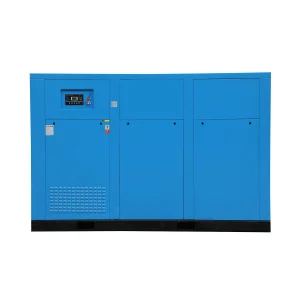
Explore our complete export catalog engineered for flexible voltage options (380V / 400V / 415V 50Hz) and heavy manufacturing duty cycles.
Frequently Asked Questions on Oil-Free Screw Air Systems in Sri Lanka
In-depth technical answers addressing certification, grid compatibility, water treatment, and maintenance specifics.