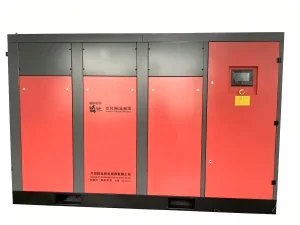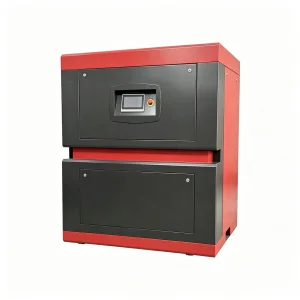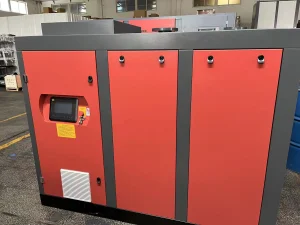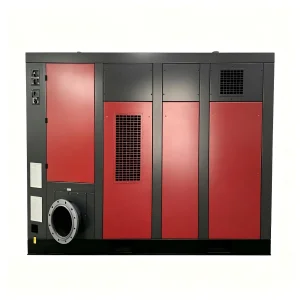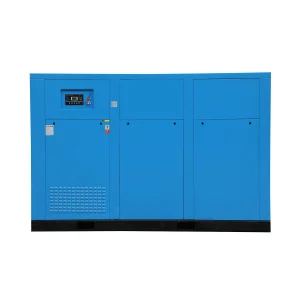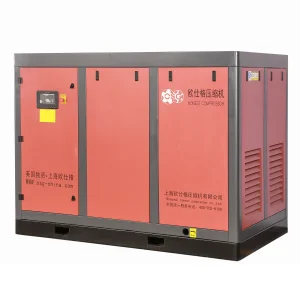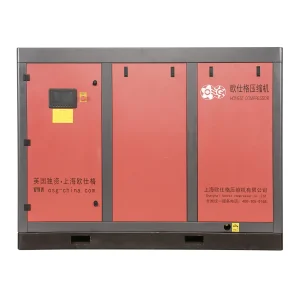
Core Low-Pressure Screw Blower Systems for Swiss Applications
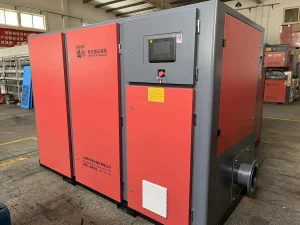
Precision engineered twin-screw rotary blower and vacuum modules configured for Swiss cantonal compliance, quiet operation (<72 dB(A)), and high thermodynamic efficiency.
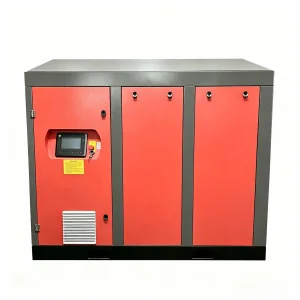
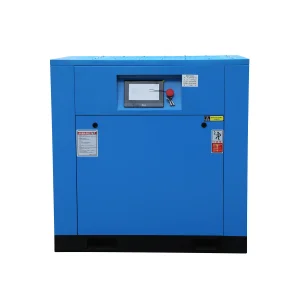
Switzerland Industrial Landscape: The Imperative for Oil-Free Screw Aeration
Decarbonization, strict municipal noise limits, and uncompromising purity in Swiss manufacturing drive the systemic transition from traditional tri-lobe Roots blowers to helical screw technology.
High Power Costs & The Swiss Federal Energy Act (EnG)
Switzerland’s industrial sector operates within one of Europe's most rigorous environmental frameworks. Under the revised Swiss Federal Energy Act (Energiegesetz, EnG) and the Swiss Federal Office of Energy (SFOE / EnergieSchweiz) programs, industrial production facilities, water protection associations, and cantonal utilities are under legislative mandate to eliminate energetic waste. In continuous low-pressure compressed air applications—such as biological wastewater treatment (ARA, Abwasserreinigungsanlagen), pneumatic powder conveyance, and bulk material handling—compressed air generation typically accounts for up to 60% to 75% of a facility’s total electric load.
Historically, Swiss facilities relied on dynamic multi-stage centrifugal blowers or conventional positive displacement tri-lobe Roots blowers. However, Roots blowers rely on external compression (isochoric compression), which leads to significant thermal throttling loss, elevated discharge temperatures exceeding 130°C, and severe acoustic resonance. Our dry rotary screw blowers utilize internal polytropic compression between synchronized precision-machined helical rotors. This fundamental thermodynamic shift reduces specific power consumption (kW/m³/min) by 25% to 38%, directly aligning with cantonal carbon abatement subsidies and long-term operating cost reduction targets.
Thermodynamic Principle: Internal vs External Compression
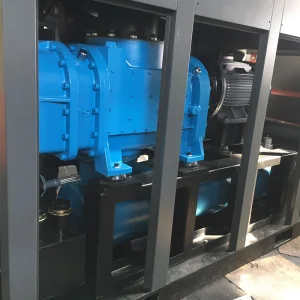
While Roots-type equipment expels air into a pressurized manifold without changing internal volume—wasting energy against backpressure—the oil-free screw air end progressively shrinks the air pocket between male and female lobes along the axial path. Compression is completed inside the casing prior to exhaust port opening, minimizing backflow shocks and thermal dissipation.
Furthermore, Switzerland's unique topographic and cantonal clustering creates specific logistical demands. From the chemical and life sciences corridor of Basel-Landschaft and Basel-Stadt, to high-precision engineering hubs across Zurich, Aargau, and Romandy, air purity is paramount. Even microscopic oil mist residues pose grave contamination risks to active pharmaceutical ingredients (APIs), sterile biological processes, and municipal potable water aquifers regulated by the Swiss Federal Act on the Protection of Waters (GSchG).
Global Industry Evolution & Technological Trends
The international low-pressure fluid machinery market is witnessing a rapid structural migration toward integrated intelligent variable frequency screw units.
IE5+ Permanent Magnet Synchronous Drives
Global original equipment manufacturers (OEMs) are discontinuing standard asynchronous induction motors in favor of liquid- or air-cooled Permanent Magnet (PM) synchronous systems. Operating at IE5 ultra-premium efficiency, these motors maintain high torque and 96%+ motor efficiency across wide turndown ranges (25% to 100% speed), preventing the severe off-peak efficiency penalties typical of fixed-speed blowers.
Advanced Polymeric Rotor Coatings
Micro-clearance sealing is the defining factor in screw blower volumetric efficiency. Modern metallurgy employs aerospace-grade food-safe PTFE/MoS₂ or nano-ceramic synthetic coatings applied to precision-milled ductile iron or forged stainless steel rotors. These coatings withstand thermal cycling up to 200°C without flaking, preventing internal air slippage over 50,000+ operating hours.
Edge Telemetry & Real-Time Diagnostics
Industry 4.0 connectivity has transitioned low-pressure air generators into intelligent edge nodes. Modern units feature dual Modbus TCP/IP, Profinet, and OPC-UA protocols, allowing real-time integration into Swiss SCADA topologies. Vibration monitoring, bearing thermal imaging, and pressure differential trending allow for condition-based predictive maintenance.
Engineering Technology Matrix: Low-Pressure Aeration Machinery
| Evaluation Parameter | Oil-Free Rotary Screw Blower | Tri-Lobe Roots Blower | Single-Stage High-Speed Turbo |
|---|---|---|---|
| Thermodynamic Compression | Internal polytropic compression | External isochoric (no compression) | Dynamic aerodynamic conversion |
| Average Electrical Efficiency | 75% – 88% across broad flow range | 45% – 62% (steep thermal loss) | 80% – 86% (narrow sweet spot) |
| Turndown Capability | Wide: 25% – 100% capacity | Limited: 60% – 100% capacity | Restricted: Surge margin limits (45%–100%) |
| Discharge Pulsation & Vibration | Continuous axial flow, minimal pulse | High cyclical pulsation (pipe fatigue) | Smooth non-pulsating continuous flow |
| Sensitivity to Ambient Temperature | Extremely low (robust positive displacement) | Moderate thermal derating | High (surge limit shifts with air density) |
| Lubricant Migration Risk | Zero (mechanical atmospheric air barrier) | Oil seal degradation risks oil mist | Zero (air foil or magnetic bearing) |
Localized Swiss Application Scenarios & Case Engineering
Customized machine configurations meeting the strict biological, acoustic, and sanitary requirements of the Swiss industrial heartland.
1. Cantonal Municipal Wastewater Aeration (ARA Facilities)
Wastewater treatment plants in Zurich (e.g., ARA Werdhölzli), Bern, Lucerne, and St. Gallen operate under rigorous biological nutrient removal standards mandated by the Swiss Federal Act on the Protection of Waters (GSchG) and VSA guidelines. Deep-basin fine-bubble aeration basins require stable gauge pressures between 0.3 bar and 1.1 bar (30 kPa to 110 kPa). Diurnal wastewater load shifts require blowers that maintain specific energy consumption without overheating when running at partial load during nocturnal periods.
Our permanent magnet screw blowers integrate automated dissolved oxygen (DO) feedback control loops. When oxygen sensor readings rise, the VFD instantly ramps motor speed down to match biological assimilation demand. Furthermore, the oil-free labyrinth seal design features atmospheric venting chambers that make it impossible for bearing lubricating oil to bypass the oil seals into the process airstream, completely safeguarding downstream micro-pollutant ozonation and granular activated carbon (GAC) filtration stages.
2. Basel Life Sciences & High-Purity Synthesis
In the pharmaceutical corridors of Basel, Muttenz, and Visp, compressed low-pressure gas is utilized for dry cake blow-off, fluid-bed drying, and pneumatic transfer of sterile active compounds. In these cleanroom-adjacent zones, any aerosolized hydrocarbon particle compromises multi-million-franc production batches.
Certified per ISO 8573-1 Class 0 standards, our air ends undergo third-party testing with flame ionization detection (FID) confirming total oil content below 0.003 mg/m³. With acoustic baffles, vibration dampers, and micro-grooved sound dampening panels, equipment sound pressure ratings conform to the Swiss Federal Noise Abatement Ordinance (Lärmschutz-Verordnung, LSV), allowing indoor installation directly adjacent to production suites.
3. Dairy, Confectionery & Food Processing in Romandy
Switzerland’s celebrated dairy and chocolate manufacturing sector—clustered heavily in cantons such as Fribourg, Vaud, and Neuchâtel—demands hygienic air handling. Pneumatic conveying of powdered milk, cocoa, sugar, and flour requires oil-free, pulsation-free air at moderate pressures (0.5 to 1.5 bar gauge) to prevent pipeline scouring and product shearing.
Helical twin-screw delivery guarantees non-pulsating continuous laminar airflow, preventing pipe chatter and product breakage during pneumatic transport. Direct-drive coupling eliminates belt drive dust and debris, complying with Swiss FOPH (BAG) and IFS Food certification audit standards.
4. Precision Micro-Parts & Watchmaking Cleaning Systems
In the Jura Watch Valley (Vallée de Joux, La Chaux-de-Fonds, Biel/Bienne), horological component manufacturers utilize low-pressure vacuum and air knife blow-off tables for degreasing, ultrasonic rinse drying, and micro-chip evacuation. Hydrocarbon contamination would ruin sub-millimeter movement plates and balance springs. Our screw blower vacuum stations maintain high volumetric displacement with zero lubricants inside the vacuum sweep chamber.
Technical Roadmap & Swiss Net-Zero 2050 Outlook
Forward-looking machine architectures addressing circular economy principles, thermal waste recovery, and artificial intelligence integration.
Heat Recovery Integration (Wärmerückgewinnung)
Under Switzerland's 2050 Climate Strategy, industrial plants are incentivized to implement closed-loop thermal harvesting. Compressing air generates substantial thermal energy; in a typical screw blower, over 85% of input electrical energy is converted into air thermal heat. Our integrated heat exchanger modules tap into the air discharge manifold and lubricating oil cooling circuits. This yields water temperatures between 50°C and 70°C, suitable for feeding municipal district heating networks (Fernwärmenetz) or pre-heating boiler feedwater in Swiss municipal utilities.
Decarbonization Metric
A continuous 75 kW screw blower running 8,000 hours annually generates approximately 510,000 kWh of reclaimable thermal energy. Diverting this to facility heating saves up to 100 metric tons of CO₂ equivalent annually compared to fossil fuel baseline heating.
Digital Twin & Dynamic Flow Scheduling
Next-generation blower networks incorporate real-time kinematic digital twin models. Operating parameters—including inlet relative humidity, barometric altitude deration across Swiss alpine elevations, and dynamic system backpressure—are processed by onboard neural-logic controllers. Instead of crude pressure band switches, the system dynamically schedules rotor revolutions to maintain target mass flow (kg/h) rather than simple volumetric flow (m³/h), minimizing specific consumption (kWh/Nm³).
Macro Turnkey Engineering Solutions for Swiss Importers & EPCs
Complete skidded systems configured for 400V 50Hz Swiss electrical distribution, CE and SEV electrical compliance, and seamless plant room integration.
Custom Voltage & Harmonic Mitigation
Built for Swiss three-phase 400V ±10% 50Hz networks. VFD cabinets incorporate integrated active harmonic filters (THDi < 5%) conforming to Swiss grid operator standards (VSE/AES guidelines) to eliminate electromagnetic pollution in sensitive laboratory and industrial micro-grid environments.
Turnkey Skidded Enclosures
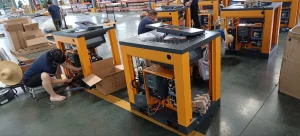
Complete skidded configurations incorporating base frame vibration isolators, intake silencer filters, non-return check valves, safety relief valves, and discharge expansion joints. Fully wired and factory tested to eliminate field assembly errors on Swiss job sites.
Dedicated Swiss Export Support
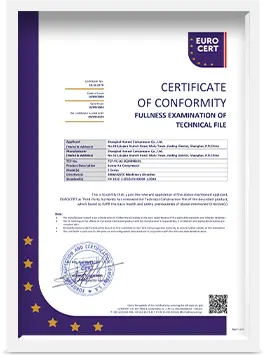
Seamless export logistics from our modern factory directly to Swiss customs ports (Basel-Mulhouse border terminal, Zurich cargo terminals). Complete EUR.1 documentation, Swiss-recognized CE declarations of conformity, and comprehensive English/German operating documentation.
Technical Procurement FAQ: Oil-Free Screw Blowers for Switzerland
Clear engineering answers addressing the technical, financial, and operational concerns of Swiss plant directors, municipal engineers, and procurement specialists.
Comprehensive Air Compression & Vacuum Portfolio for Swiss Exporters
Full industrial range engineered for maximum duty reliability, two-stage energy efficiency, and precision vacuum processing across Swiss manufacturing clusters.