Featured Industrial Compressors: High-Efficiency Rotary & Oil-Free Systems
Explore factory-direct rotary screw machinery engineered to minimize kW per m³/min, meeting rigid CE, ASME, and ISO 8573-1 air purity standards.
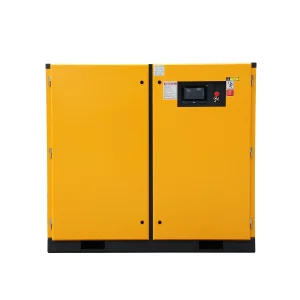
The Strategic Advantages of China's Air Compressor Distribution Hub
How upstream raw material integration, high-precision machining ecosystems, and agile OEM supply chains make China the epicenter for international compressed air distribution.
Concentrated Supply Chain Synergies
Based in Shanghai's Yangtze River Delta manufacturing corridor, our distribution model integrates high-purity casting foundries, 5-axis rotor milling centers, and specialized motor windings within a 50-kilometer radius. This tight localization eliminates logistics bottlenecks, guarantees rapid component restocking, and drastically reduces unit fabrication lead times for wholesale distributors.
Advanced CNC Rotor Profile Grinding
Modern Chinese facilities employ ultra-precision German and Japanese grinding equipment to achieve 5:6 asymmetric rotor lobe tolerances down to the sub-micron scale. This tight internal tolerance profile substantially minimizes blow-hole leakage, enhances isothermal efficiency, and delivers maximum volumetric displacement per kilowatt of input energy.
Rigorous Multi-Market Compliance
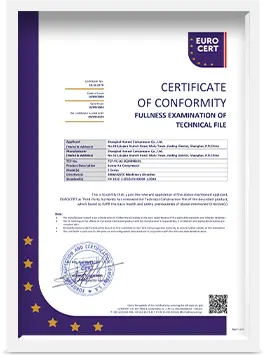
Navigating international customs demands exhaustive certification. Our factory distribution models are fully accredited under ISO 9001, ISO 14001, CE Machinery Directive 2006/42/EC, ASME Section VIII pressure vessel codes, and Class 0 purity testing per ISO 8573-1:2010. Sourcing directly ensures zero administrative delay during destination customs clearance.
Global Industry Trends: Thermodynamics, Smart IoT & PM Motoring
An analytical overview of technological shifts governing industrial air compressor production, focusing on motor efficiencies, compression stages, and emission abatement.
Compressed air is frequently referred to as the "Fourth Utility" in modern manufacturing, but it remains one of the most energy-intensive. Across a standard compressor's 10-year lifecycle, direct electrical consumption represents between 70% and 82% of the Total Cost of Ownership (TCO), while capital expenditure typically accounts for only 12% to 15%. Consequently, engineering innovations in China's compressor distribution sector have pivoted decisively away from low-cost fixed-speed designs toward advanced thermodynamic architectures that suppress specific energy consumption (kW/m³/min).
Central to this revolution is the integration of IE4 and IE5 Permanent Magnet Synchronous Motors (PMSM) paired with vector-controlled Variable Frequency Drives (VFD). Unlike traditional induction motors that suffer efficiency drops below 70% nominal load, PMSM units sustain flat efficiency curves down to 25% rotational velocity. Utilizing high-coercivity NdFeB magnets rated for up to 180°C demagnetization limits, direct-driven airends eliminate transmission losses associated with belts and high-ratio gearboxes.
- Two-Stage Compound Compression: By distributing the total compression ratio across two distinct rotor stages with intermediate fluid cooling, internal compression work approaches the near-isothermal ideal curve, slashing power demand by 15% compared to single-stage units.
- Class 0 Water-Lubricated Screws: Engineered with medical-grade stainless steel casings and ceramic polymer rotors, single-screw water-injected systems utilize purified water as the sealant and lubricant, achieving 100% oil-free air without the thermal penalties of dry-screw units.
- Edge-Computing Telemetry (IoT 4.0): Built-in Modbus RTU, Profinet, and 4G LTE communication gateways calculate real-time specific power, oil contamination indices, and bearing vibration spectrums to avert catastrophic downtime.
| Architecture Type | Thermodynamic Stage | Specific Energy (kW/m³/min) | Ideal Demand Profile |
|---|---|---|---|
| Fixed-Speed Rotary Screw | Single-Stage Oil-Flooded | 7.2 – 8.1 @ 8 bar | Flat base-load (90–100% duty) |
| Standard PM VFD | Single-Stage Oil-Flooded | 6.4 – 7.1 @ 8 bar | Moderate fluctuations (40–90%) |
| Two-Stage Compound PM VFD | Dual-Stage Intercooled | 5.3 – 5.9 @ 8 bar | Continuous heavy manufacturing |
| Water-Lubricated Oil-Free | Single/Dual-Stage Injection | 6.1 – 6.8 @ 8 bar | Strict zero-hydrocarbon processes |
| Dry-Type High-Speed Screw | Two-Stage Air/Water Intercooled | 6.6 – 7.4 @ 8 bar | Ultra-sterile, food/pharma bulk |
Localized Application Scenarios: Delivering Custom Operational Pressures
Tailoring pneumatic performance parameters to real-world industrial installations across diverse sectors and specialized production processes.
High-Precision Fiber Laser Cutting
Modern fiber lasers (12kW to 40kW) cutting stainless steel and aluminum alloy plates require clean, ultra-dry assist gas at 16 to 30 bar. Our dedicated high-pressure PM screw systems, integrated with refrigerated dryers and 0.01-micron coalescing filters, replace expensive liquid nitrogen delivery systems, slicing assist gas operational expenditures by over 75%.
Pharmaceutical & Biotechnology
Pneumatic conveying of active pharmaceutical ingredients (APIs), sterile fermentation tanks, and blister packaging cannot tolerate a single micro-gram of lubricating oil. Our EOF dry screw and EOWV water-lubricated series deliver certified Class 0 air (ISO 8573-1:2010), preventing chemical contamination, production lot recalls, and regulatory non-compliance.
Semiconductor & Photovoltaic
Cleanroom wafer handling, solar silicon slicing, and pick-and-place robotics demand steady 0.7–0.8 MPa pressure paired with desiccant dryers reaching a pressure dew point of -40°C to -70°C. Our integrated VFD PM compressors eliminate moisture-induced oxidation and voltage transients in precision semiconductor fabrication lines.
Automotive & Steel Fabrication
Stamping presses, robotic spot welding, and electrophoretic painting plants operate continuous multi-shift regimes with massive dynamic volumetric swings. Our two-stage direct-driven compressors (up to 250 kW / 55 m³/min) handle constant, violent loading fluctuations with zero pressure drop across critical pneumatic valves.
Macro-Level Industrial Solutions: Beyond the Standalone Compressor
Engineering an end-to-end pneumatic infrastructure from generation and treatment to distribution and smart energy recuperation.
Engineered Air Treatment Skids
A compressor is only as reliable as its downstream purification chain. Industrial distribution packages integrate cyclonic water separators, dual-tower desiccant or refrigerated air dryers, and multi-stage micro-coalescing filtration trains. This setup removes solid particulates down to 0.01 microns and guarantees oil residual contents below 0.003 mg/m³, preserving costly pneumatic actuators downstream.
Master Centralized Sequencing (DCS)
Operating multiple independent compressors results in artificial pressure buildup and excessive idling. Our centralized sequencing controllers monitor common header pressure with 0.01 bar sensitivity, dynamically modulating VFD trimming units while maintaining base-load machines at their optimal isothermal operating point. This eradicates the traditional 1-2 bar overpressurization cushion.
Thermal Energy Recovery Modules (WHR)
Approximately 94% of electrical energy consumed by a screw air compressor is converted directly into thermal heat within the oil and cooling circuit. Our integrated shell-and-tube heat recovery systems extract water at 70°C to 85°C directly from the lubrication loop. This byproduct heat is redirected to facility space heating, boiler feed preheating, or domestic sanitary hot water.
Navigating Global Procurement: Technical Criteria for Enterprise Sourcing
Essential technical benchmarks, electrical standardization protocols, and risk mitigation strategies for procurement managers and machinery distributors.
For industrial distributors and EPC contractors sourcing machinery from Chinese manufacturers, avoiding operational misalignment requires precise specification alignment before issuance of purchase orders. Compressed air machinery cannot be evaluated on nominal motor horsepower alone; accurate sizing hinges on Free Air Delivery (FAD) measured strictly under ISO 1217:2009, Annex C or E conditions.
Moreover, global electrical networks pose substantial design variables. Direct exporters must provide native transformer compatibility, supporting dual-frequency options (50 Hz / 60 Hz) and varying voltage ratings (220V, 380V, 400V, 415V, 440V, and 460V 3-phase). Failing to match coil insulation and inverter filtering to local grid harmonic profiles can lead to premature gate turn-off thyristor (IGBT) burnouts in variable speed drives.
- Severe Environment Protection: Demanding Class F insulation, Class B temperature rises, IP55 or IP66 motor enclosures, and dual-stage nanofiber intake filtration to mitigate high ambient dust and humidity levels.
- Consignment Spare Parts Packages: Establishing distributor margins through localized stock of maintenance kits (spin-on oil separators, synthetic polyalphaolefin (PAO) lubricants, intake valve rebuild kits, and solenoid coils).
- Digital White-Label Customization: Professional OEM/ODM flexibility offering custom exterior color schemes, distributor-specific software splash screens, and localized controller firmware languages (Spanish, Russian, Arabic, French, German).
Factory Witness Acceptance (FAT)
Prior to export crating, rigorous computerized load testing verifies real-time discharge pressure, sound pressure levels dB(A) at 1 meter, total electrical power draw, and harmonic distortion across multiple operational speeds. Verified digital test logs ensure zero out-of-box defects.
Containerization & Export Crating
Heavy industrial equipment must survive maritime transit through high-humidity oceanic zones. Machinery undergoes vapor-corrosion-inhibitor (VCI) shrink wrapping, mechanical desiccant placement, internal shock mounts, and fumigated solid timber crating to guarantee pristine arrival.
British-Founded Engineering Pedigree in Shanghai Since 2004
Combining international thermodynamic design standards with China's manufacturing speed across a state-of-the-art 50,000 square meter facility.
20+ Years Specialized Production
Founded in early 2004 under British investment in Malu Town, Jiading District, Shanghai Honest Compressor Co., Ltd. (OSG Compressor) has focused exclusively on twin-screw air ends, oil-free rotors, and screw vacuum equipment. We maintain over 1,000 active global service coordination points, supporting over ¥100M+ in annual output across high-demand industrial sectors.
5-Stage Quality Gate Framework
From raw ductile iron casting inspection to high-precision CNC rotor cutting, dynamic rotor balancing, 100% full-load run-in temperature validation, and vacuum hermetic seal verification, every unit operates at peak efficiency prior to crating. This zero-compromise approach ensures field failure rates drop below 0.12% during the initial 10,000 operational hours.
Direct Factory Technical Support
We empower machinery distributors, mechanical engineering dealers, and EPC contractors with complete CAD/BIM dimensional drawings, P&ID schematics, comprehensive parts catalogs, marketing collateral, and round-the-clock remote diagnostic support. We provide wholesale partners with dedicated territory protection to expand market presence securely.
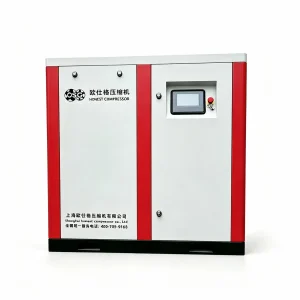
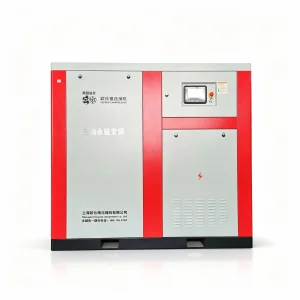
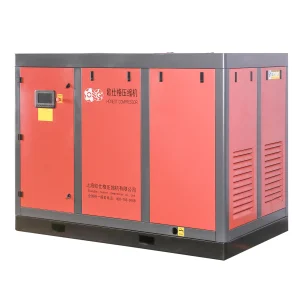
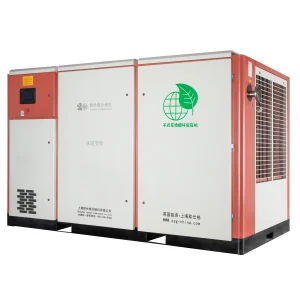
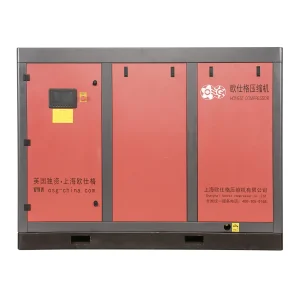
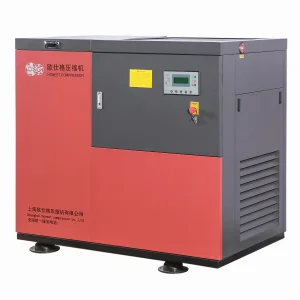
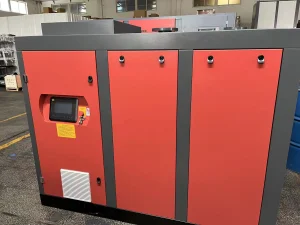
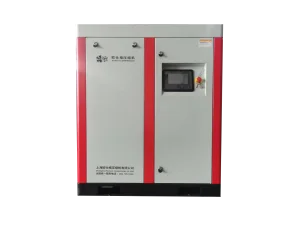
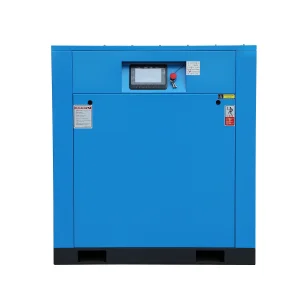
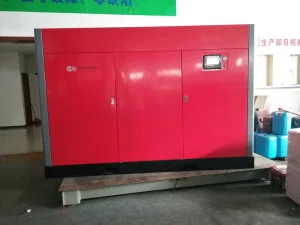
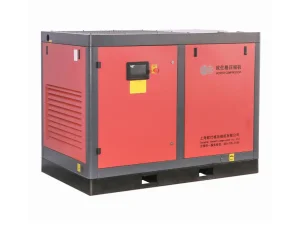
Industrial Compressors, Specialized Vacuum Pumps & Two-Stage Machinery
High-pressure laser cutting configurations, micro-oil vacuum solutions, and direct-drive variable speed series built for demanding industrial performance.
Frequently Asked Technical & Sourcing Questions
Direct, engineer-verified answers to common questions regarding compressor sizing, operational thermodynamics, power systems, and OEM distributor agreements.
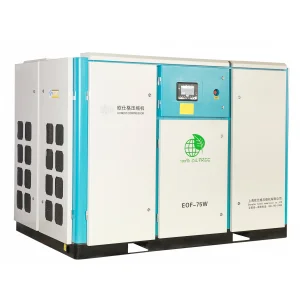
Dry Type Screw (EOF Series): Male and female rotors are held in synchronization via precision external timing gears without any fluid inside the compression cavity. Because there is no liquid to seal rotor tip clearances, dry screws operate at high rotational velocities (up to 15,000–22,000 RPM) and rely on specialized heat-resistant polymer or molybdenum rotor coatings. They are complex, robust, and suited for high-volume chemical and pharmaceutical sites.
Water-Lubricated Screw (EOWV Series): Purified reverse-osmosis (RO) water is injected directly into the compression cavity. Water acts as an exceptional sealing, lubricating, and cooling agent. Rotors rotate at much lower speeds (typically 1,500–3,000 RPM), noise levels are remarkably quiet (62–68 dB(A)), and compression temperatures rarely exceed 50°C. Water-lubricated systems have lower initial capital acquisition costs and simpler maintenance requirements for small-to-medium facilities.
First, we use ultra-high thermal grade NdFeB magnets (SH, UH, or EH series) with structural coercivity ratings capable of withstanding continuous operational temperatures up to 180°C.
Second, our PM motors feature liquid oil cooling or enclosed water jackets rather than basic air fan cowlings. The compressor's conditioned synthetic coolant circulates through an integrated jacket around the motor stator, keeping winding temperatures below 75°C even in 45°C ambient tropical operating environments. Real-time embedded PT100 thermal sensors monitor core temperatures and instantly trigger automated derating or emergency shutdown if internal motor temperatures exceed safe operational envelopes.
1. Total Continuous Volumetric Demand: Measured in m³/min, CFM, or Nm³/hr, specifying minimum, average, and peak flow variations.
2. Operating Gauge Pressure: Desired pressure at the end-use point versus target pressure at the compressor discharge flange (e.g., 7.0 bar, 8.5 bar, 13 bar, or 20–30 bar for laser cutting).
3. Site Ambient Conditions: Average and maximum ambient temperatures, relative humidity percentage, and installation elevation above sea level (altitude derating applies above 1,000m).
4. Power Grid Specifications: Main supply voltage (e.g., 208V, 380V, 400V, 415V, 460V, 480V, or 600V), frequency (50 Hz or 60 Hz), and available short-circuit current / transformer capacity.
5. Air Purity Class Requirement: Maximum permissible solid particulate size, pressure dew point requirement (-20°C, -40°C, or -70°C), and total residual oil limits per ISO 8573-1:2010.
OEM / ODM Customization: We supply machinery under distributor private labeling, custom RAL corporate powder coating, distributor-branded controller interfaces, and bespoke electrical enclosure configurations conforming to regional safety standards (CE, UL508A, or CSA).
Spare Parts Supply Chain: All routine maintenance consumables (oil filters, air intake filters, spin-on and flange-type air-oil separator elements, minimum pressure check valves, and thermodynamic bypass valves) use standard dimensions for broad interchangeability. We provide emergency consignment spare parts containers to regional distributor hubs to guarantee immediate local fulfillment for end customers.
Warranty & Technical Support: Standard factory warranty provides 24 to 60 months of coverage on the core twin-screw airend casting and rotor assemblies, backed by direct remote telemetry diagnostics, full digital schematics, and hands-on factory engineer training programs in Shanghai or virtually.