Featured Industrial Air Compressors (Top Deployment)
Premium OEM/ODM rotary screw compressors, VFD PM intelligent models, and laser-cutting dedicated systems configured for high mechanical efficiency.
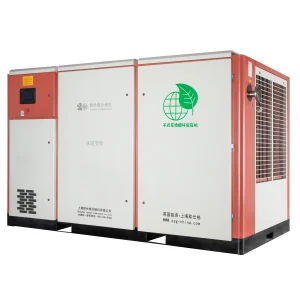
ODM EOF Oil-Free Dry Screw Compressor | 100% Oil-Free PM VFD Factory
View Product Specification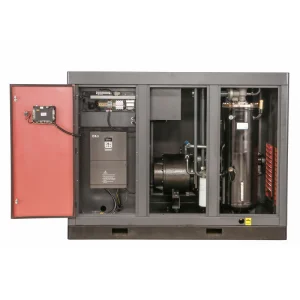
ODM Oil-Cooled Two-Stage Permanent Magnet Variable Frequency Screw Compressor
View Product Specification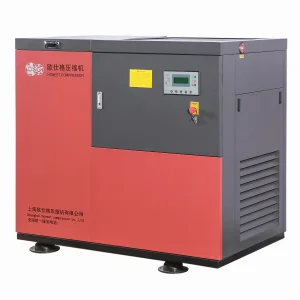
China 20bar Screw Air Compressor Dedicated for Fiber Laser Cutting Machines
View Product Specification
OEM 10A-PM Permanent Magnet Frequency Screw Compressor 220V Single Phase
View Product Specification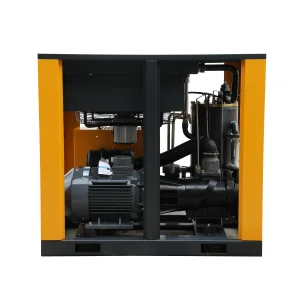
OEM 22kW 30HP Variable Speed Direct Driven Rotary Screw Air Compressor
View Product Specification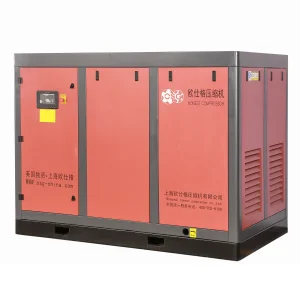
ODM IP55/54 55kW 75HP Industrial Two-Stage Screw Air Compressor Unit
View Product Specification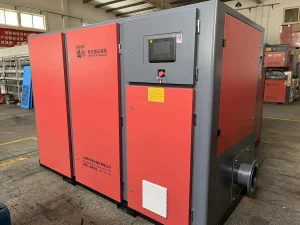
China 30kW Industrial Oil-Free VSD Screw Blower & Vacuum Pump System
View Product SpecificationGlobal Procurement Architecture: Decarbonization & Footprint Optimization
Industrial procurement for compressed air infrastructure has transitioned from simple capital expenditure (CapEx) metrics to complex Total Cost of Ownership (TCO) assessments.
Electricity & TCO Weight Analysis
Over a standard 10-year operating horizon, electrical energy costs represent 70% to 78% of the total cost of owning a rotary compressor. Mechanical acquisition constitutes only 12% to 15%. Implementing IE4/IE5 permanent magnet motors running on variable-speed frequency drives mitigates off-load cycling losses, generating significant utility cost amortizations within 18 months.
Turnkey Integrated Footprint (4-in-1)
Traditional pneumatic station designs mandate separate foundation anchors for the compressor, air receiver vessel, refrigerant/desiccant dryer, and multi-stage filtration towers. Integrated skid-mounted units reduce total mechanical room spatial footprints by up to 58%, eliminating inter-system pipeline pressure drops and drastically lowering mechanical installation overhead.
Class 0 Oil-Free Stringency
Cross-contamination in chemical, semiconductor, bio-pharma, and food processing lines carries massive liability risks. Clean air procurement strategies mandate strict ISO 8573-1 Class 0 validation. Water-lubricated ceramic/stainless twin-screw systems and dry-type coated twin-rotors eradicate hydrocarbon aerosols directly at source without downstream risk.
Cross-Sector Engineering Solutions & Application Scenarios
How specialized high-yield air solutions resolve operational pain points across heavy fabrication, electronics, processing, and high-pressure manufacturing.
Precision Laser Cutting
Requires uninterrupted 16–20 bar clean, dry air. Eliminates high-cost liquid nitrogen assist gas when processing stainless and carbon steels, delivering edge finishes with zero moisture oxidation.
Pharma & Biotechnology
Pure water-lubricated compression units guarantee 100% oil-free delivery for cleanroom pill packaging, sterile pneumatic valve operation, and bioreactor sparging under FDA compliance.
Automotive & Robotics
Centralized two-stage rotary screw configurations providing 55.0 m³/min flow stabilization for continuous-duty robotic welding, pneumatic body stamping, and automated electrostatic paint lines.
Glass, Textiles & Mining
Severe-duty IP55/IP54 rated direct-coupled screw packages engineered to thrive in particulate-rich, high-temperature processing sheds requiring robust uninterrupted dust exclusion.
| Application Sector | Primary Engineering Requirement | Optimal Compressor Series | Typical Energy Advantage |
|---|---|---|---|
| Laser Cutting (Sheet Metal) | 16–20 bar pressure stability, pressure dew point ≤ 3°C | High-Pressure 20bar Integrated 4-in-1 Screw | Replaces liquid N₂ canisters, ~65% cost cut |
| Food, Dairy & Beverage | ISO 8573-1 Class 0 certified oil-free air delivery | Water-Lubricated / Dry Screw PM Series | Zero oil filtration consumables, 25% lower heat |
| Continuous Heavy Fabrication | 24/7 base-load continuous flow, low stage differential | Two-Stage Oil-Cooled PM Variable Frequency | 12–18% specific power reduction over single-stage |
| Pneumatic Conveying / Vacuum | High air volume at differential pressure (< 2.5 bar) | VSD Oil-Free Screw Air Blower & Vacuum Pump | 30% higher volumetric efficiency than Roots blowers |
Engineering Roadmap: Rotor Dynamics, IoT & AI Algorithms
The transition from mechanical reliability to intelligent autonomous compressed air systems: explore our iterative engineering developments.
Phase I • Aerodynamic Profiling
Third-Gen 5:6 Asymmetric Rotors
Transitioning from symmetric geometries to 5:6 tooth profiles maximizes sealing lines, reducing blow-hole leakage areas by 41% and reducing internal friction within the compression chamber.
Phase II • Magnetic Motors
Rare-Earth IE5 Motor Integration
Eliminating slip rings, external gearboxes, and pulley transmission linkages via coaxial direct-drive permanent magnet motors that retain 96.5%+ efficiency across wide operational speed bands.
Phase III • Predictive Edge AI
Dynamic IoT Diagnostics
Micro-vibration frequency analysis and thermographic telemetry identify bearing degradation, rotor eccentricity, and filter saturation curves before catastrophic plant downtime occurs.
Phase IV • Thermal Co-Generation
85%+ Heat Recovery Systems
Integrated plate-type heat exchanger channels reclaim thermal kinetic heat generated during air compression, routing hot water (up to 75°C) to plant sanitation, boiler pre-heating, or space heating.
Why Two-Stage Screw Compression Wins
By dividing the overall compression ratio across two serial rotor pairs, the pressure ratio per stage drops significantly (e.g., from 8:1 down to ~2.8:1). This drastically lowers volumetric bypass leakage through the rotor end clearances, minimizes mechanical bearing strain, and drops discharge thermal profiles. Inter-stage cooling injects atomized oil mist, moving the compression cycle closer to an ideal isothermal curve for dramatic electrical savings.
Water-Lubricated Ceramic Reliability
Water-lubricated compressors utilize purified water as the internal sealing, cooling, and lubricating medium. Operating at nominal rotor speeds below 3,000 RPM, the discharge air stays near 45°C—well below conventional dry-screw limits (which often reach 160°C–200°C). This eliminates the need for expensive synthetic lubricants, oil-water separation equipment, and disposal costs, offering true Class 0 air purity.
Export Compliance, Certification Standards & Regional Customization
A British-founded Shanghai enterprise facilitating frictionless cross-border delivery through rigorous compliance frameworks and localized engineering adaptations.
Pressure Vessel Certifications
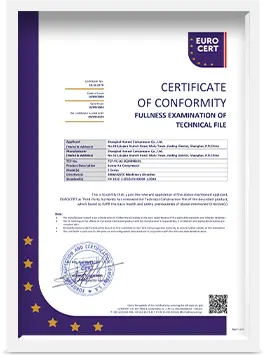
Every integrated air receiver and oil separator vessel meets destination port statutory standards: CE (Pressure Equipment Directive 2014/68/EU) for Europe, ASME Section VIII Div 1 for North American markets, MOM for Singapore, and DOSH for Southeast Asia.
Universal Electrical Modularization
In-house power converter engineering permits plug-and-play field adaptation for diverse electrical grids: 380V/50Hz, 400V/50Hz, 415V/50Hz, 220V/60Hz, 460V/60Hz, and high-spec UL/cUL electrical control cabinets with Schneider or Siemens switchgear components.
Global Field Service Support
Over 1,000 localized partner touchpoints worldwide guarantee technical dispatch, rapid air delivery of consumable filter cartridges, synthetic lubricants, dynamic seals, and complete airend replacement blocks with complete OEM traceability.
Comprehensive Compressor & Vacuum Portfolio (Extended Lineup)
High-capacity two-stage systems, water-lubricated platforms, dry vacuum pumps, and specialized industrial blowers configured for extreme durability.
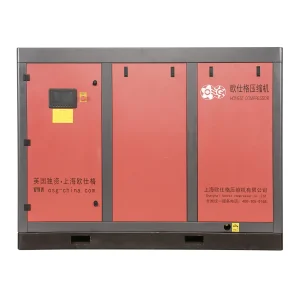
China 55kW 75HP Two-Stage Direct Drive Screw Air Compressor VSD PM Motor
View Product Specification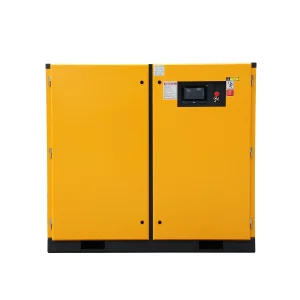
Low Noise High Efficiency 10HP to 100HP Rotary PM VSD Screw Compressor
View Product Specification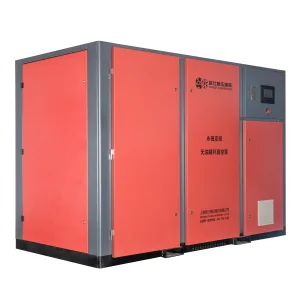
ODM PM VFD Dry Oil-Free Screw Vacuum Pump for Industrial Clean Vacuum
View Product Specification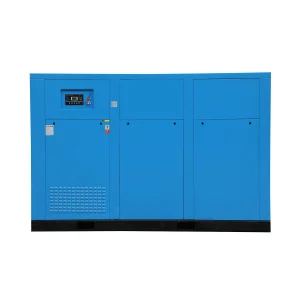
China 110kW/150HP Two-Stage PM VFD Rotary Screw Compressor 380V Air Cooled
View Product Specification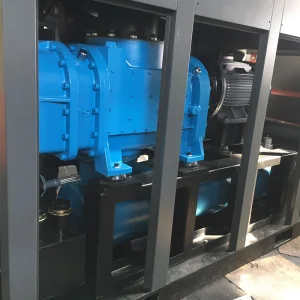
OEM Industrial Oil-Free VSD Screw Air Blower & Vacuum Pump System
View Product Specification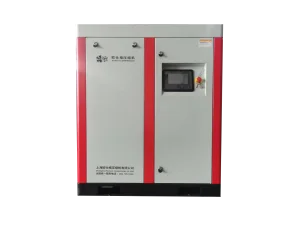
OEM 30kW Water Lubricated Oil Free VSD Screw Compressor 380V/400V/415V
View Product Specification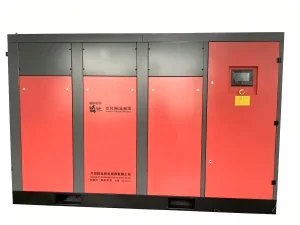
China EGV-132A-140 Industrial Oil-Free Permanent Magnet VFD Screw Blower
View Product Specification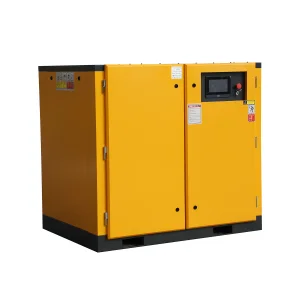
OEM 18.5kW 25HP Industrial Variable Frequency PM Screw Air Compressor
View Product SpecificationTechnical Clarifications & Engineering Buyer FAQ
In-depth responses resolving sizing, thermodynamic behavior, electrical customization, and lifecycle maintenance queries.
How does an integrated 4-in-1 compressor system compare against modular equipment installations?
An integrated 4-in-1 configuration combines the rotary screw compressor, calibrated air storage vessel, refrigerant air dryer, and multi-stage coalescing line filters onto a unified, structurally engineered vibration-isolated baseplate. Beyond reclaiming 50%–60% of floor space, it eliminates field piping fabrication errors, internal pressure drops through undersized transfer pipework, and external condenser cabling costs. Factory pre-commissioning guarantees that pressure dew point and aerosol metrics are fully synchronized upon site power connection.
What specific thermodynamic efficiency advantages are achieved by two-stage screw compression?
Two-stage compression divides total compression into two distinct stages connected by inter-stage cooling. The primary airend compresses atmospheric air to an intermediate pressure stage (approx. 2.5 to 3.5 bar), where temperature is brought down by oil-mist cooling before entering the secondary stage. This intermediate cooling moves the thermal path substantially closer to isothermal compression, reducing specific power consumption by 12% to 18% compared to single-stage units operating at identical discharge pressures, while dramatically prolonging bearing operational lifetimes.
How do Permanent Magnet (PM) motors combined with VFD drive down operating expenses?
Standard fixed-speed compressors operate on a load/unload control cycle; when system air pressure reaches its setpoint, the intake valve throttles, yet the motor continues spinning, drawing 30% to 45% of full-load power while producing zero air. In contrast, our PM VFD platforms dynamically adjust motor RPM precisely to real-time air consumption. In addition, the synchronous permanent magnet motor maintains 96%+ efficiency even at 25% low-frequency speed, eliminating off-load idling power losses and inrush starting current spikes.
What are the key technical distinctions between Dry-Type and Water-Lubricated oil-free compressors?
Dry-type oil-free compressors employ high-precision timing gears to synchronize non-contacting twin rotors treated with advanced fluoropolymer or molybdenum disulfide coatings. Compression chambers run dry without liquid, needing multi-stage intercoolers. Water-lubricated screw units inject sterile purified water into the compression chamber, which seals dynamic rotor clearances, absorbs heat directly (yielding ultra-low operating temperatures of ~45°C), and lubricates the bearings. Both architectures deliver ISO 8573-1 Class 0 clean air, but water-lubricated units offer simplified internal mechanical complexity.
What data parameters must be submitted to size a facility compressor accurately?
To avoid undersizing pressure drop issues or costly oversizing inefficiency, plant engineering teams should specify: 1) Peak and base Free Air Delivery (FAD in m³/min or CFM); 2) Minimum operating pressure required at point-of-use machines (bar or PSI); 3) Ambient site temperature range and operational altitude; 4) Grid voltage, frequency, and transformer phase allowances; 5) Targeted ISO 8573-1 purity classification (particulates, pressure dew point, residual oil content); and 6) Plant duty cycles (continuous 24/7 versus single shift batch runs).
What OEM / ODM customization options are supported for global distributor partnerships?
We supply full private-label and technical customization including: international electrical compatibility (208V, 220V, 380V, 400V, 415V, 460V, 575V at 50Hz/60Hz); explosion-proof certifications (ATEX / Ex d IIB/IIC); multilingual PLC interfaces (English, Spanish, French, Russian, Arabic, German); custom powder-coated canopy finishes; skid mounting adaptations for containerized outdoor deployments; and integrated IoT remote cloud diagnostics modules with open Modbus RS485 / Profibus protocols.