1 / 3
OEM 22kW 30HP Variable Speed Rotary Screw Compressor Factories, Exporter
Product Description
Product Overview
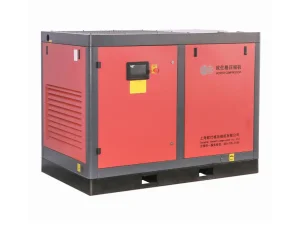
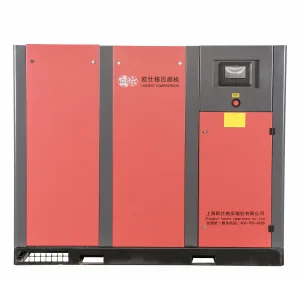
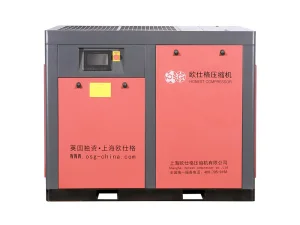
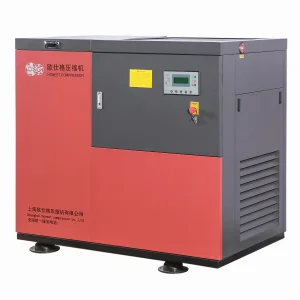
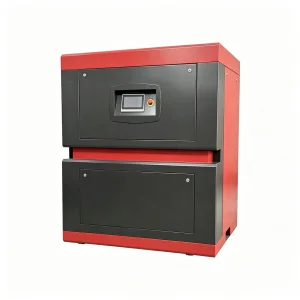
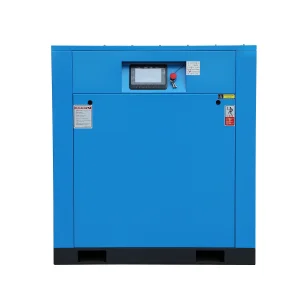
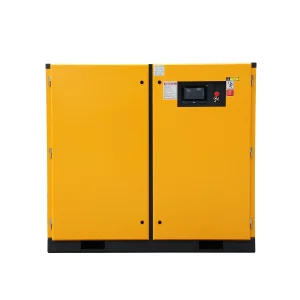
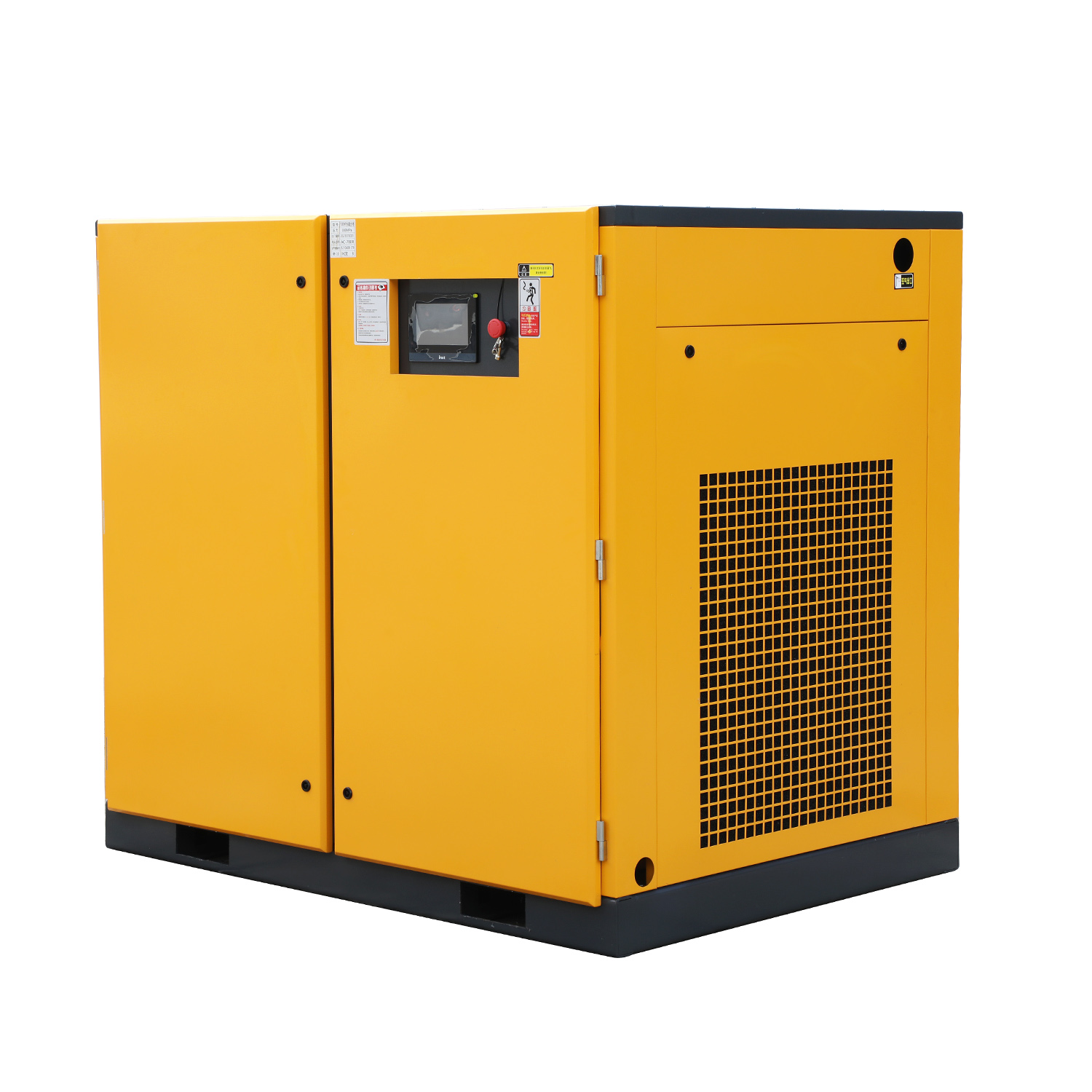
The XZV-30A represents a step up in capacity, featuring a 22kW permanent magnet motor that delivers up to 3.7 m³/min at 0.7MPa. This model is engineered for manufacturing facilities with moderate to high air consumption, including multiple production lines operating simultaneously. The advanced VFD technology ensures that the compressor runs only as hard as necessary, dramatically reducing energy waste during low-demand periods. The anti-corona stator winding is a key differentiator—it prevents electrical discharge damage in high-voltage environments, making this unit particularly suitable for facilities with unstable power supply or frequent start-stop cycles. The 1" connector and 396kg robust construction provide a stable, vibration-free operation that extends component life.
Core Advantages
1
Advanced VFD Algorithms – Up to 35% Energy Reduction
- Proprietary load-matching software predicts demand patterns and adjusts output proactively
- Maintains ±0.01 MPa pressure stability—critical for processes like painting and laser cutting
- Reduces energy consumption by 20–35% compared to fixed-speed compressors
- Provides real-time energy consumption reporting via PLC
2
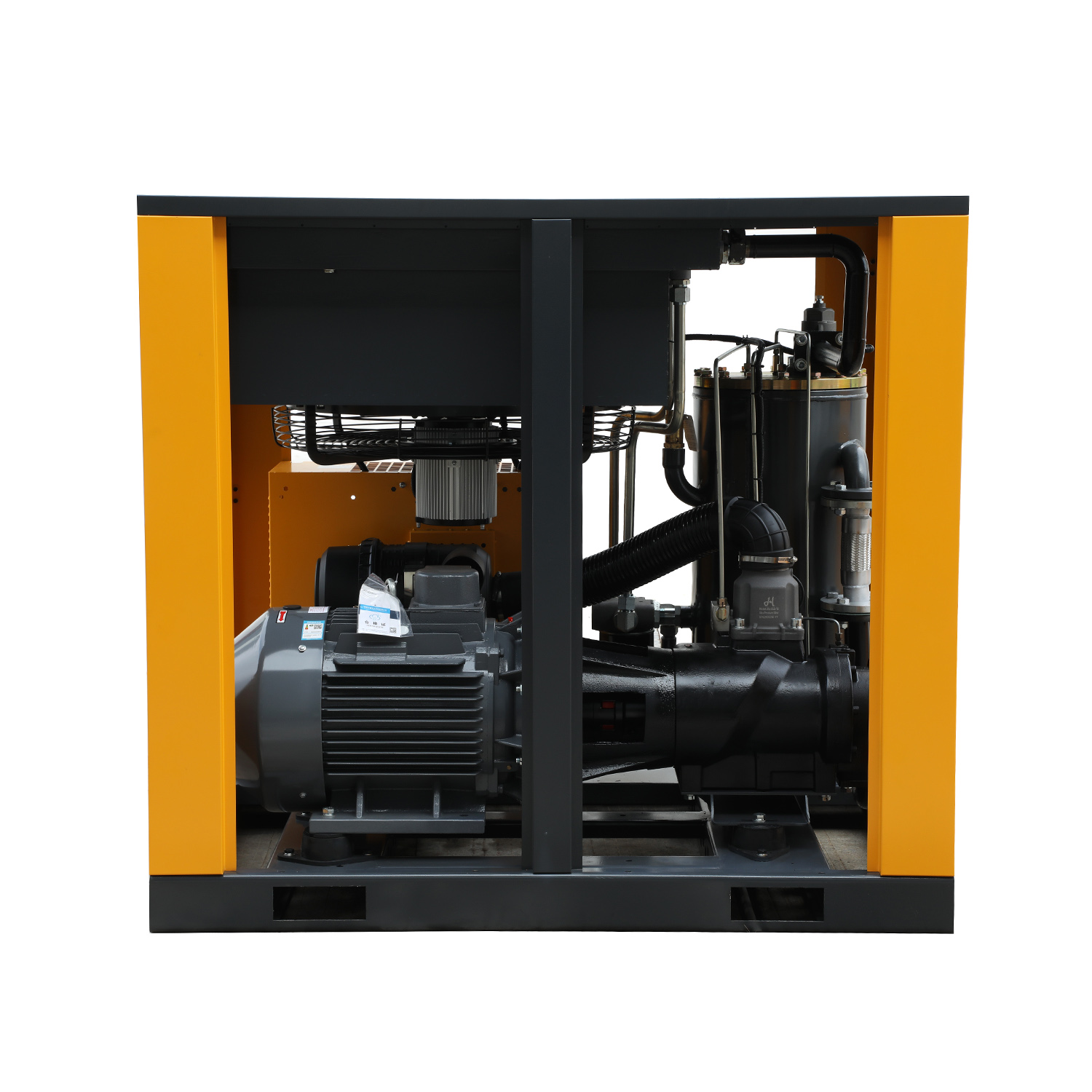
Oil-Cooled Double-Shell Motor – Superior Dust and Contaminant Resistance
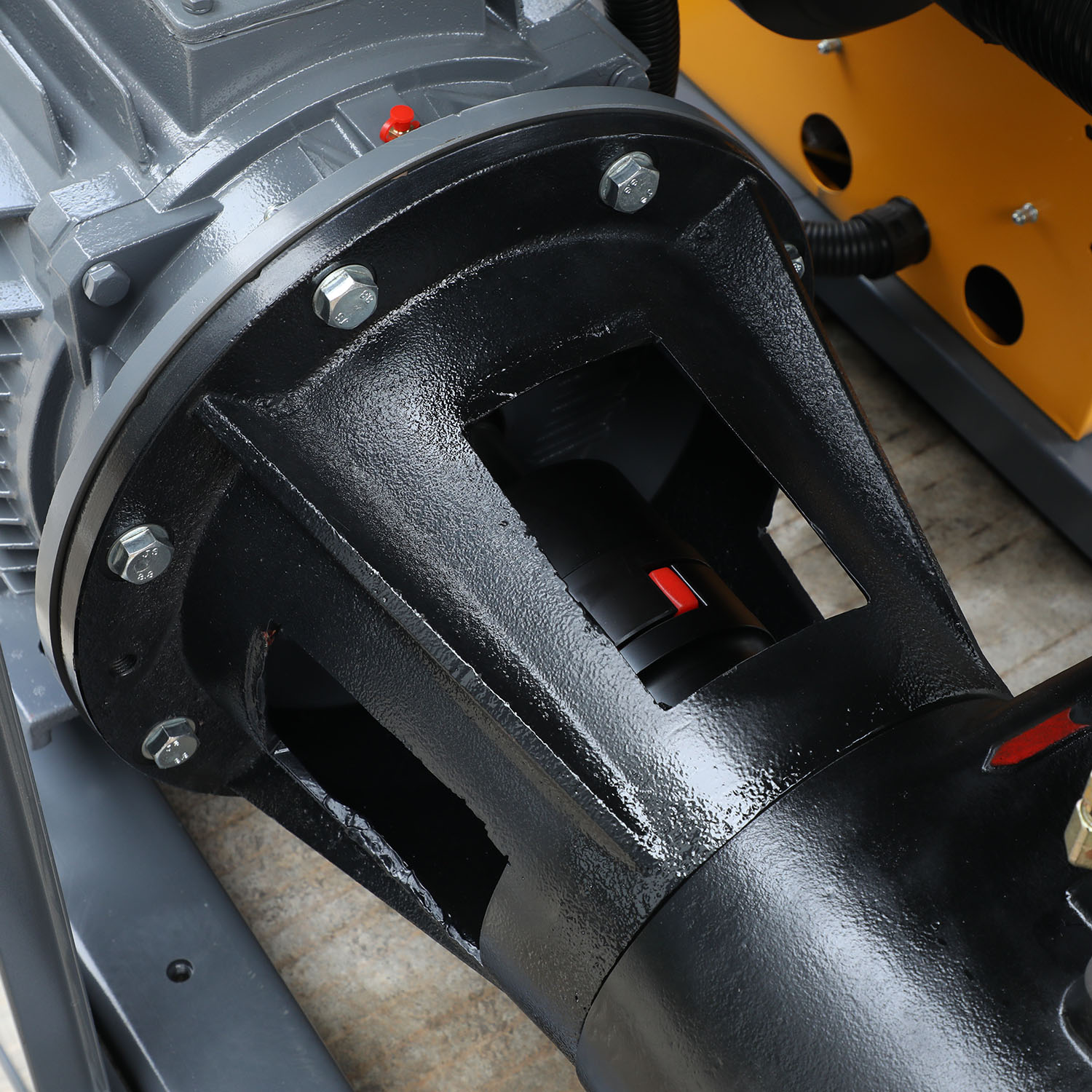
- The oil-cooled design isolates the motor from ambient air, preventing dust ingress
- Perfect for cement plants, mineral processing, foundries, and woodworking shops
- Eliminates need for external motor cooling fans (reduces noise and energy use)
- Extends maintenance intervals by reducing contamination-related wear
3
Anti-Corona Stator Enameled Wire – Long-Term Reliability
- Specialized winding insulation prevents corona discharge damage in high-voltage environments
- Particularly beneficial in facilities with voltage fluctuations or frequent motor starting
- Extends motor life by 30–50% compared to standard windings
- Reduces unscheduled downtime and repair costs
4
81°C Precision Temperature Management
- Active temperature control maintains oil at optimal viscosity for maximum lubrication
- Prevents moisture condensation in the oil system (extends oil life to 6,000+ hours)
- Reduces thermal expansion stress on bearings and seals
- Automatic shutdown protection if temperature exceeds safe limits
5
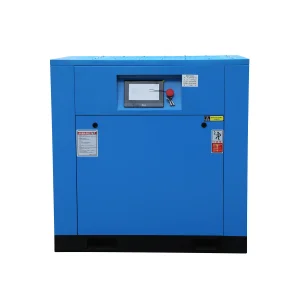
French PLC with Touch-Screen and Data Logging
- User-friendly 7-inch color touch panel with intuitive navigation
- Real-time display of all key operating parameters (pressure, flow, temp, power)
- Data logging for up to 30 days of operation history
- Fault alerts with detailed diagnostic codes for fast troubleshooting
Technical Parameter
Free air delivery:
3.7 m³/min @ 0.7MPa | 3.5 @ 0.8MPa | 3.1 @ 1.0MPa | 2.7 @ 1.25MPa
Motor power:
22kW / 30HP
Start method:
Y-△ Starter
Voltage:
380V 3PH 50Hz (customizable: 460V/60Hz, 220V/60Hz, 400V/50Hz, 6000V/50Hz)
Drive method:
Direct Drive (coaxial integrated transmission)
Oil content:
≤3 PPM
Connector:
1"
Noise:
68±2 dB(A)
Air supply temperature:
≤ ambient temperature +8~15°C
Dimension:
1250×850×1160mm
Weight:
396kg
Application
| Industry | Specific Applications |
|---|---|
| Automotive | Paint spray booths, robotic assembly, pneumatic fastening, tire inflation |
| CNC Machining | Precision milling, turning centers, tool changer actuation, chip blowing |
| Food & Beverage | Conveyor systems, packaging sealing, bottling filling nozzles |
| Pharmaceutical | Tablet compression, granulation, coating pans, clean room pressurization |
| Electronics | SMT assembly, PCB testing, component handling, soldering fume extraction |
| Textile | Dyeing machine controls, finishing rollers, pneumatic loom operation |
| Rubber & Plastic | Injection molding, blow molding, extrusion cooling air |
FAQ
Q1
What makes the anti-corona stator winding different from standard windings?
Standard motor windings can suffer from corona discharge—a phenomenon where high-voltage electrical fields ionize air around the winding, causing gradual insulation degradation. This leads to shorts and motor failure over time. Our anti-corona winding uses specially coated enameled wire and reinforced slot insulation that prevents this discharge, making the motor suitable for high-frequency VFD operation and areas with unstable power. This is particularly important for compressors that start and stop frequently, as voltage spikes are common during these cycles.
Q2
How does the VFD handle sudden spikes in air demand, such as when multiple machines start simultaneously?
The XZV-30A's VFD has a rapid response time of less than 0.5 seconds to pressure drops. When demand spikes, the drive instantly increases motor speed to supply the required air, preventing pressure dips. Unlike fixed-speed compressors that rely on large storage tanks to buffer demand, the VFD responds dynamically, allowing for a smaller receiver tank (saving floor space). The unit's maximum torque is available from zero speed, ensuring immediate response.
Q3
Can the XZV-30A be paralleled with another compressor for redundancy?
Yes, the PLC supports master/slave sequencing for up to 4 compressors. When connected, the PLC coordinates startup, load sharing, and standby rotation to equalize operating hours across units. This extends the service life of each compressor and provides automatic backup if one unit requires maintenance. The sequence control is fully programmable via the touch screen.
Q4
What is the recommended receiver tank size for this model?
For optimal performance, we recommend a 1,000-liter (1 m³) receiver tank. This provides adequate buffer for demand spikes and allows the VFD to operate efficiently. The tank also helps remove moisture from the compressed air through natural cooling. For critical applications requiring tight pressure control, a 2,000-liter tank is recommended.
Q5
How does the 81°C constant temperature control impact oil life and maintenance costs?
Maintaining oil at a consistent 81°C prevents the two main causes of oil degradation: excessive heat (which oxidizes oil) and condensation (which emulsifies oil with water). By staying at the optimal temperature, the oil maintains its lubricating properties for much longer—typically 6,000 hours between changes compared to 2,000–3,000 hours in traditional compressors. This reduces annual oil costs by approximately 50% and extends the life of bearings and rotors.