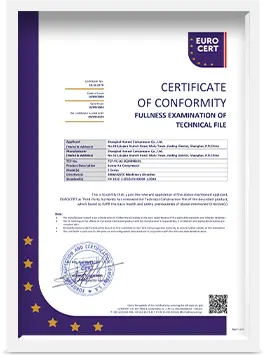
High-Efficiency Oil Injection & Industrial Screw Air Compressors
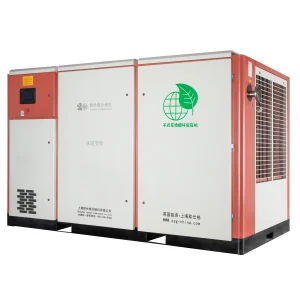
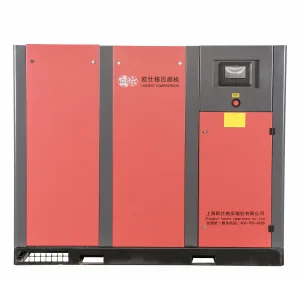
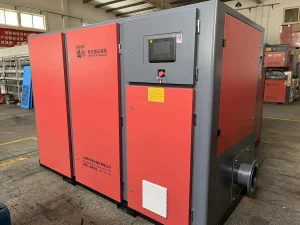
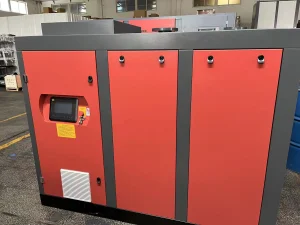
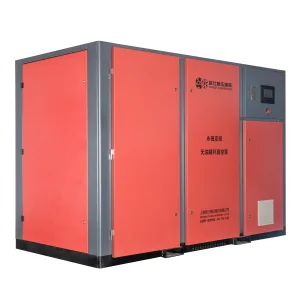
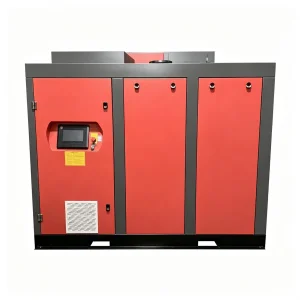
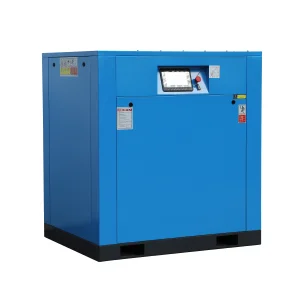
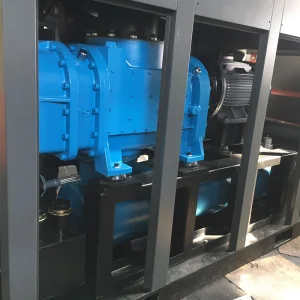
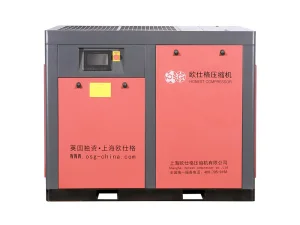
Engineered for maximum thermodynamic stability, low specific power consumption, and demanding heavy-duty plant environments. Review verified product skids from our Shanghai manufacturing lines.
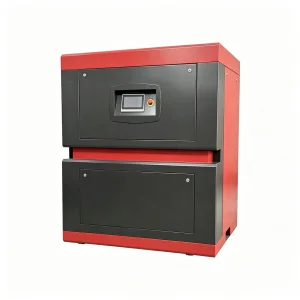
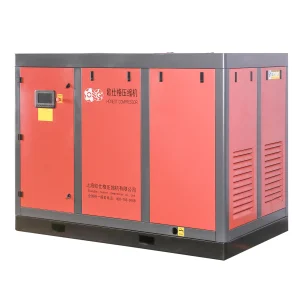
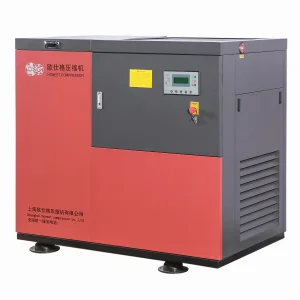

Thermodynamics & Rotor Kinematics: The Mechanics of Modern Oil-Injected Screw Compression
Oil-injected (also termed oil-flooded) rotary screw air compressors serve as the foundational backbone for pneumatic operations worldwide. Unlike reciprocating machines characterized by mechanical pulsation and volumetric degradation, twin-screw rotary compressors deliver smooth, pulsation-free mass flow via continuous volumetric displacement. Compression occurs within the helical flutes formed between a precision-machined male rotor (typically four lobes) and female rotor (typically six flutes).
The injection of synthetic or highly refined mineral lubricant directly into the compression cavity serves four indispensable thermodynamic functions simultaneously:
- Dynamic Hydrodynamic Sealing: Oil bridges the microscopic clearances (microns) between the intermeshing rotors, as well as between rotors and housing bore, dramatically curtailing internal back-leakage and raising volumetric efficiency past 95%.
- Near-Isothermal Cooling: The high heat capacity of compressor fluid absorbs the thermal energy generated by air molecules undergoing rapid polytropic compression. This holds discharge temperatures below 90°C–98°C, bringing the thermodynamic cycle closer to the ideal isothermal baseline and slashing specific energy requirement (kW/m³/min).
- Hydrodynamic Film Lubrication: The fluid establishes an uninterrupted elastohydrodynamic film across radial journal bearings and angular contact thrust bearings, eliminating rotor-to-rotor contact and protecting mechanical surfaces.
- Corrosion Inhibition & Acoustic Attenuation: Injected oil coats precision metallurgical alloys, preventing ambient moisture-induced oxidation while dampening high-frequency pressure pulsations.
Over the last decade, Chinese compressor engineering has transitioned from conventional single-stage, constant-speed belt systems into high-efficiency direct-coupled, permanent-magnet variable-frequency (PM VFD) systems and two-stage integrated injection platforms. In high-demand factories, compressed air represents between 10% and 35% of overall plant electrical expenditure.
Over a standard 10-year operating life, energy accounts for up to 78% of a compressor's Total Cost of Ownership (TCO), whereas initial capital equipment procurement represents a mere 12% to 15%. Consequently, modern procurement directors are shifting scrutiny away from baseline unit FOB cost toward validated specific power performance according to ISO 1217:2009 Annex C/E and GB 19153-2019 Grade 1 standards.
Shanghai Honest Compressor leverages proprietary 5:6 asymmetric rotor geometry, German-engineered grinding tolerances, and vector-controlled ultra-efficient synchronous reluctance/permanent magnet motors to deliver reliable air delivery with minimum kilowatts consumed per standard cubic meter.
Strategic Manufacturing Advantages of China's Screw Compressor Industry
The transformation of China's Yangtze River Delta industrial belt into an elite global epicenter for rotary screw compressors combines metallurgical mastery, end-to-end component clusters, and high-precision CNC automation.
Integrated Supply Chain Synergy
From precision meehanite gray-iron casting foundries to specialized stainless-steel valve producers and ASME/CE-certified pressure vessel plants, 98% of critical assembly components are manufactured within a 150-kilometer radius. This tight localization curtails freight lead times, mitigates logistical bottlenecks, and optimizes agile prototyping for client-specific OEM configurations.
Sub-Micron Rotor Profile Grinding
Our production floor deploys premier multi-axis CNC rotor grinding machinery—including Klingelnberg and Holroyd systems—guided by Carl Zeiss 3D coordinate measuring machines (CMM). Consistent micro-finish machining eliminates air-slips and back-flow vortices, guaranteeing rotor intermeshing clearance consistency down to ±0.003 mm across long batch runs.
Rare-Earth Permanent Magnet Dominance
China holds over 70% of global rare-earth mining and refining capacity, specifically Neodymium-Iron-Boron (NdFeB). Chinese compressor manufacturers integrate custom-wound IE4 and IE5 ultra-premium efficiency permanent magnet synchronous motors (PMSM) directly with male screw shafts, completely cutting transmission losses while maintaining 96%+ motor efficiency even at partial loads (25%-50%).
Technological Roadmaps Shaping Oil-Injected Screw Systems
Market requirements have transitioned from basic mechanical durability to cyber-physical integration, ultra-low specific energy, and industrial decarbonization.
Two-Stage Compression Platforms
For applications demanding 0.7 MPa to 1.3 MPa, two-stage oil-injected screw units split the overall compression ratio across two independent rotor pairs with inter-stage fluid cooling. By reducing the pressure differential (ΔP) per stage, internal leakage across rotor lobes drops exponentially. This architecture yields up to 15% lower specific power consumption compared to single-stage equivalents.
Integrated Thermal Energy Recovery
In oil-injected compressors, approximately 80% to 85% of input electrical energy is converted into heat absorbed by the lubricant. Modern Chinese factories equip skid-mounted plate heat exchangers (HRS modules) plumbed directly into the oil circuit. This captures thermal output to supply boiler pre-heating water, factory space heating, or sanitary wash systems without requiring extra fuel.
AIoT Telemetry & Self-Optimizing Control
Our microprocessor systems incorporate industrial Modbus RS485 and 4G/5G cloud IoT interfaces. Continuous machine-learning algorithms monitor vibration signatures, inter-stage oil temperature, differential oil filter pressure, and load profiles in real-time. The system predicts mechanical maintenance milestones and adjusts delivery pressure within ±0.01 MPa to stop plant over-pressurization waste.
Engineering Solutions Across Global Industry Sectors
Oil-injected screw technology is not a generic commodity; it requires application-specific tuning across pressure envelopes, oil separation schemes, and filtration trains.
High-Pressure Fiber Laser Cutting (16–30 Bar)
Modern 10kW to 60kW fiber laser cutters deploy ultra-dry, high-pressure compressed air as an assist gas in place of costly liquid nitrogen. Our integrated 16–30 bar oil-injected booster packages feature multi-stage filtration ensuring residual oil content under 0.003 ppm (mg/m³) and a pressure dew point of -40°C. This protects sensitive laser optics from particulate damage and produces dross-free edge finishes on thick stainless steel.
Chemical Processing & Petrochemical Facilities
Our OEM explosion-proof explosion-rated (Ex d IIB / IIC T4 Gb) series addresses hazardous atmospheres in chemical manufacturing and offshore installations. Outfitted with ATEX/IECEx certified electrical cabinetry, anti-static belts, stainless steel tubing, and sealed instrumentation, these units prevent explosive vapor ignition while powering pneumatic valves, fluid agitation, and catalyst blow-down lines.
Textile Air-Jet Weaving & Mining Plants
Textile mills operate hundreds of air-jet spinning and weaving looms non-stop, requiring vast volumes of air at steady pressure (0.5 to 0.7 MPa). Any pressure dip leads to yarn defects and machinery stops. Our double PM motor two-stage units run continuously in elevated ambient dust and heat, with multi-stage heavy-duty cyclonic air intake filters maintaining steady pressure throughout.
Macro-Level Industrial Compressed Air System Architecture
A screw air compressor does not operate in isolation. Peak reliability and low specific energy demand systematic integration across air distribution, receiver sizing, and multi-stage purification trains.
Central Station Piping & Ring-Main Design
A prevalent engineering failure in heavy plants is excessive line pressure drop (>0.05 MPa / 0.5 bar) caused by undersized radial pipe layouts. Honest Compressor engineers recommend closed-loop ring-main distribution with smooth-bore modular aluminum piping or 304/316 stainless steel lines. A looped layout balances pressure during sudden, localized load spikes, preventing false unloader cycles at the compressor station.
Additionally, wet and dry air storage tanks must be sized to system capacity. We recommend installing an initial wet receiver directly after the compressor skid to condense bulk liquid before it reaches refrigerated or desiccant dryers. This reduces the thermal load on downstream air treatment systems.
Purification & ISO 8573-1 Air Quality Classes
Modern oil-injected screw compressors utilize high-efficiency three-stage spin-on or flanged air-oil separators. Centrifugal vortex separation combined with borosilicate coalescing wrap reduces raw oil carry-over below 2–3 ppm before the discharge line.
For applications requiring ISO 8573-1 Class 1 oil quality (≤0.01 mg/m³), downstream filtration trains pair refrigerated dryers (3°C dew point) or zero-purge heated desiccant dryers (-40°C dew point) with micro-fiber coalescing filters and activated carbon adsorption towers. This combination enables oil-injected units to serve demanding automotive spray paint and electronics assembly lines at a fraction of the capital cost of dry oil-free compressors.
Global Enterprise Technical Sourcing & FAT Inspection Standards
Evaluating China screw compressor suppliers requires structured metrics covering electrical voltage matching, thermodynamic efficiency certifications, and rigorous Factory Acceptance Testing (FAT).
Grid Harmonization (50Hz / 60Hz)
International industrial sites run on varied power grids: 380V/50Hz (Asia, Europe), 400V/415V/50Hz (Commonwealth), 460V/480V/60Hz (North America), or 220V/380V/60Hz (South America, Philippines). Our engineering teams adjust motor stator windings, inverter DC bus filters, and cooling fans to ensure full compliance with target-market grid frequencies and UL/CSA/CE insulation guidelines.
Standardized FAT Rigor
Every compressor passes full-load testing on our calibrated test rigs prior to crating. Verified parameters include Free Air Delivery (FAD) measured by nozzle flow-meter to ISO 1217 Annex C, vibration velocity (RMS < 2.8 mm/s per ISO 10816-1), acoustic sound pressure to ISO 2151, and high-voltage dielectric isolation protection.
Standard TCO Evaluation Formula
When assessing supplier tenders, enterprise procurement teams apply the life-cycle cost equation:
A lower initial invoice cost can be offset within months if specific power consumption increases by just 0.5 kW/(m³/min).
| Compressor Technology Class | Nominal Motor Range (kW / HP) | Working Pressure (bar / MPa) | Specific Power [kW/(m³/min)] | Air Quality Baseline (ISO 8573-1) | Optimal Industrial Suitability |
|---|---|---|---|---|---|
| Direct-Drive Single Stage PM VFD | 11kW – 75kW (15–100HP) | 7.0 – 10.0 bar (0.7–1.0 MPa) | 6.1 – 6.6 kW/(m³/min) | Class 2.4.2 (Standard Filtration) | General Manufacturing, CNC Machining, Packaging Lines |
| Two-Stage Energy-Saving PM VFD | 45kW – 250kW (60–350HP) | 7.0 – 13.0 bar (0.7–1.3 MPa) | 5.3 – 5.8 kW/(m³/min) Tier 1 Elite | Class 2.4.2 (Standard Filtration) | 24/7 Heavy Chemical, Steel Metallurgy, Glass Manufacturing |
| High-Pressure Assist Series (Laser) | 15kW – 45kW (20–60HP) | 16.0 – 30.0 bar (1.6–3.0 MPa) | 8.2 – 9.1 kW/(m³/min) | Class 1.2.1 (Ultra-Dry, -40°C PDP) | High-Power Sheet Metal Fiber Laser Assist Cutting |
| Ex-Proof PM Skid Unit | 7.5kW – 55kW (10–75HP) | 7.0 – 10.0 bar (0.7–1.0 MPa) | 6.3 – 6.8 kW/(m³/min) | Class 2.4.2 (Explosion Protected) | Petroleum Extraction, Paint Spray, Solvent Mixing, Mines |
Frequently Asked Technical & Commercial Questions
Expert answers addressing the sizing, commissioning, maintenance, and international compliance of oil-injected screw compressors.
Oil carry-over typically stems from four distinct failure points: a saturated or ruptured air-oil separator element, a clogged oil scavenger return line (orifice check valve), operating continuously below design discharge pressure (which creates excessive air velocity across the separator media), or overfilling the oil sump. In a correctly engineered Honest Compressor unit, air-oil separation operates via a dual-action mechanism: mechanical cyclonic swirling removes 98% of bulk liquid oil, and a pleated micro-fiber borosilicate coalescing cartridge collects residual droplets. A clear-sight scavenge pipe returns the collected fluid directly back to the vacuum side of the airend, keeping discharge aerosol oil content strictly below 3 ppm (mg/m³).
Traditional fixed-speed compressors operate on a load/unload hysteretic control cycle. When the plant reaches target line pressure, the inlet valve closes, and the machine runs idle. During this idling mode, the compressor consumes approximately 30% to 45% of its full-rated electrical power without producing any useful compressed air. In contrast, an Honest PM VFD system deploys a high-speed microprocessor to continuously match motor RPM directly to instant air demand down to 25% of maximum capacity. By stabilizing header pressure within ±0.01 MPa (0.1 bar) and eliminating wasteful idle cycling, facilities with variable pneumatic usage regularly achieve electrical power reductions between 25% and 42%.
Ambient thermal extremes introduce serious operational risks. If ambient temperatures exceed 40°C (104°F), fluid viscosity can degrade rapidly, compromising bearing lubrication and causing high-temperature thermal tripping (factory fault setpoint at 105°C). Conversely, in sub-zero climates (<2°C), moisture can condense within the oil sump, emulsifying the lubricant into an acidic sludge that accelerates bearing pitting. Honest Compressor combats high-heat environments with oversized aluminum bar-plate oil coolers and thermostatically regulated thermostatic bypass valves that keep oil injection temperatures in the ideal window (75°C to 88°C). This design prevents atmospheric water condensation while preventing lubricant thermal oxidation.
The transition to two-stage compression is financially justifiable under two primary conditions: continuous 24/7 baseload production cycles and motor power ratings of 55 kW (75 HP) or greater. Because two-stage compression divides the compression ratio (e.g., from ambient to 0.3 MPa in stage one, then intercooled before reaching 0.8 MPa in stage two), the volumetric efficiency climbs significantly while bearing load diminishes by up to 30%. The 12% to 18% specific energy reduction delivered by a two-stage unit typically pays back the higher initial purchase price within 10 to 18 months of intensive round-the-clock factory operation.
Achieving our designed 100,000-hour rotor bearing longevity requires adherence to regular preventative maintenance milestones: replace intake air filter cartridges every 2,000 to 3,000 hours (sooner in high-particulate cement, wood, or textile installations); change spin-on oil filter cartridges every 2,000 hours; replace air-oil separator elements every 4,000 hours (or when differential pressure crosses 0.08 MPa); and conduct synthetic oil drain-and-refill procedures every 4,000 to 6,000 hours depending on operating temperatures. Furthermore, quarterly oil fluid laboratory sampling is recommended to track total acid number (TAN), viscosity index, and trace wear metals.
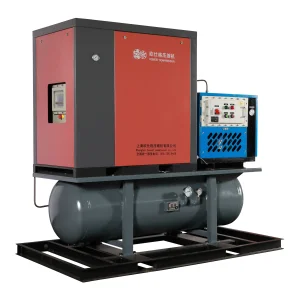
Yes. Over 60% of our production volume operates under structured OEM/ODM private-label partnerships for international distributors and engineering brands across Europe, North America, the Middle East, and Southeast Asia. Custom options include tailored industrial powder-coat canopy colors (RAL spectrum matching), client-branded PLC interface software supporting multiple languages (English, Spanish, Russian, French, German, Arabic), custom sheet-metal footprint designs for tight plant rooms, skid-mounted integrated configurations (compressor, vessel, and dryer on a single frame), and market-specific electrical cabinet builds (CE, UL508A, CSA).
Specialized Vacuum, Explosion-Proof & Custom Compressor Skids
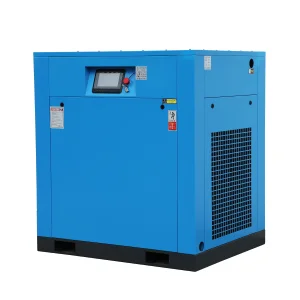
Expand operational capabilities with engineered vacuum pumps, integrated 4-in-1 hazardous atmosphere skids, and high-efficiency permanent magnet compressor systems.
Optimize Your Industrial Air System's Total Cost of Ownership
Collaborate directly with our Shanghai application engineering team to calculate your plant load profile, size multi-machine sequencing skids, and receive complete technical specifications, CAD layout drawings, and transparent factory FOB/CIF pricing.