Precision Compressed Air Processing Systems
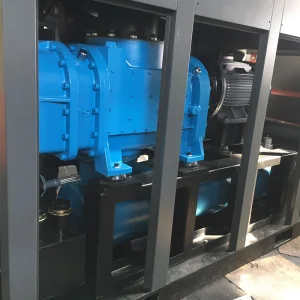
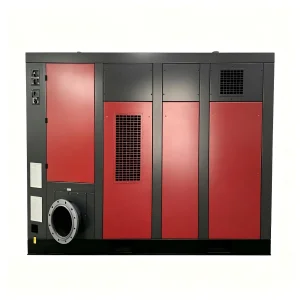
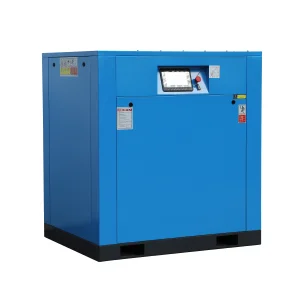
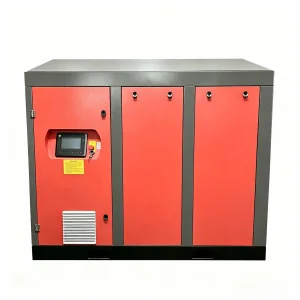
Seamless integration between high-efficiency rotary screw compressor stations and multi-stage refrigerated dehumidification systems.
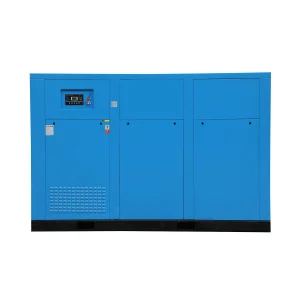
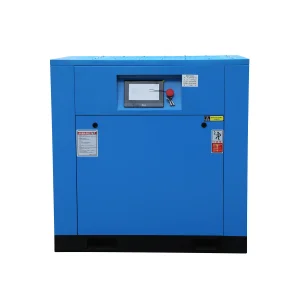
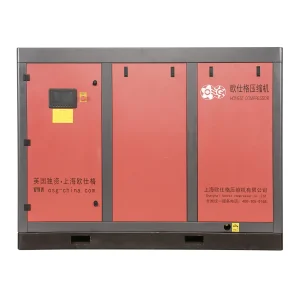

The Critical Role of Refrigerated Dehumidification in Modern Air Networks
Atmospheric ambient air intake contains vast volumes of water vapor, gaseous hydrocarbons, and micro-particulates. As air undergoes volumetric compression, the partial vapor pressure skyrockets, causing rapid saturation.
Thermodynamic Dew Point Integrity
Maintaining an accurate pressure dew point (PDP) between +3°C to +5°C (ISO 8573-1 Class 4) eliminates liquid condensates throughout downstream distribution piping, terminating corrosion, pneumatic valve stalling, and pneumatic instrument sensor fouling.
Plate-Fin 3-in-1 Aluminum Heat Exchangers
Featuring counter-flow pre-cooling, internal evaporation, and mechanical water separation within a unitary aluminum core. This architecture decreases internal differential pressure drop below <0.018 MPa, safeguarding overall electrical efficiency.
Smart Hot-Gas Bypass Modulation
Eliminating the risk of heat-exchanger freezing under low pneumatic demand. Precision modulating valves bleed superheated discharge refrigerant back into the evaporator, providing non-cycling stability from 0% to 100% intermittent duty loads.
Technological Frontiers in Industrial Refrigerated Air Dryers
Decarbonization, Industry 4.0 telemetry, and strict international F-gas regulations are transforming how global procurement teams source refrigerated compressed air dryers from China.
Inverter-Driven Refrigerant Compressors
Traditional refrigerated dryers run fixed-speed compressors constantly, wasting power when pneumatic lines run at half-capacity. Variable-speed inverter refrigerant compressors match motor speed dynamically to the thermal load, cutting energy consumption by up to 35%.
Ultra-Low Global Warming Potential (GWP)
In compliance with the Kigali Amendment and European F-Gas directives, advanced dryers from top Chinese suppliers leverage R513A, R1234ze, and R290 green refrigerants, lowering direct carbon footprints without compromising heat-transfer coefficients.
Zero-Air-Loss Capacitive Condensate Traps
Pneumatic bleed drains waste costly pressurized air whenever discharging water. Intelligent electronic capacitive level-sensing drains dump only condensate, preventing costly air leaks and saving thousands of dollars annually per facility.
Engineered Moisture Extraction Across High-Demand Sectors
Every factory environment introduces unique variables regarding humidity, ambient temperatures, and air quality standards. Here is how our engineered dryers secure key industrial workflows.
Automotive Laser Cutting & Robotic Paint
Water droplets in high-pressure assist nitrogen/air lines cause severe lens spitting, cutting surface burrs, and paint bubbling. Refrigerated dryers ensure continuous ISO 8573-1 Class 4 dew point delivery for blemish-free robotic coating.
Pharmaceutical Cleanroom Packaging
Pairing water-lubricated Class 0 oil-free screw compressors with sterile sub-micron coalescing filtration and refrigerated dryers ensures zero hydrocarbon aerosol migration and inhibits bacterial proliferation across sterile pill sorting and blistering units.
Heavy Foundry & Marine Engineering
High ambient temperatures up to +50°C and corrosive salt-air conditions require reinforced condensers, marine-grade anti-corrosive copper/aluminum finning, and oversized thermal expansion modules for durable continuous operations.
Technological Trajectory & Future Industry Milestones
Continuous R&D is transforming thermal air treatment from a reactive auxiliary component into an active, cloud-monitored optimization center.
Micro-Channel Condensation
Full migration to all-aluminum micro-channel condensers, reducing refrigerant charge weight by 40% and enhancing heat rejection speed.
Predictive IoT Dewpoint Tuning
Algorithms anticipating upstream compressor load variations through factory SCADA, modulating chiller output before dew point drift occurs.
Magnetic-Bearing Compression
Adoption of high-efficiency magnetic-bearing centrifugal refrigeration compressors for large-scale drying (>100 m³/min) without oil lubricants.
Thermoelectric Solid-State Units
Deployment of advanced Peltier-based solid-state modules for precision micro-flow applications, eliminating mechanical refrigerant loops entirely.
Holistic Compressed Air Treatment: Engineering the Complete Room
Dryers cannot be evaluated in isolation. A truly energy-efficient compressed air utility system requires seamless harmonization between air generation, cooling, moisture extraction, and final distribution filtration.
Thermodynamic Heat Recovery Integration
Upstream screw air compressors convert up to 94% of input electrical energy into heat. By integrating liquid-cooled heat exchangers, this thermal output is redirected into facility heating or boiler pre-heat, lowering whole-facility energy bills.
Optimized Buffer Receiver Sizing
Locating an adequately sized wet-air receiver before the refrigerated air dryer dampens surging pneumatic pulses and drops bulk moisture out of suspension before it ever reaches the dryer's precooler heat exchanger.
Multi-Stage Differential Filtration
Pairing a 3-micron pre-filter before the refrigerated dryer protects the aluminum exchanger channels from particulates, while 0.01-micron downstream filters capture residual oil mist, ensuring pure industrial air delivery.
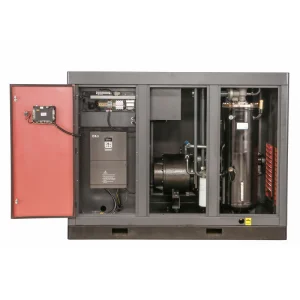
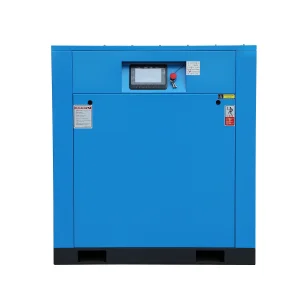
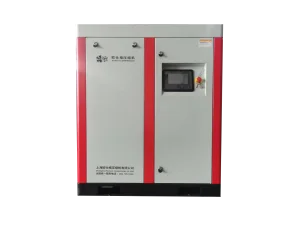
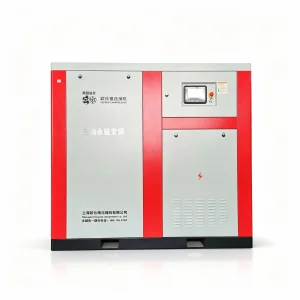
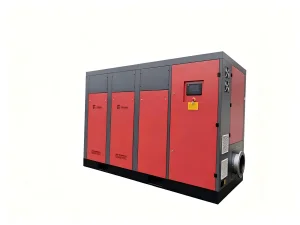
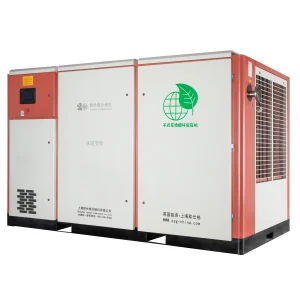
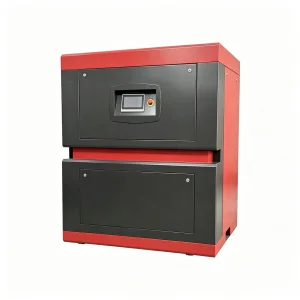
Heavy-Duty Compressors, Blowers & Vacuum Systems
Explore our British-engineered industrial equipment built in our 50,000 m² state-of-the-art facility in Shanghai, China.

Engineering & Sourcing Technical FAQs
Detailed thermodynamic, mechanical, and logistical insights for plant managers, facility planners, and global procurement teams.