High-Efficiency Compressed Air & Vacuum Machinery
Discover our specialized lineup of oil-free screw compressors, permanent magnet VFD air compressors, and heavy-duty vacuum systems engineered for global OEM/ODM integration.
The Critical Role of Ultra-Low Pressure Dew Point (-40°C to -70°C PDP) in Modern Industrial Automation
In modern industrial manufacturing, compressed air is often referred to as the "fourth utility." However, atmospheric air drawn into an industrial air compressor inherently contains significant quantities of water vapor, particulate contaminants, and vaporized hydrocarbons. When air is compressed, its moisture-holding capacity drops exponentially per unit volume, resulting in bulk liquid condensation inside distribution headers, pneumatic actuators, solenoid valves, and end-use process equipment.
While standard refrigeration air dryers can achieve pressure dew points (PDP) down to approximately +3°C (+37.4°F), they are fundamentally incapable of preventing condensation in sub-zero ambient environments or meeting the ultra-clean moisture limits dictated by ISO 8573-1:2010 Class 1 (-70°C PDP) or Class 2 (-40°C PDP) purity standards. This technical boundary is where Industrial Desiccant Air Dryers become essential.
An industrial desiccant air dryer utilizes advanced solid desiccant media—specifically engineered matrixes of activated alumina, molecular sieves (3A/4A/13X), and silica gel—to remove water vapor via physical adsorption. Adsorption is a surface-bound thermodynamic phenomenon where water molecules adhere to the microscopic pore structure of the desiccant beads without changing their chemical structure. Through twin-tower regenerative configurations, one vessel actively dries the compressed air stream while the off-line vessel undergoes desiccant regeneration via pressure swing adsorption (PSA), thermal swing adsorption (TSA), or ambient blower purging.
Adsorption Chemistry & Desiccant Media Selection Dynamics
Selecting the precise adsorption media is critical to achieving lower lifetime operational costs, minimal pressure drop, and exceptional mechanical stability against structural crushing and thermal shock:
- Activated Alumina ($Al_2O_3$): High mechanical crush strength and superior resistance to liquid water slugging. Ideal for primary moisture removal in heatless and heated desiccant dryers achieving -40°C PDP.
- Synthetic Molecular Sieve (Zeolite 4A / 13X): Engineered crystalline aluminosilicates with uniform pore diameters. Molecular sieves exhibit an extremely steep adsorption isotherm at low relative humidity levels, making them mandatory for achieving extreme -70°C PDP air purity in semiconductor and battery dry-rooms.
- Silica Gel Matrix ($SiO_2$): High surface area material optimized for low-temperature regeneration applications, such as heat-of-compression (HOC) and blower-assisted desiccant systems.
Industrial Desiccant Air Dryer Evolution: Technological Trends Driving Global Sourcing
The global market for industrial desiccant air dryers is undergoing a massive structural shift. Rising industrial energy tariffs, stringent environmental ESG regulations, and rapid automation in high-tech manufacturing sectors are forcing procurement teams and engineering managers to move away from legacy high-purge systems toward smart, low-carbon air treatment infrastructure.
1. Shift to Zero-Purge & Low-Purge Technologies
Traditional heatless desiccant air dryers consume 12% to 15% of total compressed air flow solely for tower purge regeneration. Global enterprises are rapidly retrofitting plant air systems with Heated Blower Purge and Zero-Purge Heat-of-Compression (HOC) dryers, effectively reducing purge energy loss to under 2% or absolute zero.
2. AI-Driven Dew Point Dependent Switching (DDS)
Fixed-cycle timer switching forces desiccant towers to regenerate regardless of actual moisture load. Modern ODM desiccant dryers integrate digital hygrometers linked to PLC microcontrollers. By continuously monitoring outlet PDP, tower switching cycles are dynamically extended during partial-load conditions, yielding energy savings up to 35%.
3. Modular Aluminium Desiccant Towers vs. Steel Pressure Vessels
Extruded aluminium modular desiccant dryers are capturing market share in compact plant layouts and OEM machine integration. Offering corrosion-free internal fluid channels, reduced weight, and compact footprints, modular dryers enable easy expansion compared to heavy traditional welded carbon steel twin-tower vessels.
| Desiccant Dryer Technology Type | Regeneration Method | Average Purge Loss (%) | Achievable Pressure Dew Point | Ideal Industrial Applications |
|---|---|---|---|---|
| Heatless Pressure Swing (PSA) | Expanded dry process air expansion | 14% - 18% | -40°C to -70°C PDP | Small to medium flow setups, hazardous explosion-proof areas |
| Heated Blower Purge (TSA) | Electric heater + ambient air blower | 2% - 5% | -40°C PDP | Continuous heavy manufacturing, central plant air systems |
| Heat of Compression (HOC) | Hot discharge heat from oil-free screw compressor | 0% (Zero-Purge) | -20°C to -40°C PDP | Large-scale petrochemical, glass manufacturing, power generation |
| Modular Compact Extruded Tower | High-efficiency PSA / Heated Hybrid | 3% - 10% | -40°C to -70°C PDP | Laser cutting cells, medical equipment, electronics packaging |
Global Enterprise Procurement Demand: Evaluating Total Cost of Ownership (TCO)
For industrial procurement managers, engineering procurement contractors (EPCs), and OEM distributors, evaluating an industrial desiccant air dryer purely based on initial capital expenditure (CAPEX) is a costly error. Over a standard 10-year lifecycle of an industrial dryer, CAPEX accounts for less than 15% of the total system outlay. Operating expenditure (OPEX)—comprising electrical power consumption for heaters/blowers, compressed air purge waste, and desiccant replacement—dominates over 85% of life-cycle expenses.
Key Procurement Evaluation Criteria (RFP/RFQ)
- Specific Power & Purge Ratio Verification: Demand certified flow testing data establishing real purge loss under high ambient summer temperatures and 100% relative humidity.
- Desiccant Fluidization Safeguards: Ensure the dryer design incorporates non-turbulent up-flow drying and down-flow depressurization to prevent desiccant bead attrition, dusting, and channel bypassing.
- Pressure Drop ($\Delta P$) Optimization: High internal pressure drops force air compressors to operate at elevated operating pressures. Low-friction valve manifolds and streamlined headers should limit total dryer $\Delta P$ to under 0.2 bar (2.9 psi).
- Custom Voltage & Electrical Standard Flexibility: Verification that OEM/ODM suppliers accommodate worldwide power grids: 380V/50Hz, 400V/50Hz, 460V/60Hz, 575V/60Hz, and 690V industrial sites.
ODM/OEM Customization Capabilities
As a leading Chinese manufacturing exporter, our engineering team offers turnkey customization tailored to global brand distributors and plant systems integrators:
- Custom branded enclosures with acoustic muffling options (< 75 dBA).
- PLC integration supporting Siemens S7-1200/1500, Allen-Bradley CompactLogix, and Modbus TCP/IP, PROFIBUS, and CANopen protocols.
- Heavy-duty marine coatings, C5-M anti-corrosion painting for offshore oil rigs.
- Integrated filtration skid packages containing pre-filters (0.01 micron oil removal) and post-desiccant high-temperature dust filters.
Macro-Industry Solutions: Tailored Compressed Air Treatment Architectures
Different manufacturing sectors carry unique operational sensitivities. Our ODM industrial desiccant air dryers are custom-engineered to overcome sector-specific environmental and quality risks.
1. Semiconductor & Lithium Battery Dry Rooms
Challenge: Lithium-ion battery cell assembly requires ultra-dry atmospheres with relative humidity under 0.5% (PDP -50°C to -70°C) to prevent catastrophic reactions between moisture and electrolyte lithium salts ($LiPF_6$).
Solution: Dual-tower molecular sieve desiccant dryers featuring zero-leakage pneumatic butterfly valves, deep -70°C PDP dew point stabilization, and continuous online hygrometer trace recording.
2. Pharmaceuticals & Medical Manufacturing
Challenge: Compressed air coming into direct contact with active pharmaceutical ingredients (APIs) or sterile packaging must strictly comply with cGMP guidelines and ISO 8573-1 Class 1:2:1 or Class 1:1:1.
Solution: Stainless steel desiccant vessels paired with Class 0 water-lubricated or oil-free dry screw air compressors, sterile high-efficiency particulate air (HEPA) final stage filters, and continuous dew point alarming.
3. Petrochemical & Explosion-Proof Marine
Challenge: Offshore platforms and refineries operate in highly corrosive, highly combustible environments demanding continuous instrument air for pneumatic control valves.
Solution: Fully customized ATEX / IECEx Zone 1 and Zone 2 explosion-proof electrical panels, Ex d IIC T4 ratings, stainless steel (316L) interconnecting pipework, and ASME Sec VIII pressure vessels.
International Manufacturing Standards & Localized After-Sales Support
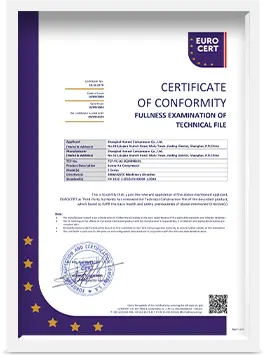
Exporting complex industrial equipment demands uncompromising adherence to regional pressure vessel legislations, electrical safety codes, and local service availability. As an established manufacturer and international exporter based in Shanghai, China, our manufacturing plant operates under full ISO 9001:2015 Quality Management and ISO 14001:2015 Environmental System frameworks.
Global Compliance & Pressure Vessel Certifications
- ASME Boiler & Pressure Vessel Code (Section VIII Div 1): Stamped pressure vessels for seamless deployment across North America and South America.
- CE-PED (2014/68/EU Pressure Equipment Directive): Full conformity marking for European Union member states.
- CRN (Canadian Registration Numbers): Province-specific technical registration for heavy Canadian industrial operations.
- EAC Certification: Full compliance documentation for Eurasian Customs Union markets (Russia, Kazakhstan, Belarus).
- UL / CSA / CE Electrical Panels: Control cabinets built with high-grade Schneider, ABB, or Siemens components meeting strict local electrical inspector codes.
Worldwide Technical Support & Lifecycle Services
We provide comprehensive lifecycle backing for our global ODM partners, engineering contractors, and factory operators:
- Rapid Spare Parts Dispatch: Modular valve repair kits, pre-measured desiccant charges, and filtration elements stocked in key overseas regional hubs.
- Remote Cloud Monitoring & IoT Diagnostics: Integrated RS485 / Ethernet controllers pushing real-time pressure, dew point, heater temperature, and fault alerts directly to plant SCADA systems.
- Comprehensive Technical Documentation: Supplied with localized operation manuals, CAD dimensional drawings, P&ID schematics, and electrical wiring diagrams.
Technical Roadmap (2025–2035): Next-Decade Innovations in Desiccant Regeneration
As global industry accelerates toward net-zero carbon targets, compressed air purification equipment is evolving beyond simple physical filtration into highly efficient, intelligent thermodynamic systems.
1. Nanostructured Core Adsorbents
Emerging metal-organic frameworks (MOFs) and nanostructured synthetic zeolites are being engineered to provide 300% higher water adsorption capacity per kilogram compared to traditional activated alumina. This breakthrough will shrink desiccant tower footprints by half while reducing regeneration heat energy requirements by up to 40%.
2. Smart Predictive AI Dew-Point Controls
Next-generation desiccant air dryers will leverage edge computing machine learning algorithms. By correlating real-time weather forecasts, ambient humidity shifts, and factory production schedules, the controller dynamically adjusts tower switching and heating profiles prior to moisture load spikes, guaranteeing absolute dew point stability at lowest electrical power input.
3. High-Temperature Heat-Pump Regeneration
Replacing traditional electric resistance regeneration heaters with industrial high-temperature heat pumps. By capturing waste heat from oil-free screw compressor cooling water loops and multiplying thermal energy output, desiccant regeneration power consumption can be drastically cut by 60% or more.
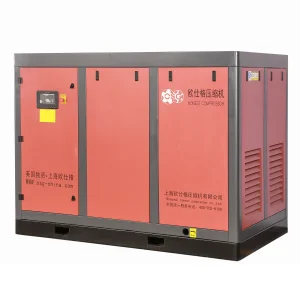
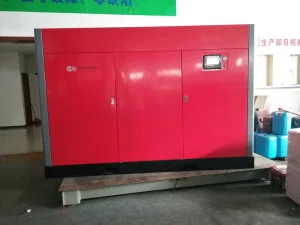
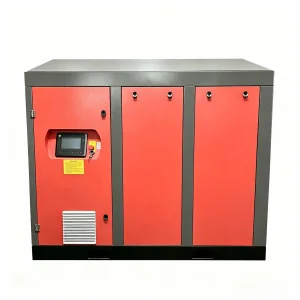
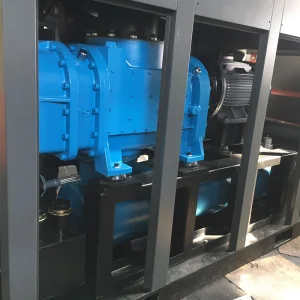
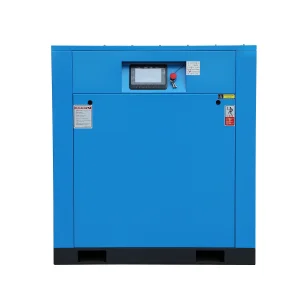
Advanced Air Compressors, Blowers & Vacuum Equipment
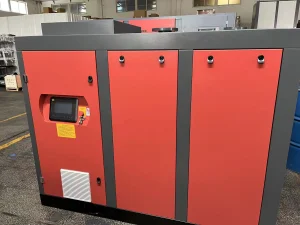
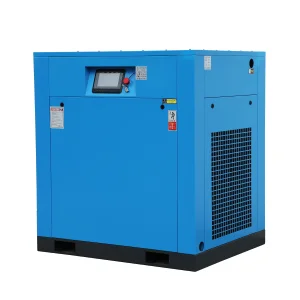
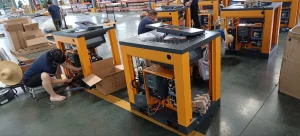
Explore our full suite of industrial screw air compressors, variable frequency drives, blowers, and vacuum pumps engineered for global market export.
Frequently Asked Questions by Industrial Sourcing & Engineering Teams
Expert technical answers to essential procurement, installation, and engineering selection queries regarding industrial desiccant air dryers.