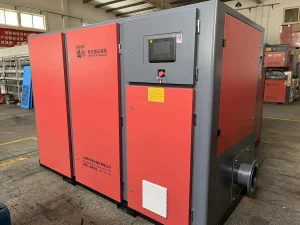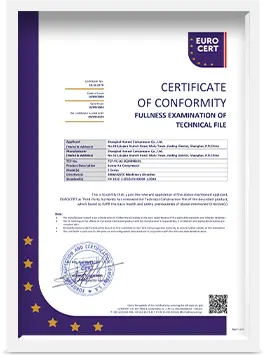
Featured Industrial Compression & Air Treatment Machinery
Precision-machined screw air compressors, variable-frequency drives, and clean industrial vacuum units designed to integrate seamlessly with desiccant adsorption drying systems.
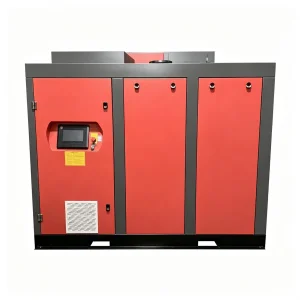
OEM Hot Sale China Factory High Quality Screw Vacuum Pump Permanent Magnet Frequency Conversion Progressive Pump Manufacturers, Factories
Request Technical Spec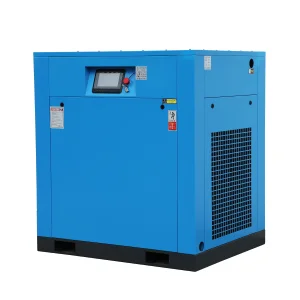
China Permanent Magnet VFD Rotary Screw Compressor 11kW Manufacturer, Manufacturers
Request Technical Spec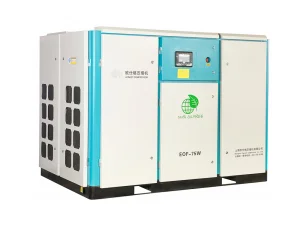
China 55kw to 315kw Oil free screw air compressor with dry type fixed speed or VSD PM type Suppliers, Exporters
Request Technical Spec
OEM Industrial Screw Vacuum Pumps – Oil-Injected (0.35 mbar) & Oil-Free (20–80 kPa) Series, 5.5–110 kW Supplier, Exporter
Request Technical Spec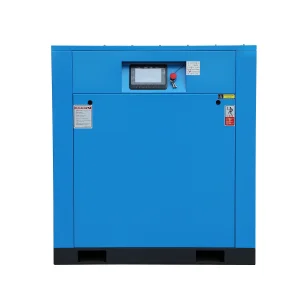
OEM VFD screw air compressor 0.7-1.25mpa Energy Saving up to 30% Manufacturers, Exporter
Request Technical Spec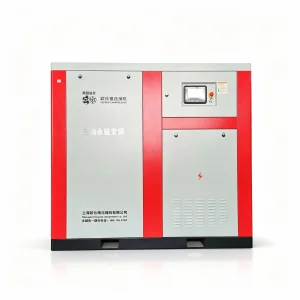
China Oil-Free Water Lubricated Screw Air Compressor EOWV-45A/W Suppliers, Exporter
Request Technical Spec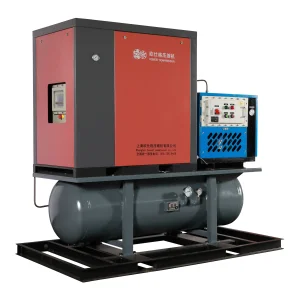
OEM 4-in-1 Explosion-Proof Air Compressor | 7.5-22kW Permanent Magnet Integrated Unit Factory, Exporters
Request Technical Spec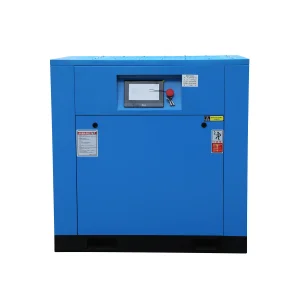
OEM Industrial 15kw/22kw/37kw/55kw/75kw Energy Saving Pm Motor VSD/VFD Rotary Screw Air Compressor Manufacturer, Exporters
Request Technical SpecThermodynamic Mechanics of Industrial Adsorption Air Dryers
A deep engineering analysis of molecular sieves, activated alumina desiccant beds, and modern regeneration kinetics governing dew point depression in mission-critical plants.
Pressure Swing Adsorption (PSA)
PSA, or heatless desiccant drying, operates on alternating dual-tower pressure cycles. While one tower dehydrates saturated feed air under system pressure (typically 0.7 to 1.0 MPa), a calibrated fraction of dry purge air (12% to 15%) is expanded to near atmospheric pressure into the regenerating bed. This dramatic drop in water vapor partial pressure strips adsorbed moisture molecules off the desiccant surface without external heat inputs, delivering stable pressure dew points of -40°C down to -70°C PDP.
Thermal Swing Adsorption (TSA)
Thermal Swing Adsorption systems decouple regeneration from excessive compressed air loss by employing thermal energy. Externally heated purge dryers and blower purge systems heat ambient air or minimal purge stream (typically 4% to 7%) to 160°C–200°C. By raising desiccant bed temperature, moisture equilibrium capacity decreases rapidly, releasing trapped water vapor. This yields massive operational expenditure (OPEX) reductions over continuous multimegawatt facility baselines.
Heat of Compression (HOC) Systems
Engineered primarily for integration alongside high-capacity oil-free rotary screw compressors, HOC dryers capture the non-intercooled heat generated directly during compression stages. Rather than expelling this thermal energy via coolers, hot discharge air (140°C to 180°C) is routed directly through the saturated desiccant bed to desorb moisture with virtually zero purge air penalty (0% to 1.5% loss), setting the benchmark for net-zero energy decarbonization programs.
| Adsorption Architecture | Typical Dew Point (PDP) | Purge Air Consumption | Specific Power Addition | Primary Industrial Use Case |
|---|---|---|---|---|
| Heatless Desiccant (PSA) | -40°C to -70°C | 12.0% – 15.0% FAD | 0.00 kW (No Heaters) | Harsh outdoor piping, mining, modular skids |
| Externally Heated Purge | -40°C | 5.0% – 7.0% FAD | Electric heater thermal batching | General industrial plants, automotive painting |
| Heated Blower Purge | -40°C | 0.0% – 2.5% Compressed Air | Centrifugal blower + heating block | Heavy chemical, pharmaceutical manufacturing |
| Heat of Compression (HOC) | -20°C to -40°C | ~0.0% (Zero True Loss) | Near-zero (Harvests airend heat) | Semiconductor fabs, large oil-free complexes |
| Rotary Drum Desiccant | -20°C to -40°C | 0.0% Continuous | Fractional rotation motor (≤ 0.2 kW) | Continuous base-load cleanroom air delivery |
Strategic Manufacturing Advantages of China Factory Production
How our Shanghai engineering hub combines vertical supply chain density, precision robotics, and rigorous international code compliance to deliver unparalleled value for global procurement heads.
Certified Vessel Fabrication
Dual-tower pressure vessels are manufactured in strict compliance with ASME Boiler & Pressure Vessel Code (Section VIII Div 1), CE-PED (2014/68/EU), and China GB150 standards. Submerged arc automated welding and 100% X-ray non-destructive weld examinations guarantee absolute pressure boundary integrity up to 4.0 MPa.
Proprietary Valve Sourcing
Switching valve failure is the primary point of failure in adsorption dryers. Our Shanghai facilities utilize proprietary stainless-steel angle seat valves and high-cycle butterfly valves with anti-friction PTFE seals tested to exceed 1,000,000 continuous switching operations without packing gland leakage.
Optimized Chemical Media
Direct integration with domestic high-purity chemical suppliers provides immediate access to high-crush-strength activated alumina (surface area ≥ 320 m²/g) and 4A/13X molecular sieves. Low-dust attrition rates safeguard downstream coalescing filters and process machinery from particulate contamination.
Full Skid Modularization
Beyond stand-alone dryers, our engineering works construct completely integrated skids featuring pre-piped pre-filters, oil-vapor removal towers, post-dust filters, automatic condensate drains, and centralized Siemens/Allen-Bradley PLC human-machine interfaces ready for instant plant interconnection.
Industry Evolution: Smart, Data-Driven Dew Point Management
How advanced thermodynamic algorithms, variable capacity synchronization, and Internet-of-Things (IoT) analytics are replacing traditional fixed-timer purge cycles.
Dew Point Dependent Switching (DDS)
Traditional adsorption dryers switch towers on rigid 4- to 10-minute timers regardless of actual air demand or ambient moisture loading. In contrast, our intelligent DDS integration uses calibrated thin-film aluminum oxide or ceramic moisture sensors. Tower switching is deferred until the online bed nears genuine breakthrough saturation, reducing purge air cycles by 40% to 75% during partial plant loads and off-peak production shifts.
Predictive AI Desiccant Health Monitoring
Desiccant pore poisoning occurs when oil aerosols or thermal shocks compromise adsorptive surface microstructures. By continuously transmitting operating differential pressures ($\Delta P$), thermal bed gradients, and regeneration heating curves via Modbus TCP/IP to an edge computing controller, our systems diagnose desiccant bed degradation months before dew point drift affects sensitive factory pneumatic actuators.
Permanent Magnet VFD Flow Synchronization
Adsorption beds perform most stably under laminar velocity flows below 0.3 m/s to prevent desiccant fluidization. By pairing our adsorption dryers directly with smart permanent magnet variable-frequency (PM VFD) screw compressors, air velocity into the drying vessels ramps smoothly in locked unison with compressor output, entirely eliminating mechanical media abrasion and bed channeling.
Mission-Critical Applications & Localized Air Quality Standards
Compressed air is the 'Fourth Industrial Utility'. In modern automated manufacturing, failing to control moisture can trigger millions in product scrap, line halts, and regulatory fines.
Semiconductors & Electronics
Wafer fabrication, photolithography tools, and chip packaging environments mandate compressed dry air (CDA) complying strictly with ISO 8573-1:2010 Class 1:2:1. With moisture thresholds held at -70°C PDP, our adsorption skids ensure zero moisture condensing into micro-pneumatic pick-and-place nozzles or oxidizing sensitive silicon substrates.
Pharmaceutical & Life Sciences
In tablet compression, sterile packaging, and API bioreactor aeration, moisture allows bacterial spores to proliferate inside piping networks. Adsorption drying down to -40°C PDP inhibits all microbial activity per cGMP and FDA guidelines, preserving complete batch sterility and preventing product contamination.
EV Lithium Battery Dry Rooms
Electrolyte filling and battery cell assembly necessitate ultra-dry atmospheric cleanrooms with dew points typically below -50°C to -60°C. Standard refrigeration dryers (which bottom out at +3°C PDP) cannot operate in these parameters; multi-stage molecular sieve adsorption dryers are the sole viable engineering standard.
Petrochemical & Offshore Skids
Outdoor pneumatic control loops exposed to sub-zero subarctic or desert night temperatures face catastrophic line freezing if air moisture is present. Explosion-proof ATEX/IECEx certified adsorption skids safeguard continuous refinery valve actuations and prevent instrument freeze-up during critical plant trips.
Macro System Integration: Compressor to Point-of-Use Skids
Achieving maximum energy efficiency requires analyzing the entire compressed air room holistically. An adsorption dryer cannot perform reliably without properly sized upstream and downstream purification components.
Coalescing Pre-Filtration Cascades
Liquid water and bulk oil aerosols (even from 'well-maintained' oil-flooded screw compressors) immediately blind the micro-pores of desiccant beds, causing irreversibly fouled adsorption media. Upstream protection requires a cyclonic moisture separator followed by high-efficiency dual coalescing filters reducing aerosol concentrations below 0.01 mg/m³ (0.01 ppm).
Thermal Dew Point Bump Mitigation
During tower switchover in heated-regeneration dryers, a temperature spike (thermal bump) typically propagates downstream as the freshly baked bed comes online, momentarily degrading dew point quality. Our skids utilize integrated cool-down bypass valves and thermal mass management programming to guarantee flat, ripple-free -40°C dew point curves continuously.
Particulate Post-Filtration Engineering
Even premium grade activated alumina generates microscopic desiccant dust particles through natural friction under pressure swings. Installing an absolute 1-micron or 0.01-micron high-temperature particulate filter directly downstream of the drying towers prevents abrasion of downstream valves, robotic seals, and pneumatic instrumentation.
Global Procurement Checklist: Total Cost of Ownership (TCO)
Initial capital expense (CAPEX) accounts for less than 15% of an industrial dryer's 10-year operating lifecycle cost. Energy consumption, purge air losses, and pressure drops dominate long-term budgets.
True Purge Air Loss Financial Modeling
A heatless dryer consuming 15% purge on a 50 m³/min (250 kW) compressor discards 7.5 m³/min of compressed air into the atmosphere. At $0.12/kWh across 8,000 annual running hours, this purge air alone equates to over $36,000 USD per year in wasted electricity. Upgrading to an externally heated blower purge skid pays for itself in less than 14 months of runtime.
Pressure Drop ($\Delta P$) Power Penalty
Every 0.1 bar (1.45 psi) of unnecessary pressure drop across an undersized dryer vessel or restrictive internal manifold forces the main air compressor to operate at higher discharge pressure, increasing electrical power demand by roughly 1%. Our engineering holds total skid differential pressure under 0.15 bar (2.1 psi) at full rated velocity.
Compliance & Global Traceability
International industrial procurement teams must audit vendor test documentation rigorously. We provide verified Mill Test Reports (MTRs) for pressure vessel steel, hydrostatic pressure test certificates to 1.5x working pressure, third-party air purity testing logs per ISO 8573, and electrical control panels with UL508A, CE, or CSA compliance labeling.
Frequently Asked Technical Questions (FAQ)
Authoritative guidance direct from senior air treatment specialists on sizing, dew point stability, and OEM equipment selection.
What is the engineering difference between a refrigerated dryer and an adsorption desiccant dryer?
How do inlet air temperature and working pressure affect adsorption dryer sizing?
Actual Required Capacity = Nominal Flow ÷ (Pressure Factor $K_p$ × Temperature Factor $K_t$)
For example, if incoming air reaches 45°C instead of the nominal 35°C rating, the desiccant vessel volume or cycle frequency must typically be enlarged by 25% to 35% to prevent moisture breakthrough.
When should an engineer specify a heated blower purge dryer over a heatless desiccant dryer?
Why is Class 0 oil-free air crucial for the longevity of desiccant beds?
What factory acceptance testing (FAT) protocols does Honest Compressor provide for international OEM buyers?
Specialized Two-Stage, Oil-Free & Vacuum Pumping Infrastructure
Complete your total plant air utility ecosystem with high-pressure ratio two-stage air compressors, semiconductor vacuum systems, and clean screw blowers.
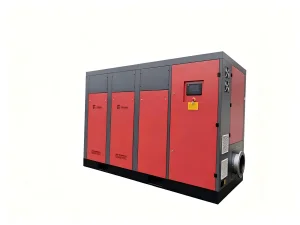
ODM Industrial Screw Vacuum Pump Oil Free High Efficiency Vacuum Pump for Semiconductor & Chemical Industry Manufacturer, Factories
Request Technical Spec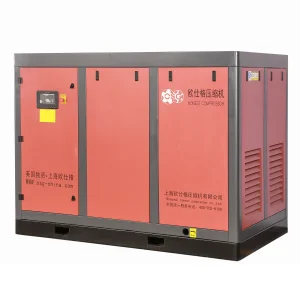
ODM IP55/54 55KW 75HP Factory Price Two Stage Industrial Screw Type Air Compressor Machine Factories, Exporters
Request Technical Spec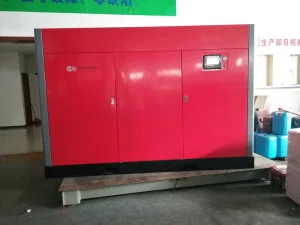
China Smart energy saving water lubricating 100% oil free screw air compressor with fixed speed or VSDPM Manufacturers, Exporter
Request Technical Spec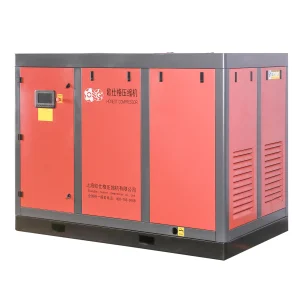
OEM Two-stage Screw air Compressor Chemical Factory Air Equipment Two-stage Screw air Compressor Manufacturer, Factory
Request Technical Spec
OEM 10A-PM permanent magnet frequency screw air compressor 220v 50hz single phase Suppliers, Exporters
Request Technical Spec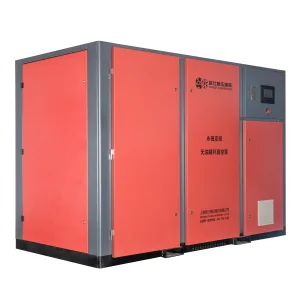
ODM PM VFD Dry Oil-Free Screw Vacuum Pump for Industrial Clean Vacuum Manufacturer, Suppliers
Request Technical Spec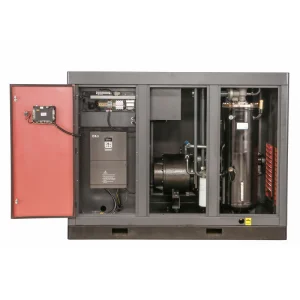
ODM Oil-cooled two-stage permanent magnet variable frequency screw air compressor Manufacturers, Suppliers
Request Technical Spec