High-Pressure & Oil-Free Industrial Air Systems
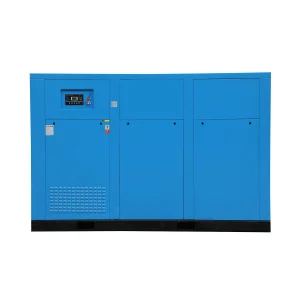
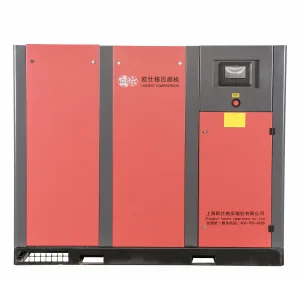
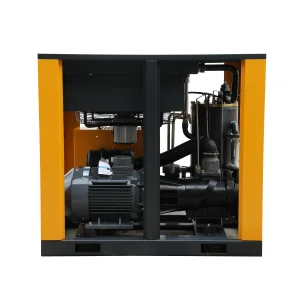
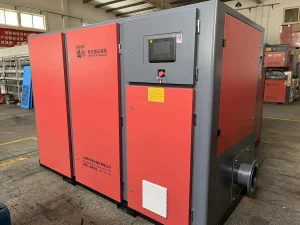
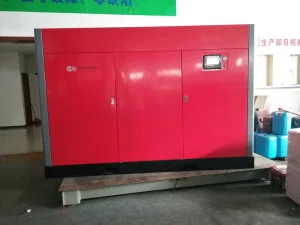
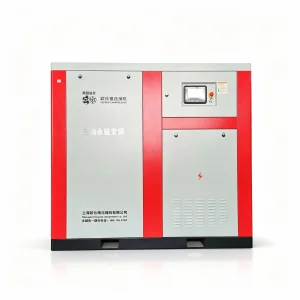
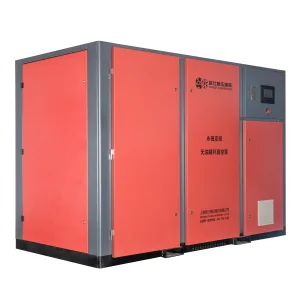
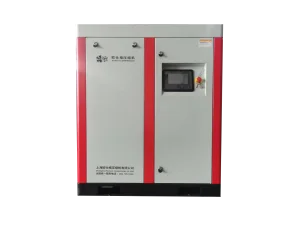
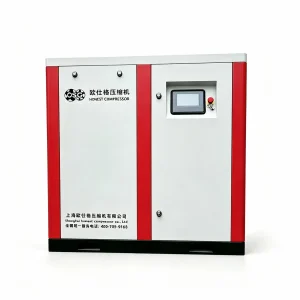
Continuous-duty rotary screw compressors and vacuum blowers manufactured under British engineering management in Shanghai, specifically configured for demanding fabrication applications including high-pressure fiber laser cutting.

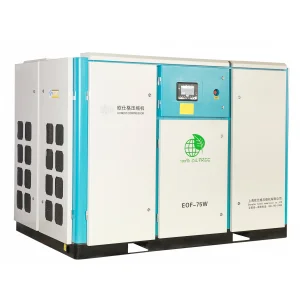
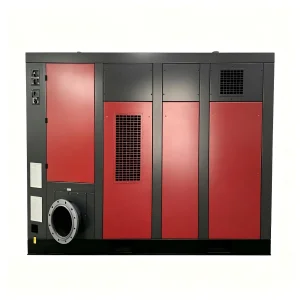
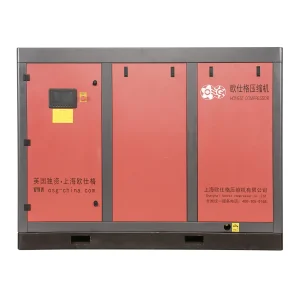
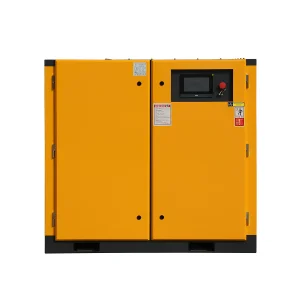
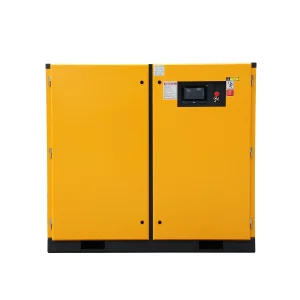
The Paradigm Shift: Why High-Pressure Compressed Air is Replacing Nitrogen & Oxygen
In modern fiber laser processing ranging from 4kW up to 60kW, assist gas is no longer a peripheral expense—it represents up to 40% to 60% of total hourly operating cost. Purified shop air at 16–30 bar delivers revolutionary economics.
Assist Gas Operating Cost Reduction vs. Bulk Liquid N₂ Delivery
Bar Pressure Capability for Fast Dross Expulsion in Thick Plates
Months Average Payback Period for a Dedicated Laser Compressor Skid
mg/m³ Residual Oil Vapor Guarantee (ISO 8573-1 Class 1 Strict Optics Protection)
Thermodynamics & Gas Dynamics at the Cutting Kerf
The fundamental objective of laser assist gas is twofold: to chemically or kinetically interact with the melt puddle and to pneumatically eject molten slag down through the kerf before recast occurs. Historically, fabricators faced a binary compromise: Oxygen (O₂) enabled low-pressure cutting through exothermic iron oxidation, but left a brittle, black oxide film requiring secondary mechanical deburring or chemical pickling before welding and painting. Liquid Nitrogen (N₂) achieved pristine, bright edge surfaces via pure kinetic ejection, but generated immense recurring costs from tanker rentals, liquid boil-off loss, and high flow-rate consumption.
High-pressure compressed air (composition: ~78% Nitrogen, ~21% Oxygen, ~1% Argon) introduces a breakthrough hybrid dynamic. At pressures of 16 to 30 bar, the 21% oxygen fraction supplies a mild, controlled exothermic boost that raises cutting velocities by 20% to 50% compared to pure nitrogen in mild carbon steels, while the dominant 78% nitrogen component cools the heat-affected zone (HAZ) and mechanically strips molten slag with high Mach velocities.
The economic delta is astronomical. Fabricators operating 12kW to 30kW fiber lasers typically expend $12.00 to $28.00 per hour on liquid nitrogen. A dedicated, integrated high-pressure screw compressor consumes only electricity—dropping the gas production cost to approximately $0.80 to $2.20 per hour.
Comparative Gas Analysis: Laser Assist Gas Performance in Sheet Metal Fabrication
| Evaluation Parameter | High-Pressure Air (16–32 Bar) | Liquid Nitrogen (N₂ Cylinder / Tank) | Oxygen (O₂ Low Pressure 0.5–3 Bar) |
|---|---|---|---|
| Direct Cost per Hour (12kW Laser) | $1.20 – $2.40 / hr (Electricity only) | $14.00 – $32.00 / hr (Gas + Rental) | $3.50 – $7.00 / hr |
| Cutting Speed (Carbon Steel 1–6mm) | Maximum (20–40% faster than N₂) | High velocity | Moderate (Limited by thermal blowout) |
| Cut Edge Condition | Mild light golden / semi-bright, ready for e-coat | Silver / Mirror bright, 100% oxide free | Heavy black oxide layer, burrs on corners |
| Secondary Post-Processing | Direct welding & powder coating possible | No post-processing needed | Requires acid bath / grinding deburr |
| Supply Reliability | Continuous 24/7 on-demand on-site generation | Dependent on logistics, tanker schedule & boil-off | Cylinder bank replenishment required |
| Optics Safety Requirement | Demands ISO 8573-1 Class 1:2:1 Filtration | High purity gas; vaporizers can frost | Clean gas; low back-reflection risk |
Why Global Industrial Buyers Source Laser Compressors from China
China produces more than 70% of the world's CNC fiber laser cutting equipment. This intense industrial concentration has catalyzed an unmatched engineering ecosystem for high-pressure air compressors engineered specifically for fiber laser duty cycles.
Full Vertical Integration & Airend Machining
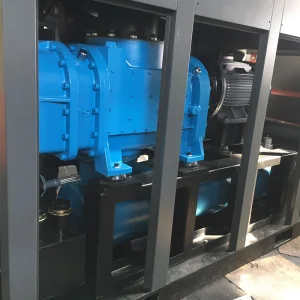
Unlike Western brand-assemblers who outsource castings and airends across multiple international sub-suppliers, premier Chinese manufacturers like Honest Compressor in Shanghai operate end-to-end production facilities spanning over 50,000 m². From ductile iron casting inspection to Klingelnberg and Holroyd CNC rotor milling, clearances are held to ±2 microns.
- In-house 5:6 asymmetric screw profile generation
- Dynamic high-speed balancing & laser coordinate checking
PMSM Rare-Earth Drive Dominance
China holds over 85% of global rare-earth permanent magnet refining capacity. Our compressors integrate ultra-efficient IE4/IE5 NdFeB (Neodymium-Iron-Boron) Permanent Magnet Synchronous Motors (PMSM) capable of maintaining 96%+ motor efficiency across wide variable speed ranges (20% to 100% load), resisting demagnetization up to 180°C.
- Direct-coupled 1:1 drive eliminating belt friction losses
- Instantaneous response to laser head start/stop cycles
Laser-Tailored 4-in-1 Compact Skids
Chinese factories pioneered the integrated "Laser-Dedicated Air Power Station". Instead of requiring buyers to procure separate air receivers, refrigerant dryers, adsorption units, and coalescing filters from four distinct vendors, Chinese plants engineer single-chassis, plug-and-play modular skids with factory-tested pressure pulsation damping.
- 50% footprint reduction compared to conventional layouts
- Pre-wired, pre-piped stainless steel internal interconnects
Protecting $20,000+ Laser Optics: The ISO 8573-1 Challenge
In high-power laser cutting (10kW–30kW), an assist gas carrying microscopic oil aerosols or moisture vapor will immediately contaminate the protective window, collimating lens, and focus mirror, causing thermal lens effect, beam distortion, or catastrophic quartz explosion.
Bulk Condensate Ejection
Internal cyclone separator centrifugal force removes up to 95% of liquid bulk water immediately downstream from the aftercooler, preventing water flooding of subsequent fine media.
Refrigerated + Desiccant Dry
High-pressure stainless plate exchangers lower air temperature to 2°C–5°C, followed by combined molecular sieve adsorption to drive pressure dew point (PDP) down to -20°C ~ -40°C.
5-Stage Gradient Filtration
Progressive filtration: 3 µm pre-filter → 1 µm particulate filter → 0.1 µm oil coalescer → 0.01 µm ultra-fine coalescer traps aerosols with 99.999% efficiency.
Activated Carbon Tower
Deep bed activated carbon adsorption absorbs remaining volatile organic compounds (VOCs) and oil fumes, guaranteeing oil vapor ≤ 0.003 mg/m³ for zero lens clouding.
Why Pressure Stability (±0.1 Bar) Governs Kerf Quality
In fiber laser cutting, sudden fluctuations in nozzle gas pressure alter the expansion shockwave geometry below the nozzle tip. A pressure drop of just 1.5 bar during high-speed cutting causes the supersonic jet to detach from the kerf wall, instantaneously producing dross, bottom burrs, or incomplete penetration. Honest Compressor’s dedicated laser cutting air compressors incorporate oversized precision stainless receiver buffers and high-speed variable frequency algorithms that monitor pressure in real-time at 100Hz, holding system discharge pressure rock-steady at ±0.1 bar (±1.45 PSI) even during rapid rapid piercing and head acceleration.
Material Processing Profiles: Optimized Air-Assist Cutting
Engineering guidelines for metal fabrication shops processing carbon steel, stainless steel, aluminum alloys, and galvanized sheets using high-pressure compressed air assist.
Carbon & Mild Steel (0.8mm – 14mm)
Replacing traditional low-pressure oxygen cutting with 16–25 bar compressed air unlocks astounding productivity. Because the 21% O₂ component sustains exothermic reaction while the 78% N₂ cools and flushes the kerf, cutting speeds can be boosted by 2.5x to 4x compared to oxygen on thin to medium sheet metals.
Core Advantage: Cut edges exhibit minimal oxidation and can be powder coated directly without secondary grit-blasting or solvent washing.
Stainless Steel (304 / 316, 1mm – 10mm)
While cryogenic nitrogen produces a mirror-silver edge, high-pressure air at 20–30 bar produces a clean, semi-bright cut face with a very faint golden tint. For structural components, electrical chassis, architectural brackets, and industrial machinery frames, this aesthetic is fully compliant with structural standards at one-tenth the gas cost.
Core Advantage: Eliminates nitrogen cylinder logistics in high-volume mass production stamping and laser contract facilities.
Aluminum & Galvanized Steel (1mm – 8mm)
Aluminum is prone to dross adherence due to its high thermal conductivity and low melt viscosity. The supersonic kinetic impact of 25–30 bar compressed air strips the viscous aluminum alloy droplets cleanly from the bottom kerf, delivering burr-free edges. On galvanized sheet, air minimizes zinc vapor blowback into the laser ceramic ring.
Core Advantage: Superb piercing speed and dross prevention without consuming high-cost cylinder nitrogen banks.
Future Industry Roadmaps: 20kW–60kW Lasers & Green Fab
As fiber laser power escalates into the ultra-high realm (20kW to 60kW), the pressure and volume requirements for compressed assist gas are fundamentally transforming compressor engineering.
30–35 Bar Continuous Baseline
Cutting 25mm–50mm plate with 30kW+ lasers requires nozzle diameters of 3.5mm–5.0mm. To maintain supersonic kerf velocity, dedicated compressor pressure is climbing from conventional 16 bar to 30–35 bar continuous ratings.
Bus-Integrated Gas Modulation
Compressors now link via EtherCAT and Modbus TCP directly to CNC laser controllers (such as Beckhoff, CypCut, Siemens), dynamically raising or ramping down compressor pressure synchronously with the CNC pierce cycle.
Eliminating Heavy Tanker Miles
Manufacturing cryogenic liquid nitrogen requires cryogenic air separation plants and continuous road diesel transport. On-site compression eliminates transport carbon footprint and eliminates the 15%–25% natural tank boil-off venting loss.
Factory Thermal Integration
Up to 80% of the electrical energy converted into heat during high-pressure screw compression is reclaimed via plate heat exchangers to provide facility space heating or boiler pre-heating, achieving near-neutral utility overhead.
How to Size Your Laser Air Compressor Skid: Engineering Formulas
Correct sizing prevents pressure drops during thick plate piercing. Air consumption is a mathematical function of nozzle orifice diameter, cutting pressure, and duty cycle.
The Pneumatic Flow Equation for Laser Nozzle Consumption
Gas flow rate through a supersonic laser nozzle can be computed using the choked compressible flow equation:
Where d_nozzle is the nozzle diameter in millimeters, P_bar is gauge assist pressure, and C_discharge is the nozzle coefficient of discharge (~0.85–0.92 for double conical nozzles). A 3.0mm nozzle at 20 bar requires ~1.85 m³/min of compressed air at the cutting head. Always specify a compressor with a 25% buffer above nominal consumption to account for piping loss and line charging.
Recommended Compressor Power Sizing Matrix by Fiber Laser Wattage
| Fiber Laser Power | Common Nozzle Size | Optimal Assist Pressure | Required Flow Rate (FAD) | Recommended Compressor Power |
|---|---|---|---|---|
| 3kW – 6kW Fiber Laser | 1.5mm – 2.0mm | 16 Bar (232 PSI) | 0.8 – 1.2 m³/min | 11kW / 15kW (15HP / 20HP) |
| 6kW – 12kW Fiber Laser | 2.0mm – 2.5mm | 16 – 20 Bar (290 PSI) | 1.5 – 2.2 m³/min | 15kW / 22kW (20HP / 30HP) |
| 12kW – 20kW Fiber Laser | 2.5mm – 3.5mm | 20 – 25 Bar (362 PSI) | 2.4 – 3.2 m³/min | 30kW / 37kW (40HP / 50HP) |
| 20kW – 40kW Fiber Laser | 3.5mm – 5.0mm | 25 – 32 Bar (464 PSI) | 3.5 – 5.5 m³/min | 45kW / 55kW (60HP / 75HP) |
Global OEM & ODM Customization
We configure bespoke electrical packages matching worldwide grid standards: 380V/50Hz, 400V/50Hz, 415V/50Hz, 460V-480V/60Hz, and 220V/60Hz 3-phase. Custom sheet metal powder coating, distributor branding, and multi-language PLC touchscreens (English, Spanish, Russian, French, German, Arabic) are standard options.
Rigorous International Certifications
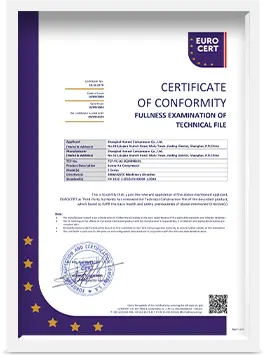
All pressure vessels, safety valves, and electrical control cubicles adhere strictly to international compliance: European CE PED (Pressure Equipment Directive 2014/68/EU), CE MD (Machinery Directive), ASME Section VIII Div. 1 code stamping upon request, and ISO 9001:2015 quality management guarantees smooth customs clearance in 50+ export destinations.
Laser Assist Air Compression: Frequently Asked Questions
Detailed answers prepared by senior application engineers to address critical operational and procurement questions regarding compressed air assist gas systems.
Can compressed air completely replace nitrogen for all laser cutting operations?
Compressed air can replace nitrogen for approximately 80% to 90% of routine sheet metal fabrication. It excels on carbon steel (thin to medium thicknesses), galvanized sheets, aluminum, and general-purpose stainless steel parts. However, for specialized medical instruments, aerospace components, or high-end cosmetic stainless steel parts requiring an absolute 100% mirror-chrome oxide-free edge for surgical-grade passivation, pure high-purity nitrogen (99.999%) remains mandatory. Many fabricators install an automated two-way gas selector valve, using compressed air for 85% of standard production runs and switching to nitrogen only when high-end cosmetic stainless runs require it.
How does compressed air affect the lifespan of laser cutting protective lenses and focus optics?
If standard workshop air (7–8 bar with conventional filters) is routed to a laser cutting head, oil and moisture will destroy the protective glass within hours, triggering thermal blooming and lens cracking. However, when using our dedicated 4-in-1 Laser Air System—incorporating sub-micron coalescing, refrigeration drying, molecular sieve adsorption (-40°C PDP), and activated carbon vapor capture meeting ISO 8573-1 Class 1:2:1—the air purity matches or exceeds bottled gas. Under these conditions, protective optic life reaches normal operational spans of 1,000 to 2,000 cutting hours without haze or degradation.
What is the minimum pressure required for high-speed fiber laser cutting?
While low-power CO₂ lasers historically utilized 8 to 12 bar air, modern fiber lasers require higher kinetic force to overcome narrow kerf geometry. For sheet metals up to 3mm, 14 to 16 bar is adequate. For 4mm to 12mm stainless and carbon steel plates, pressures of 18 to 25 bar are critical to eject molten slag cleanly and eliminate bottom burrs. For heavy plates (16mm to 25mm) cut with 20kW+ lasers, pressures of 25 to 30 bar are necessary.
What is the difference between an integrated 4-in-1 laser compressor and a standard compressor with an external booster?
A booster system utilizes an existing 7–8 bar factory air compressor and passes the pre-compressed air through a secondary piston or reciprocating booster to reach 20–30 bar. While viable for retrofits, booster setups suffer from high mechanical vibration, loud noise, high maintenance intervals (piston rings every 2,000 hrs), and severe oil carry-over risk. Our dedicated 4-in-1 integrated screw system utilizes a single-chassis, two-stage rotary screw airend that compresses air from 0 to 30 bar smoothly, equipped with factory-matched dryers, receivers, and filters with quiet rotary operation (<72 dB), 50% smaller footprint, and 40% lower maintenance costs.
Why is a permanent magnet variable frequency drive (PM VFD) critical for laser cutting applications?
Laser cutting is inherently intermittent. During plate loading, sheet positioning, head rapids, and optical piercing, air demand drops to zero or low flow; during continuous profiling, air consumption spikes to maximum. A fixed-speed compressor repeatedly loads and unloads, venting compressed air to atmospheric pressure and consuming 40% to 50% power during idle cycles. A PM VFD motor smoothly adjusts rotational speed in direct synchronization with nozzle opening, consuming only the exact kilowatt power required and keeping pressure constant at ±0.1 bar without line pressure surge.
How much money can a fabrication shop realistically save per year by switching to compressed air?
Consider a 12kW fiber laser operating 16 hours per day, 250 days per year (4,000 running hours). Consuming liquid nitrogen at an average cost of $18.00 per hour results in an annual assist gas bill of approximately $72,000. Running a 30kW high-pressure screw air compressor consuming 24 kWh average at an electricity rate of $0.12/kWh costs approximately $2.88 per hour—or $11,520 per year. The net annual cash saving is approximately $60,480, paying off the complete capital investment of the compressor skid in less than 6 to 9 months.
What maintenance routine is required for a dedicated 16–30 bar laser compressor system?
Routine maintenance includes daily inspection of automatic condensate drains, routine cleaning of cooler radiator fins, air filter replacement every 2,000–3,000 hours, fine coalescing filter cartridge swaps every 4,000 hours (or annually), activated carbon bed repacking every 6,000–8,000 hours, and synthetic high-pressure lubricant renewal at 4,000 hours. Built-in PLC monitoring alerts maintenance teams well in advance of differential pressure saturation.
Can multiple fiber laser cutting machines be operated from a single centralized compressor skid?
Yes. Many high-capacity fabrication plants centralize their assist gas generation. For example, a 55kW or 75kW two-stage high-pressure screw compressor delivering 6.5 to 9.0 m³/min at 25 bar can comfortably feed two 15kW lasers or three 6kW lasers simultaneously. In such installations, an adequately sized 1,000L to 2,000L stainless steel high-pressure buffer tank and a ring-main distribution loop ensure that machine piercing events on one table do not create a pressure dip on an adjacent cutting table.
High-Capacity Screw Compression & Vacuum Solutions
Explore the second portfolio tier of our industrial rotary equipment—engineered with high volumetric efficiency, two-stage permanent magnet drives, and Class 0 oil-free certifications for international distributors and processing plants.