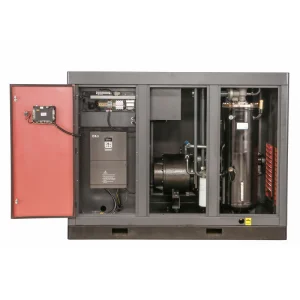
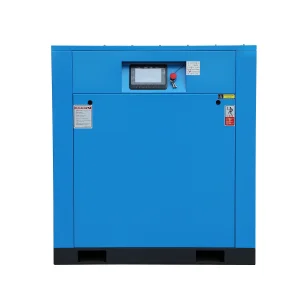
Featured Engineering Models
High-Efficiency Industrial Rotary Screw Compressor Systems
Explore our export-ready twin-screw product line equipped with precision-ground 5:6 asymmetric rotors, low-decibel acoustic enclosures, and advanced PLC frequency modulation.
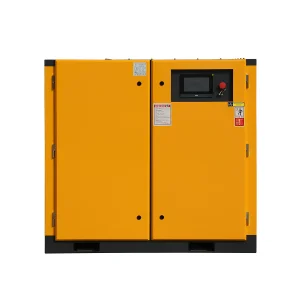
OEM Variable Frequency Drive Air Compressor 15kW Energy Saving Manufacturers, Exporters
Explore Model Spec
OEM 10A-PM permanent magnet frequency screw air compressor 220v 50hz single phase Suppliers, Exporters
Explore Model Spec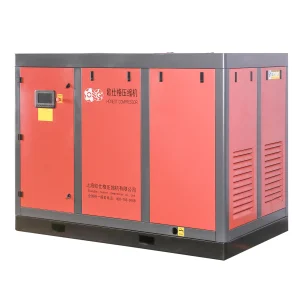
OEM Two-stage Screw air Compressor Chemical Factory Air Equipment Two-stage Screw air Compressor Manufacturer, Factory
Explore Model Spec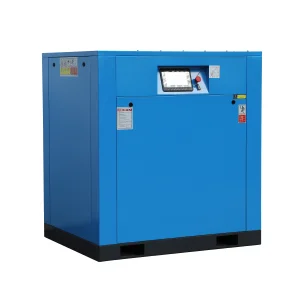
OEM 30kW 40HP Permanent Magnet VFD Air Compressor Manufacturers, Factories
Explore Model Spec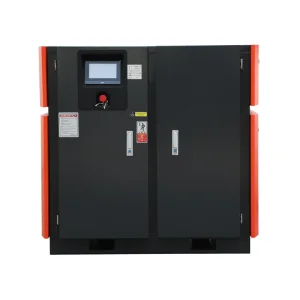
China Horizontal two-stage pressure screw air compressor Two Stage Screw Air Compressor Electric Screw Air Compressor Price Suppliers, Exporters
Explore Model Spec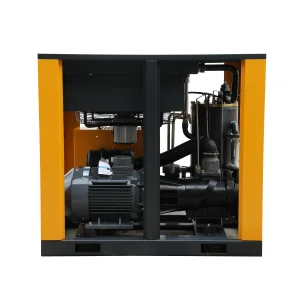
OEM 22kW 30HP Variable Speed Rotary Screw Compressor Factories, Exporter
Explore Model Spec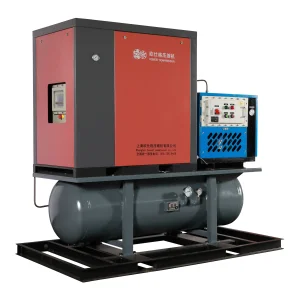
OEM 4-in-1 Explosion-Proof Air Compressor | 7.5-22kW Permanent Magnet Integrated Unit Factory, Exporters
Explore Model Spec
Industry Whitepaper Analysis
The Strategic Hegemony of China's Industrial Compressor Manufacturing
A rigorous engineering appraisal of how localized supply-chain density, ultra-precision machining centers, and motor-frequency control technologies converge to deliver unprecedented total cost of ownership (TCO) advantages.
Full-Spectrum Cluster Supply Chains
The manufacturing cluster located across Shanghai, Jiangsu, and Zhejiang encompasses over 70% of the world's auxiliary component ecosystem. From specialized ductile iron castings (QT450-10) to CNC rotor profile grinding tools and synthetic ester lubricants, Chinese compressor producers eliminate supply volatility, drastically cutting lead times from 12 weeks down to sub-15 working days for custom OEM builds.
Micron-Tolerance Asymmetric Screw Profiling
By leveraging 5-axis German Klingelnberg and British Holroyd rotor grinding machines alongside Zeiss 3D coordinate measuring machines (CMM), modern Chinese facilities achieve rotor-to-housing clearances under 0.015 mm. This suppresses bypass backflow leakage, generating up to 8% to 12% higher volumetric efficiency over legacy symmetric lobe geometries.
Rare-Earth Permanent Magnet Integration
China commands over 70% of the world's Neodymium Iron Boron (NdFeB) permanent magnet production. Local air compressor manufacturers directly embed high-coercivity (grade 38UH/42SH, rated up to 180°C demagnetization threshold) PM synchronous motors directly into the main drive shaft, attaining IE4 and IE5 super-premium electrical efficiencies without intermediary gearboxes or belt drive losses.
Technological Innovation Vectors
Engineering Paradigms Redefining Rotary Screw Air Delivery
A comprehensive examination of thermodynamic, fluid-mechanical, and algorithmic advancements that modern Chinese compressor builders deploy across the global market.
Two-Stage Quasi-Isothermal Compression
By splitting total pressure ratios across primary (low-pressure) and secondary (high-pressure) rotor chambers, compression work approaches an ideal isothermal process. Interstage oil-atomized cooling drops the second-stage intake air temperature by 30°C to 45°C. This lowers power consumption by 15% compared with single-stage units handling the same volumetric throughput at 0.8 MPa–1.3 MPa.
ISO 8573-1 Class 0 Oil-Free Water Injection
Addressing stringent cleanliness mandates in biopharma, microchip lithography, and infant formula canning, Chinese water-lubricated single-screw and twin-screw airends substitute synthetic lubricating oils with purified deionized water. The water acts as sealant, cooling medium, and lubricant simultaneously, guaranteeing certified absolute zero hydrocarbon carryover (0.00 mg/m³).
IoT 4.0 Telemetry & Vector Inverter Synergy
Standard export machinery now integrates dual-core 32-bit DSP controllers linked via Modbus RS-485, CANopen, or 4G LTE IoT industrial routers. The intelligent control algorithm samples system discharge pressure at 100 Hz, instantly accelerating or decelerating the PM motor to maintain target line pressure within ±0.01 MPa, eliminating unload running losses entirely.
Direct-Drive Integrated Monobloc Design
Eliminating belts, pulleys, and gear assemblies removes mechanical conversion losses (typically 3% to 5%) while solving radial load issues on rotor bearings. Oil-cooled PM motors share a common driveshaft with the male rotor, housed in an IP65 completely sealed housing that prevents environmental particulate ingress and acoustic resonance.
Technical Benchmarking
Comparative Performance Matrix: Screw Compressor Configurations
Quantitative thermodynamic and operational criteria to assist plant engineers and procurement teams in matching compression topology to plant baseload characteristics.
| Compression Architecture | Specific Power (kW/m³/min) | Pressure Stability | Discharge Temperature | Oil Carryover | Primary Industrial Use Case |
|---|---|---|---|---|---|
| Fixed-Speed Oil-Injected Single-Stage | 7.2 – 8.1 @ 0.8 MPa | ±0.05 to 0.1 MPa (Load/Unload) | 75°C – 95°C | < 3 ppm | Constant continuous baseload plants without fluctuating pneumatic demand. |
| PM VFD Oil-Injected Single-Stage | 6.4 – 7.2 @ 0.8 MPa | ±0.01 MPa (Continuous PID) | 70°C – 85°C | < 2 ppm | Dynamic shift operations, assembly lines, laser cutting with shifting flow rates. |
| Two-Stage PM VFD Oil-Injected | 5.4 – 6.1 @ 0.8 MPa | ±0.01 MPa (Continuous PID) | 65°C – 75°C | < 1.5 ppm | 24/7 continuous process industries (chemicals, glass, steel, large automotive). |
| Water-Lubricated Oil-Free Single-Stage | 6.8 – 7.6 @ 0.8 MPa | ±0.01 MPa (Continuous PID) | < 50°C (Quasi-isothermal) | 0.00 ppm (Class 0) | Pharmaceutical formulation, electronics manufacturing, medical oxygen, food processing. |
| Dry-Type Oil-Free Two-Stage | 6.9 – 7.8 @ 0.8 MPa | ±0.02 MPa | 140°C – 180°C (Before intercooler) | 0.00 ppm (Class 0) | Automated wafer fabs, semiconductor cleanrooms, petrochem instrumentation. |
Application Engineering
Mission-Critical Pneumatic Integration Across Strategic Sectors
Engineering how industrial screw compressors interact with upstream power networks and downstream production machinery in high-stakes environments.
Automotive Stamping & Robotic Assembly
Modern vehicle plants deploy automated spot welding, pneumatic stamping presses, and robotic paint application cells requiring sustained 0.65 to 0.85 MPa air supplies. Variable-frequency twin-screw compressors respond instantly to simultaneous line firing without pressure droops that cause assembly robot faults. Dual oil-separation filtering keeps residual lubrication under 1 ppm to safeguard electrostatic paint bonding.
Food Processing & Pharmaceutical Packaging
For product-contact applications such as pneumatic transport of dry milk powder, bottle blow-molding, and tablet blister packing, water-lubricated Class 0 screw compressors eliminate risks of aerosol contamination. Paired with desiccant air dryers achieving a -40°C pressure dew point (PDP), the delivered compressed air stops microbiological colonization and satisfies FDA and GMP hygienic standards.
High-Precision Fiber Laser Cutting
Modern CNC fiber laser cutters operating at 10 kW to 30 kW utilize high-pressure compressed air (1.6 MPa to 3.0 MPa) as an assist gas in place of expensive bottled liquid nitrogen. Custom integrated 4-in-1 screw packages (compressor, 3.0 MPa storage vessel, refrigerated dryer, 5-stage micro-coalescing filtration) purge water, vapor, and oil mists to protect optical lenses from micro-fouling.
Petrochemical & Hazardous Mining Facilities
Operating in environments filled with combustible hydrocarbons or coal dust requires certified explosion-proof equipment. Specialized OEM builds integrate flameproof electrical cabinets (Ex d IIB T4 / Ex d IIC T4 Gb), intrinsically safe sensor loops, anti-static drive belts, and non-sparking copper-alloy fan shrouds to guarantee ATEX and IECEx compliance for offshore rigs and refineries.
Circular Energy Architecture
Macro Plant Decarbonization: Waste Heat Recovery & Station Automation
Turning electrical operating overhead into usable thermal assets through intelligent thermodynamic integration and automated compressor room sequencing.
80% to 85% Thermal Energy Recovery
During standard operation, roughly 94% of the electrical energy consumed by a screw air compressor is converted into mechanical friction and thermal energy within the lubricating oil circuit. Modern Chinese factories integrate 316L stainless steel plate heat exchangers directly into the internal oil flow path. This extracts 70°C to 85°C hot water for boiler preheating, industrial parts washing, or plant space heating without using additional electricity or fossil fuel.
Centralized Smart Sequencing Hubs
Where multiple units operate simultaneously, uncoordinated pressure bands create wasteful cycling. Master PLC sequencing systems interface with up to 16 compressors over bus protocols, dynamically balancing runtime hours and assigning continuous baseloads to large two-stage machines while fluctuating trim demands are assigned to PM VFD units. This multi-machine management saves plants an extra 10% to 15% in electrical power consumption.
Predictive Vibration & Tribological Diagnostics
Integrated accelerometer sensors positioned at the suction and discharge ends of the airend monitor high-frequency shock-pulse values. When bearing race degradation or rotor pitting begins, cloud algorithms detect abnormal spectral vibration harmonics well before mechanical seizure occurs, notifying maintenance teams and scheduling bearing renewals during planned plant turnarounds.
Procurement Decision Framework
Total Cost of Ownership (TCO) & Factory Sourcing Protocol
A structured calculation methodology evaluating initial capital expenditure (CapEx) against long-term electrical and maintenance operating expenses (OpEx).
The 10-Year 77% Energy Reality
Engineering lifecycle analyses indicate that across a 10-year operating horizon (working 6,000 hours annually), equipment purchase price (CapEx) accounts for only 12% to 15% of total expenditure. Routine maintenance (filters, oil, separator elements) represents 8% to 11%. Electrical utility power costs constitute a massive 74% to 77% of the total lifecycle outlay. Investing in a two-stage PM VFD machine with higher upfront specifications often pays for itself within 9 to 18 months via lower electricity usage.
Factory Audit & Technical Qualification
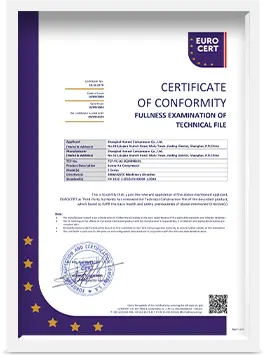
When selecting a Chinese manufacturer, overseas buyers should review specific technical criteria: verify that the airend housing uses stress-relieved Meehanite cast iron; check whether rotor profiling is ground on imported Klingelnberg/Holroyd machinery; confirm motor insulation meets Class H with an IP55 or IP65 rating; and verify CE-MD (Machinery Directive), CE-PED (Pressure Equipment Directive), and ASME Section VIII certification for all air-oil separator vessels.
Power Grid & Environmental Customization
Export units require electrical and environmental customization based on destination markets. Experienced Chinese exporters regularly produce configurations for 220V/380V/400V/415V/440V/460V/480V across both 50Hz and 60Hz grids. For high-ambient operations in the Middle East, South America, or Southeast Asia, units should be configured with oversized fin-and-tube coolers rated for 50°C ambient temperatures alongside dual-stage dust pre-filtration mats.
Technical Knowledge Base
Frequently Asked Questions: Industrial Screw Air Compressors
In-depth engineering answers addressing operating life, energy calculations, air quality standards, and export logistics.
How does a permanent magnet VFD screw compressor achieve up to 30%-40% energy savings?
Traditional fixed-speed compressors operate on a load/unload control cycle. When downstream air storage reaches the target pressure, the compressor intake throttle valve closes while the motor continues running at full speed (idling), consuming 30% to 45% of its rated power while delivering no useful compressed air. In contrast, a Permanent Magnet Variable Frequency Drive (PM VFD) compressor uses frequency vector control to continuously adjust motor RPM to match real-time system airflow demands down to 25% of maximum capacity. By eliminating idle power, maintaining system pressure in a narrow ±0.01 MPa band, and preventing over-pressurization (each 0.1 MPa rise above required pressure demands ~7% more electrical power), real-world electrical consumption is reduced by 25% to 40%.
What is the difference between single-stage and two-stage rotary screw compressors?
A single-stage compressor compresses ambient atmospheric air to the final discharge pressure (e.g., 0.8 MPa) within a single set of intermeshing rotors, yielding a high pressure ratio (~9:1). This creates high inter-lobe discharge temperatures and increased internal air leakage past rotor tips. A two-stage compressor divides this process across two successive chambers. The first stage compresses air to intermediate pressure (~0.3 MPa); the air then enters an interstage atomized cooling zone that lowers its temperature before the second-stage rotors compress it to its final pressure. Because work on cooler air demands less energy (approaching an isothermal cycle) and lower stage pressure ratios reduce seal leakage, two-stage units deliver 12% to 18% higher specific efficiency, making them the preferred choice for heavy manufacturing baseloads above 75 kW.
How do oil-injected and oil-free rotary screw compressors compare in maintenance and air purity?
Oil-injected screw compressors introduce synthetic lubricating fluid into the compression chamber to seal internal clearances, lubricate bearings, and remove heat. Downstream oil separators and coalescing filters reduce residual oil carryover to 1–3 ppm. Maintenance cycles require oil filter, air filter, and separator element replacements every 3,000 to 4,000 running hours. Conversely, Class 0 oil-free compressors (using either dry-type Teflon/MoS2-coated rotors with timing gears or water-lubricated single/twin screws) keep the compression chamber free of hydrocarbons. This setup eliminates oil contamination risks for pharmaceutical, semiconductor, and food applications, removes oil disposal costs, but requires higher initial capital investment and precise water-filtration maintenance.
What international quality and pressure certifications are required to import compressors from China?
Global import compliance requires destination-specific certifications. European Union shipments require CE marking covering the Machinery Directive (2006/42/EC), Low Voltage Directive (2014/35/EU), EMC Directive (2014/30/EU), and Pressure Equipment Directive (PED 2014/68/EU) for separator vessels and safety valves. Shipments to North America require ASME Section VIII stamped pressure vessels and UL/CSA certified electrical control panels. Australian imports require AS1210 pressure vessel registration, while Eurasian customs unions mandate EAC certification. Leading Chinese manufacturers hold verified ISO 9001, ISO 14001, and ISO 45001 production facilities and provide third-party inspection dossiers (TUV, SGS, Lloyd's) upon request.
What typical lead times and spare-parts supply guarantees do Chinese OEM manufacturers provide?
Standard industrial screw compressors (7.5 kW to 75 kW, 380V/50Hz) typically ship within 7 to 14 calendar days from factory order confirmation. Custom OEM units with special voltages (e.g., 460V/60Hz, 415V/50Hz), customized enclosures, touchscreen PLC language localization, or explosion-proof certifications typically ship within 20 to 30 days. For international lifecycle support, reputable Chinese exporters provide standard consumable maintenance packs (spin-on oil filters, air filters, separator cartridges, intake valve seal kits) alongside core rotables (inverters, PLC displays, solenoids) shipped via international air express within 48 to 72 hours, backing primary components with 1-to-5-year warranty protection.
Extended Industrial Series
Specialized Vacuum, Blower & Oil-Free Pneumatic Machinery
Explore heavy-duty two-stage designs, direct-drive blowers, water-lubricated oil-free units, and progressive screw vacuum pumps engineered for challenging process plant conditions.
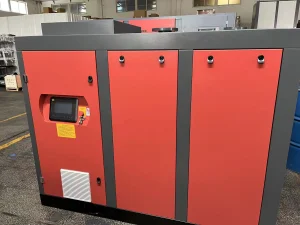
ODM electrical motor PM AC ASD rotary air vaccum pump compressor screw compressor Manufacturer, Manufacturers
Explore Model Spec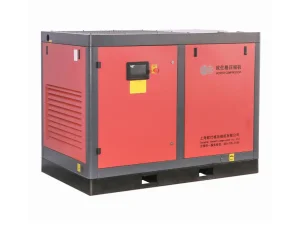
OEM Energy Saving Air Cooling Screw Compressor Two Stage Direct Driven Screw Air Compressor Manufacturers, Exporters
Explore Model Spec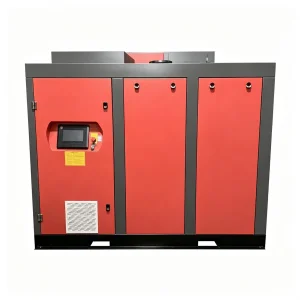
OEM Hot Sale China Factory High Quality Screw Vacuum Pump Permanent Magnet Frequency Conversion Progressive Pump Manufacturers, Factories
Explore Model Spec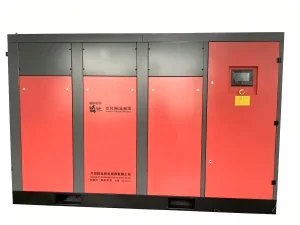
China EGV-132A-140 Oil-Free Permanent Magnet VFD Screw Blower Manufacturers, Exporters
Explore Model Spec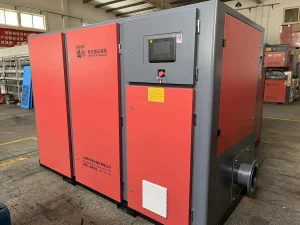
China 30kw Industrial Oil Free Vsd Screw Air Blower Vacuum Pump With Plc Inverter Pm Motor oil free screw blower Supplier, Suppliers
Explore Model Spec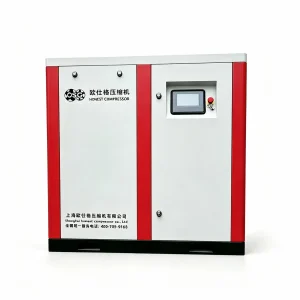
OEM Oil Free Water Lubricated Screw Air Compressor 37kW Supplier, Factories
Explore Model Spec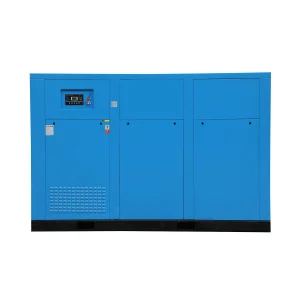
China 110Kw/150Hp Two-Stage Rotary Screw Air Compressor Permanent Magnetic Variable Frequency 380V Air Cooled Exporter, Exporters
Explore Model Spec