Featured Industrial Air Compression & Vacuum Series (Part I)
ISO 8573-1 & CE Certified OEM Machinery
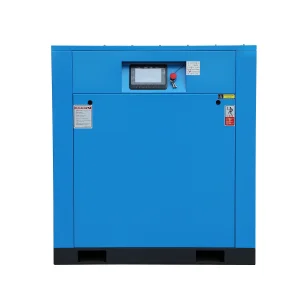
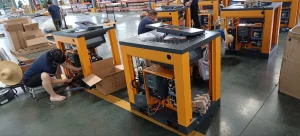
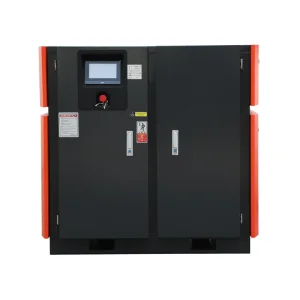
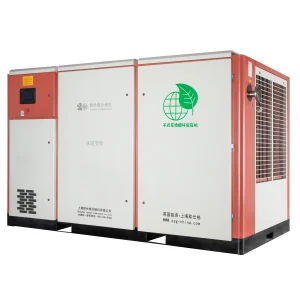
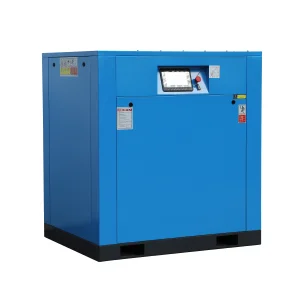
Engineering Fundamentals of OEM Belt-Driven Air Compressors
A comprehensive evaluation of mechanical energy transfer, pulley sheave ratio alignments, and vibration isolation kinetics for modern enterprise applications.
Optimized Speed Flexibility
Belt-driven systems allow engineering teams to adjust airend rotational speed independently of motor RPM by modifying pulley diameters, delivering precise volumetric delivery matching custom plant requirements.
Thermal & Vibration Dampening
Synthetic elastomer belts act as mechanical shock absorbers, dampening torque ripples and isolating motor heat from the high-precision rotary screw airend bearings.
Simplified Field Serviceability
Compared to direct-driven shaft couplings that require laser shaft alignment tools, belt-type compressors permit rapid field replacement and low-cost preventive maintenance schedules.
In modern industrial air infrastructure, the demand for reliable, high-efficiency, and easily maintainable compressed air units has elevated the strategic role of OEM Air Compressor Belt Type Suppliers & Exporters. While direct-drive rotary screw compressors are widely discussed for continuous fixed-ratio applications, belt-driven configurations remain the preferred technical choice for applications requiring operational flexibility, customized pressure variations, and economical capital expenditure profiles.
From an thermodynamic and electro-mechanical efficiency standpoint, high-grade Poly-V ribbed belts achieve torque transmission efficiencies reaching 97.5% to 98.8% when configured with automatic tensioning mechanisms and precision-machined cast-iron pulleys. OEM suppliers play a critical role in calculating precise sheave ratios, minimizing side-load forces on motor bearings, and selecting optimal rotor profile velocities for optimal Free Air Delivery (FAD).
Technology Roadmap & Future Outlook for Belt-Driven Systems
Integrating IoT smart tension sensors, carbon-fiber tensile cords, and algorithmic Variable Frequency Drives for next-generation performance.
1. Advanced Elastomer & Tensile Cord Materials
The traditional vulcanized rubber V-belt is being rapidly replaced by high-performance ethylene propylene diene monomer (EPDM) synthetic elastomers reinforced with continuous carbon-fiber or aramid tensile cords. These material advancements eliminate initial belt stretch, extend operational service intervals from 4,000 hours up to 12,000 hours, and resist thermal degradation in harsh ambient conditions up to +115°C.
2. IoT-Integrated Smart Auto-Tensioning Devices
Under-tensioned belts suffer from slip losses and premature wear, while over-tensioned belts exert excessive radial loads on motor bearings. Next-generation OEM belt-type compressors integrate dynamic spring-loaded base plates paired with optical or inductive tension-monitoring sensors. These systems stream real-time belt deflection data directly to the compressor's PLC controller, triggering automated maintenance alerts prior to efficiency drop-offs.
3. Synchronous Cogged Belts vs. Poly-V Ribbed Profiles
Future engineering roadmaps favor precision-machined tooth-profile synchronous belts (timing belts) for heavy-duty industrial compressors above 30 kW. Synchronous belts completely eliminate rotational slippage, combining the non-slip drive benefits of direct gear coupling with the vibration isolation and alignment tolerance advantages inherent to belt drives.
4. Dynamic VFD Harmony & Algorithm Optimization
Pairing belt-driven air compressors with Permanent Magnet Variable Frequency Drives (PM VFD) requires sophisticated inverter modulation algorithms. OEM engineering teams optimize acceleration/deceleration ramps to mitigate mechanical belt resonance zones, ensuring smooth torque transitions during rapid pressure changes.
Compressor Drive Architecture Benchmark
Evaluating operational attributes across Belt Drive, Direct Drive, and Gear Drive systems for enterprise procurement evaluation.
| Performance / Architecture Metric | Belt-Driven Screw Compressor | Direct-Driven Screw Compressor | Gear-Driven Screw Compressor |
|---|---|---|---|
| Initial Capital Expenditure (CAPEX) | Low to Moderate | Moderate to High | High |
| Pressure & Flow Customization | High (Via Pulley Ratio Change) | Fixed Rotor Ratio | Fixed Gear Set |
| Vibration & Shock Isolation | Excellent (Elastomeric Absorber) | Requires Flexible Coupling | Rigid Gear Transmission |
| Routine Maintenance Complexity | Simple / In-House Replaceable | Requires Precision Alignment | Specialized Gear Box Service |
| Transmission Efficiency Peak | 97.5% – 98.8% | 99.2% – 99.8% | 98.0% – 99.0% |
| Optimal Application Range | 5.5 kW – 75 kW (Variable Load) | 15 kW – 250 kW+ (Continuous Load) | 45 kW – 315 kW (Heavy Base Load) |
Macro-Industry Solutions & Systemic Deployment
Tailored compressed air integration strategies for diverse global industrial sectors.
Automotive & Commercial Transport
Supplying pulse-free compressed air for pneumatic body painting, robotized welding arms, and automated assembly line tools. Belt-type units absorb heavy start-stop cycling spikes seamlessly.
Textile & Apparel Manufacturing
Continuous air-jet weaving looms require steady pressure without micro-fluctuations. OEM custom belt ratios allow mills to match specific loom PSI requirements while keeping noise levels exceptionally low.
Packaging & Pneumatic Conveying
Providing clean, particulate-filtered compressed air for vacuum packaging, pick-and-place robotics, and bulk powder pneumatic conveying across intermediate processing plants.
Systemic Solutions for Extreme Operational Environments
In harsh environmental conditions—such as high-ambient desert temperatures, dusty cement plants, or humid coastal manufacturing zones—standard compressors often fail due to premature air filter clogging or thermal overload. OEM specialized belt-type compressors incorporate heavy-duty dual-stage intake filtration, anti-corrosive epoxy-coated cabinet enclosures, and oversized aluminum plate-fin heat exchangers.
Furthermore, because the belt drive housing is isolated from the main suction stream, ambient dust particles are prevented from entering the belt tension zone. This mechanical separation prevents premature pulley grooving and ensures continuous 24/7 reliability in demanding environments.
China Factory 4.0: Supply Chain Resilience & OEM Agility
Leveraging state-of-the-art CNC rotor grinding, automated dynamic balancing, and lean global export logistics.
Sub-Micron Rotor Machining
Our modern Shanghai manufacturing plant utilizes high-precision German CNC rotor grinding machines. Asymmetric 5:6 rotor profiles are finished with sub-micron tolerances, ensuring minimal volumetric blow-by during compression cycles.
Full-Load Factory Run-In Testing
100% of manufactured units undergo comprehensive full-load testing before packing. Automated test benches record sound pressure levels, motor current draw, oil temperature rise, and FAD volumetric flow rate to guarantee ISO compliance.
By controlling the entire vertical production chain—from raw iron casting and rotor profile milling to custom control cabinet assembly and final export packaging—our China Smart Factory delivers unmatched supply chain resilience. Global distributors benefit from short lead times, flexible Minimum Order Quantities (MOQs), and extensive ODM customization options spanning specialized voltages (e.g., 380V/50Hz, 460V/60Hz, 220V/Single Phase), dual-language PLC software interfaces, and private label cabinet branding.
Global Enterprise Procurement & TCO Blueprint
Navigating life-cycle electricity expenses, air audits, and vendor evaluation criteria.
Understanding Life-Cycle Cost Distribution
Over a standard 10-year operating lifespan of an industrial air compressor running 6,000 hours per year, electricity costs account for approximately 72% to 78% of total expenditures. Capital procurement costs represent roughly 12% to 15%, while routine maintenance and spare parts consume the remaining balance.
Consequently, evaluating OEM Belt-Type suppliers purely on initial unit purchase price leads to higher operating costs. Smart procurement teams focus on Specific Energy Consumption (SEC), measured in kW per m³/min of delivered compressed air at rated pressure.
Enterprise Vendor Evaluation Checklist
- Airend Engineering Credentials: Verify rotor profile origin, dynamic balancing grade (G2.5), and bearing brand (SKF/FAG).
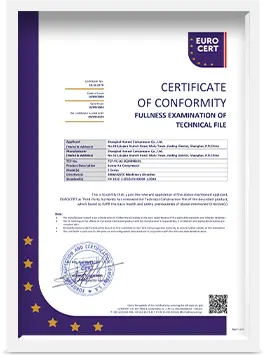
- Quality Management Certifications: Require documented ISO 9001, ISO 14001, CE safety compliance, and ASME tank pressure vessel certification.
- Spare Parts Interchangeability: Confirm standard industrial availability of drive belts, oil separators, and air filters to prevent vendor lock-in.
- After-Sales SLA Commitments: Ensure factory technical support guarantees rapid dispatch of critical emergency replacement parts globally.
Localization Support & Compliance Safeguards
Seamless regional integration, international electrical compliance, and worldwide market access.
CE Mark Compliance
Full adherence to European Machinery Directive 2006/42/EC, Low Voltage Directive 2014/35/EU, and EMC Directive 2014/30/EU.
ISO 8573-1 Air Purity
Multi-stage filtration options delivering Class 1:4:1 clean compressed air suitable for sensitive industrial processes.
Regional Electrical Tuning
Customized motor designs for regional electrical grids including 220V/380V/415V/440V/460V at 50Hz or 60Hz single & 3-phase.
Pressure Vessel Certs
Air storage tanks compliant with ASME Section VIII Div 1, PED 2014/68/EU, and China Special Equipment Manufacturing licensing.
Featured Industrial Air Compression & Vacuum Series (Part II)
High-Efficiency Rotary Screw & VFD Machinery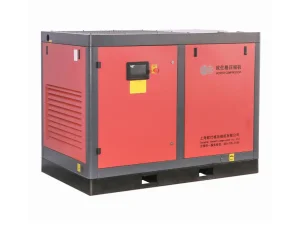

Frequently Asked Questions by Industrial Procurement Teams
Detailed answers addressing engineering considerations, maintenance intervals, and OEM customization capabilities.