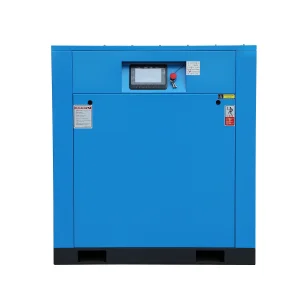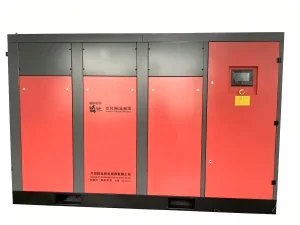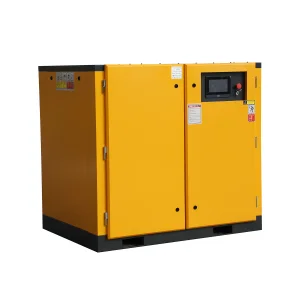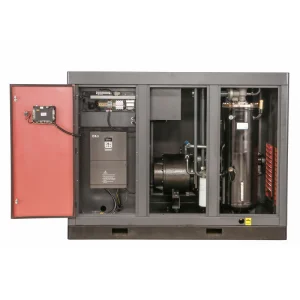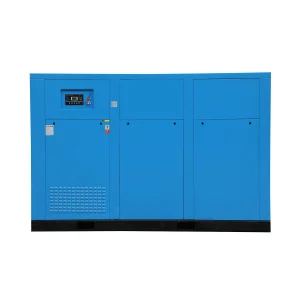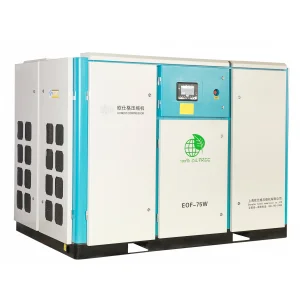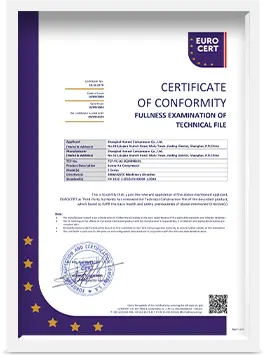
Featured OEM Air Compressors & Industrial Units
Explore our high-performance rotary screw and variable frequency drive compressors engineered for rugged operational uptime and severe-duty environments.
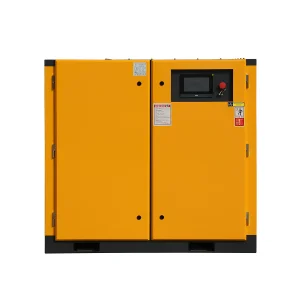
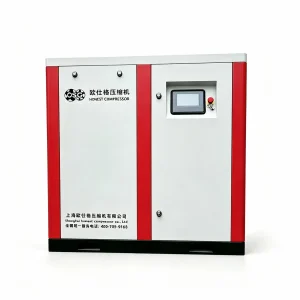
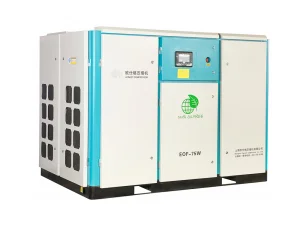
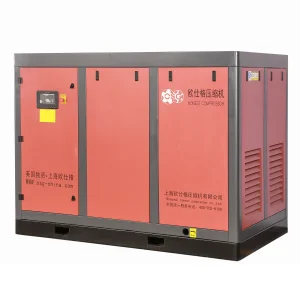

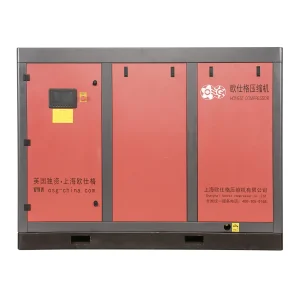
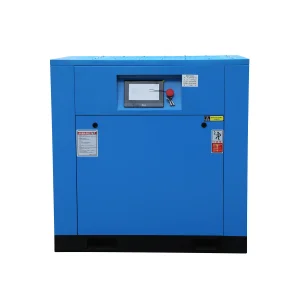
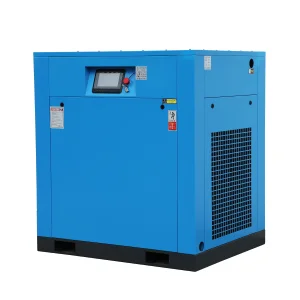
Global Landscape of Belt-Driven Industrial Air Compression
In the modern industrial manufacturing ecosystem, compressed air serves as the vital "fourth utility" alongside electricity, water, and natural gas. When evaluating plant infrastructure investments, procurement directors and engineering executives face a fundamental architectural decision: choosing between direct-drive and belt-driven air compressor systems. While direct-drive units dominate ultra-high horsepower continuous baseload applications, OEM air compressors with belt drive mechanisms remain the overwhelming choice for small-to-medium enterprise (SME) industrial manufacturing, heavy automotive body shops, remote mining outposts, and agricultural processing facilities globally.
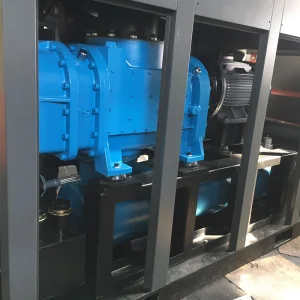
Belt-driven air compressors utilize high-tensile elastomeric or composite polymer belts to transfer rotational mechanical power from the electric motor shaft to the male rotor pulley of the air-end or piston crankshaft. This dynamic mechanical decoupling provides several operational advantages: variable pulley ratio flexibility, effective vibration dampening, over-torque slip protection, and superior field-serviceability without requiring precision laser shaft alignment in remote operations.
Strategic Information Gain: CAPEX vs. OPEX Realities
While direct-drive machines feature a 1.5% to 3% higher peak power transfer efficiency at exact nominal speeds, belt-driven configurations offer significantly lower initial capital expenditure (CAPEX), lower lifecycle spare parts cost, and substantially faster mean-time-to-repair (MTTR). In regions with fluctuating electrical grid stability or dusty field conditions, belt drives absorb torsional shock loads, preserving expensive motor bearings and air-end rotors from catastrophic failure.
Technical Mechanics of Modern Belt-Driven Compression Systems
Customizable Pulley Ratio Dynamics
Unlike fixed-gear or direct-coupled drive trains, belt drive mechanisms allow engineers to fine-tune free air delivery (FAD) and working discharge pressure (7 bar to 15 bar) by altering the pitch diameter ratio between the drive pulley and the driven pulley. This enables customized motor-to-airend matchings tailored for regional pressure standards (e.g., 100 PSI vs 175 PSI) without re-engineering the motor winding or housing assembly.
Vibration Dampening & Shock Isolation
Rotary screw and heavy-duty piston air-ends experience rapid torque pulsations during load/unload transitions and start-up cycles. Poly-V and ribbed drive belts act as mechanical low-pass filters, absorbing torsional shock, preventing harmonic vibrations from transferring into the electric motor rotor shaft, and extending motor bearing life by up to 40% compared to rigid direct couplings.
Thermal & Slip Protection
In severe ambient conditions exceeding 45°C or during accidental rotor lockup caused by oil contamination or thermal expansion, high-grade belt drives serve as a secondary mechanical safety release. The belt slips across the engineered pulley grooves, triggering motor over-current protection before catastrophic mechanical seizure can destroy the main air-end castings.
Drive Technology Matrix: Poly-V Belt vs. Cogged V-Belt vs. Direct Drive
Selecting the optimal drive mechanism requires evaluating transmission efficiency, maintenance overhead, alignment tolerance, and total cost of ownership across 50,000 operating hours.
| Technical Parameter | Advanced Poly-V Ribbed Belt | Classic Raw-Edge Cogged V-Belt | Direct Coupling / Gear Drive |
|---|---|---|---|
| Power Transmission Efficiency | 97.5% - 98.5% | 92.0% - 94.5% | 98.5% - 99.2% |
| Torsional Shock Absorption | Excellent (Polymer Flex) | Moderate | Poor (Requires Elastomeric Insert) |
| Field Alignment Requirement | Visual / Simple Laser Gauge | Basic Visual Straight-Edge | High-Precision Laser Alignment |
| Pressure / Flow Flexibility | High (Swap Pulley Sets) | High (Swap Pulley Sets) | Fixed (Requires VFD / Gear Set) |
| Vibration Isolation Level | High (<2.5 mm/s RMS) | Moderate (<4.0 mm/s RMS) | Direct Transmission to Motor |
| Initial System CAPEX | Economical / Standard | Lowest Entry Cost | 25% - 40% Premium |
China Manufacturing Ecosystem & OEM Factory Capabilities
Situated in the heart of China’s advanced precision manufacturing corridor in Shanghai (Jiading District), our state-of-the-art 50,000 m² air compressor facility represents the pinnacle of OEM/ODM industrial integration. Operating under British ownership engineering principles established in 2004, our production ecosystem seamlessly bridges high-efficiency Chinese supply chains with stringent European quality assurance metrics.
Integrated Vertical Production Capabilities:
- Precision Rotor Milling: Sub-micron clearance German rotor grinding machines producing advanced 5:6 asymmetric screw profiles for maximum free air delivery per kilowatt.
- Dynamic Balancing & Acoustic Testing: Every drive pulley and motor shaft undergoes double-plane dynamic balancing to ISO 1940 Grade G2.5, ensuring whisper-quiet operation.
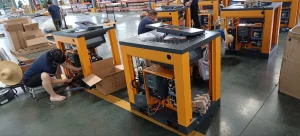
- 100% Full-Load Factory Testing: Prior to export dispatch, every belt-driven unit undergoes a continuous 4-hour hot-run performance verification, checking airflow capacity, discharge pressure stability, oil temperature equilibrium, and vibration spectrums.
- Flexible Modular OEM Customization: Complete customization options covering custom electrical voltages (220V single-phase to 480V 3-phase, 50Hz/60Hz), custom enclosure colors, private label branding, and integrated air-receiver skid systems.
OEM/ODM Service SLA Guarantees
Localized Application Scenarios & Severe Duty Performance
Mining, Quarrying & Aggregate Facilities
Mining operations in South America, Western Australia, and Sub-Saharan Africa present extreme ambient airborne dust, heavy rock crushing vibration, and severe thermal swings. Our belt-driven air compressors feature heavy-duty multi-stage heavy-particle air filters and sealed belt enclosures. In dusty quarry environments, the belt drive isolates dusty grit away from motor bearings, ensuring 24/7 continuous pneumatic power for drilling and rock sorting equipment.
Automotive Body Shops & Precision Spraying
Automotive repair centers and industrial spray booths require ultra-stable compressed air free from rapid pressure ripples that ruin paint finish consistency. The high kinetic rotational inertia of belt-driven flywheels smoothes out pressure pulsation. When paired with our downstream refrigerated dryers and multi-stage oil-coalescing filters, belt-driven screw compressors deliver steady Class 1:4:1 clean dry air for flawless paint atomization.
Agricultural Processing & Remote Irrigation
In agricultural grain handling, cotton ginning, and remote irrigation pumping stations, power grids often suffer from voltage fluctuations and frequent brownouts. Belt-driven compressors equipped with heavy-duty startup unloader valves require lower breakaway starting torque, allowing smooth startup on remote diesel generator sets without tripping circuit breakers.
Technology Roadmap: Next-Generation Belt Compression
The evolution of belt-driven industrial air compressors is moving rapidly toward smart predictive monitoring, advanced composite material science, and hybrid energy management systems. Our engineering R&D roadmap focuses on four key technology pillars:
1. IIoT Laser Alignment & Tension Sensors
Integrating smart infrared tension monitors and piezo-vibration sensors inside the belt guard enclosure. Real-time data streams to the PLC, alerting maintenance managers before micro-slippage causes energy degradation or thermal belt fatigue.
2. Aramid & Kevlar Cord Carbon Composite Belts
Transitioning from traditional polyester-reinforced rubber belts to next-generation Kevlar cord aramid composite belts with virtually zero elongation over 25,000 running hours, completely eliminating retensioning maintenance during annual service intervals.
3. PM VFD Integration on Belt Drivetrains
Combining the shock-absorption benefits of belt transmission with permanent magnet variable frequency motor control. Adjusting motor speed seamlessly across 30%-100% capacity ranges while maintaining optimal belt wrap angles and dynamic tension.
4. Acoustic & Aerodynamic Guard Enclosures
Redesigning belt guard enclosures using computational fluid dynamics (CFD) airflow modeling. Internal venturi baffles accelerate cooling air over the belt ribs, reducing belt operating temperatures by up to 15°C and doubling elastomeric flex life.
Global Compliance, Safety Standards & Field Support
Importing industrial machinery requires total compliance with regional pressure vessel directives, electrical codes, and environmental regulations. Our export manufacturing protocols guarantee that every OEM belt-driven compressor complies fully with international market entry requirements:
Pressure Vessel Safety Directives
Air receiver tanks integrated into our belt-driven skids are fully compliant with European Union Simple Pressure Vessels Directive (2014/29/EU), CE marking, or ASME Section VIII Division 1 code standards for North America, complete with certified relief valves and dual-scale pressure gauges.
Electrical Insulation & Ingress Standards
Heavy-duty electric motors feature Class F insulation (rated for Class B temperature rise) with IP54 or IP55 dust and water ingress protection. Control cabinets incorporate Schneider electric contactors, thermal overload relays, and phase sequence protection.
Frequently Asked Questions (FAQ) — OEM Belt Compressors
What are the primary maintenance requirements for a belt-driven air compressor?
Primary maintenance includes inspecting belt tension every 500 operating hours, checking for edge fraying or oil contamination, verifying pulley alignment with a laser or straight-edge gauge, and replacing belts every 8,000 to 12,000 hours depending on belt type (Poly-V vs Cogged V-belt). Routine oil filter, air filter, and lubricant changes follow standard compressor intervals (2,000 to 4,000 hours).
When should an industrial plant choose a belt-driven compressor over a direct-drive compressor?
A belt-driven air compressor is recommended when: 1) Initial procurement budget (CAPEX) is a primary consideration; 2) The plant requires field pressure/flow adjustments by changing pulley sizes; 3) Operational conditions involve high shock loads, dust, or vibration where belt shock absorption protects motor bearings; 4) On-site maintenance capability prefers straightforward belt changes over complex laser alignment required by direct couplings.
How do I properly calculate correct belt tension for optimal air compressor efficiency?
Proper belt tension is measured using a force-deflection gauge or sonic tension meter. The recommended deflection force is applied at the center of the belt span length. For a Poly-V belt, correct tension typically results in 1/64 inch of deflection per inch of span length under nominal force (approx. 3.5 to 5.0 kg force). Over-tensioning causes premature bearing wear, while under-tensioning leads to belt slip, overheating, and energy loss.
Can OEM belt-driven screw compressors be customized for regional electrical voltages?
Yes. As a direct OEM factory manufacturer, we build belt-driven compressors tailored to any regional power standard including 220V/380V/400V/415V/440V/480V at both 50Hz and 60Hz single-phase or three-phase power. Controllers, overload protectors, and electric motors are pre-configured and tested for your destination grid prior to shipment.
What is the average lead time for wholesale OEM compressor export orders?
Standard OEM production lead time is 15 to 20 working days upon order confirmation and technical drawing approval. Expedited production or custom containerized packaging for ocean shipping can be coordinated through our Shanghai export team.
High-Performance OEM/ODM Compressor Equipment
Discover our specialized oil-free, two-stage, and permanent magnet screw blowers, vacuum pumps, and high-efficiency compressors.