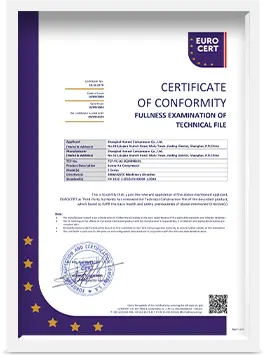
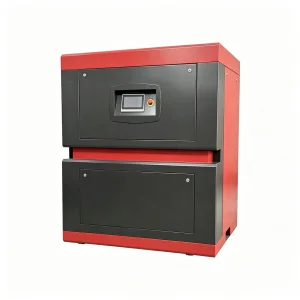
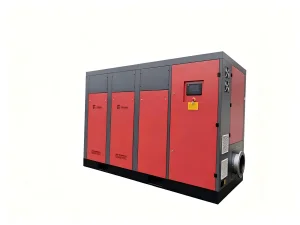
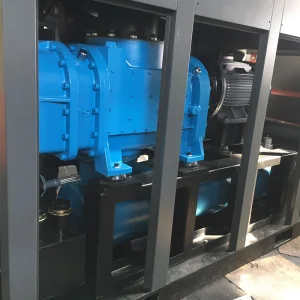
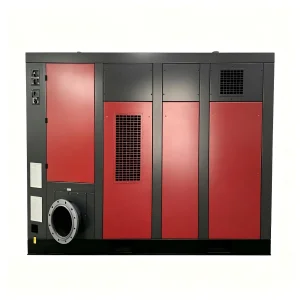
Featured Industrial Air Systems & Compressors (Batch 01)
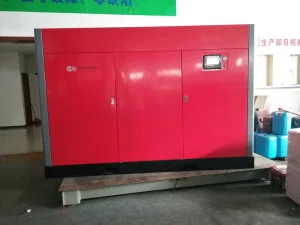
Direct-drive permanent magnet variable frequency machinery, heavy-duty rotary screw units, and high-vacuum pumps built to integrate seamlessly with custom OEM air drying systems.
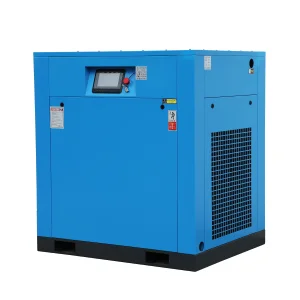
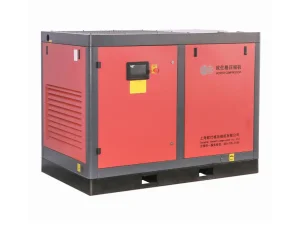
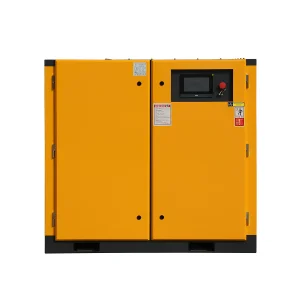
The Strategic Transformation of Industrial Air Drying: Decarbonization, Zero-Loss Regeneration, and ISO 8573-1 Compliance
In modern industrial production, compressed air represents the "fourth utility," powering automated instrumentation, pharmaceutical pneumatic conveying, electronics fabrication, and precision chemical processing. However, untreated ambient air ingested by compressors carries massive quantities of vaporized water, ambient particulates, and hydrocarbons. At an intake of 25°C and 70% relative humidity, a standard 100 m³/min industrial compressor inducts over 140 liters of vaporized water per eight-hour shift into the distribution header.
As global manufacturing transitions toward Net-Zero carbon thresholds and Industry 4.0 automation, the global compressed air dryer landscape is undergoing three monumental engineering shifts:
Low GWP Refrigerant Mandates
Regulatory frameworks such as the European F-Gas Regulation (EU 2024/573) and the US EPA AIM Act are aggressively phasing out high-GWP refrigerants (R404A, R410A, and R134a). Advanced OEM exporters are re-engineering refrigerated cycling systems with eco-friendly alternatives including R513A, R1234ze, and natural hydrocarbon R290, slashing carbon intensity by over 65% across equipment lifecycle.
Eradication of Purge Air Losses
Traditional heatless desiccant dryers consume 14% to 18% of total compressed air flow merely for desiccant bed reactivation—a colossal waste of electrical baseline energy. The modern procurement paradigm focuses heavily on zero-purge blower reactivated dryers and Heat of Compression (HOC) systems that reclaim compressor discharge thermal energy to achieve -40°C Pressure Dew Point (PDP) with zero net air loss.
Smart Edge IoT & Dew Point Control
Static timer-based valve switching is rapidly being replaced by dynamic dew-point dependent switching (DDS). Solid-state capacitive ceramic sensors monitor moisture breakthrough in real time, extending adsorption cycles from 10 minutes to several hours during light load periods, preventing desiccant attrition and yielding massive operational energy reductions.
Global Enterprise Procurement Dynamics: Dew Point Precision, TCO Optimization, and Engineering Specifications
Evaluating capital expenditure (CAPEX) versus operational life-cycle costs (OPEX) in mission-critical compressed air treatment procurement.
• Understanding the True TCO Breakdown
In continuous 24/7/365 industrial manufacturing, the initial purchase price of an air dryer accounts for less than 12% of its total 10-year life-cycle cost. Electrical power consumption (both direct compressor load for purge air and refrigeration compressor power) accounts for roughly 74%, while scheduled maintenance, desiccant replacement, and filter cartridge swaps represent 14%.
When multi-national EPC firms source from Honest Compressor, our application engineering team performs full-spectrum load profiling. Sizing an undersized refrigerated dryer risks water bypass into instrumentation lines, causing unplanned plant shutdowns costing upwards of $50,000 per hour in automotive stamping or semiconductor packaging. Conversely, installing an oversized heatless desiccant dryer without dew point controls inflicts permanent, unnecessary parasitic electrical bills.
• Technical Specification Mandates for Exporters
Global procurement managers evaluate suppliers based on rigorous, non-negotiable compliance parameters:
- Pressure Vessel Codes: ASME Section VIII Div. 1 (U-Stamp), European CE-PED (2014/68/EU), and Canadian CRN certification for desiccant dual-towers.
- Electrical Harmonization: Dual-rated 380V/400V/415V 50Hz and 460V/480V 60Hz panels with UL 508A and IEC 60204-1 compliance.
- Differential Pressure Drop: Total system ΔP below 0.2 bar (3 psi) to reduce required compressor discharge pressure and conserve upstream kWh.
Comprehensive Technology Matrix: Industrial Air Drying Methodologies Compared
Selecting the proper drying methodology requires a quantitative analysis of target pressure dew point, ambient environment, volumetric flow rate, and energy availability.
| Drying Technology | Standard Dew Point (PDP) | Energy Consumption Index | Purge Air Loss (%) | Maintenance Lifecycle | Optimal Industrial Applications |
|---|---|---|---|---|---|
| Refrigerated (Direct Expansion) | +3°C to +7°C (ISO Class 4) | Low (0.8 - 1.2 kW / 100 CFM) | 0% (Zero Loss) | Annual condenser cleaning, refrigerant check | General manufacturing, workshops, indoor pneumatic tooling, packaging lines. |
| Refrigerated (Thermal Mass / Cycling) | +3°C to +5°C (ISO Class 4) | Ultra-Low (Proportional to load) | 0% (Zero Loss) | Minimal; glycol thermal mass inspection 3-5 yrs | Fluctuating shift profiles, automotive assembly plants, light logistics centers. |
| Heatless Desiccant (PSA) | -40°C to -70°C (ISO Class 1-2) | High (Compensated by air loss) | 14% – 18% of total flow | Desiccant replacement every 2-3 years; valve seals | Sub-zero outdoor piping, pharmaceutical conveying, electronics cleanrooms. |
| Heated Blower Purge Desiccant | -40°C to -70°C (ISO Class 1-2) | Medium (Dedicated electric blower heater) | 0% to 2% (Zero air purge) | Desiccant replacement 3-5 years; blower maintenance | Heavy chemical, lithium battery gigafactories, large-scale metallurgical refining. |
| Heat of Compression (HOC) | -20°C to -40°C (ISO Class 2-3) | Extremely Low (<0.1 kW parasitic) | 0% (Uses compressor waste heat) | Low; desiccant bed lasts 5+ years due to gentle heat | Continuous 24/7 base-load oil-free screw or centrifugal compressor installations. |
| Polymeric Hollow-Fiber Membrane | -20°C to +3°C (Variable) | Zero Electrical (Pneumatic sweep) | 15% – 20% sweep air | No moving parts; annual pre-filter coalescer cartridge | Point-of-use drying, explosion-proof ATEX areas, mobile naval and railway systems. |
China Factory 4.0: Shanghai Honest Compressor's Production Scale & Quality Engineering
British engineering heritage integrated with China's world-class precision supply chain, delivering unmatched quality, speed, and OEM customization capabilities.
50,000 m² Modern Facility
Located at No. 355 Jiajian Branch Road, Jiading District, Shanghai, our smart manufacturing hub houses 4 dedicated automated assembly lines, robotic welding cells, and comprehensive test bays.
Robotic Vessel Fabrication
Automated submerged-arc welding and plasma cutting ensure seamless pressure vessel construction. Each desiccant vessel undergoes 100% X-ray weld inspection and hydrostatic testing up to 1.5× design pressure.
Helium Mass Leak Detection
Refrigeration circuits in our air dryers are tested using vacuum chamber Helium Mass Spectrometry with leakage thresholds below 1×10&supmin;&sup6; mbar·l/s, guaranteeing zero refrigerant loss during 10+ years of duty.
Modular OEM Customization
From custom skid frames, explosion-proof ATEX Zone 1/Zone 2 enclosures, and marine C5-M anti-corrosion coatings to multi-language PLC touch-screens (Siemens, Allen-Bradley, Delta), we build to your exact spec.
Vertical Integration: Mitigating Global Supply Chain Vulnerabilities
Global supply disruptions have underscored the perils of fragmented manufacturing. At Shanghai Honest Compressor Co., Ltd. (British-owned, established in 2004), we maintain end-to-end vertical integration across critical drying and compression components. Our in-house machining workshops produce proprietary stainless-steel plate heat exchangers, switching valve manifolds, and high-efficiency moisture separators. This structural independence allows us to guarantee 4-to-6 week delivery lead times for custom-engineered air dryer skids, compared to the 16-to-24 week industry norm in North America and Western Europe.
Engineered Application Scenarios: Delivering Purity in Demanding Industries
How our OEM air dryers and rotary compressors perform under diverse climatic and stringent regulatory requirements.
Semiconductor & Cleanroom Lithography
Standard Required: ISO 8573-1:2010 Class 1.1.1 (-70°C Dew Point, Zero Oil, 0.01 μm Filtration).
Solution: Two-stage oil-free screw compressor paired with an adsorption zero-purge desiccant dryer utilizing molecular sieve beds and catalytic activated carbon filters to eliminate all trace hydrocarbons and moisture vapors that could obscure optical stepper lenses.
Lithium-Ion Battery Gigafactories
Standard Required: Ultra-Dry Room environment with relative humidity below 0.5% and dew points consistently at -40°C to -60°C.
Solution: Customized Blower-Purge Desiccant Dryer Skids integrated with permanent magnet variable frequency rotary compressors, preventing lithium salt hydrolysis during cell electrolyte filling and electrode coating.
Pharmaceutical & Sterile Fermentation
Standard Required: cGMP, FDA 21 CFR Part 11 validation, Class 0 100% oil-free certified clean air.
Solution: Water-lubricated single-screw or dry oil-free compressors coupled with sanitary stainless steel (SS316L) desiccant air dryers with internal electropolished piping, zero dead-legs, and automated steam-sterilizable vent microfilters.
Automotive Robotic Spray Painting
Standard Required: Complete elimination of silicone, crater-causing condensates, and dust down to Class 1.4.1.
Solution: Cycling thermal mass refrigerated dryers with anti-vibration scroll compressors that automatically modulate refrigeration load matching paint booth cycle times, saving up to 40% in electrical consumption.
Offshore Platforms & Marine Operations
Standard Required: High ambient salinity, hazardous zone classification (ATEX/IECEx Zone 1/2), tropical ambient temperatures up to 50°C.
Solution: Heavy-duty skid-mounted air dryers with copper-nickel (CuNi) condenser tubes, epoxy-coated desiccant vessels, explosion-proof Ex d motors, and pneumatic logic control systems eliminating all electrical ignition risks.
Food & Beverage Packaging & Bottling
Standard Required: Absolute microbial and condensate control to prevent mold spore formation inside food cans and aseptic cartons.
Solution: Integrated combined systems: direct-drive VFD screw compressor, wet air receiver, pre-coalescing filter, refrigerated dryer (+3°C PDP), dry air receiver, and sterile particulate final filters.
Thermodynamic Sizing Formulation: Avoiding Critical Engineering Pitfalls (ISO 7183)
Standard rated capacity is measured under ISO 7183 reference conditions: 20°C inlet temperature, 7.0 bar(g) pressure, and 25°C cooling medium. Any deviation drastically alters dryer capacity.
The Standard Sizing Correction Equation:
To determine the required nominal air dryer capacity ($Q_{nominal}$) based on real-world site conditions, mechanical engineers must apply correction coefficients:
Lower working pressure expands compressed air volume, increasing air velocity and reducing dwell time. Operating at 5 bar(g) instead of 7 bar(g) lowers capacity by ~22% (Cp = 0.78).
Moisture carrying capacity of air doubles roughly every 11°C increase. An inlet temperature of 45°C instead of 35°C requires a massive derating coefficient (Ct = 0.69).
High ambient temperatures restrict heat rejection in air-cooled refrigeration condensers, elevating condensing pressure and compromising heat exchange efficiency (Ca = 0.85 at 40°C).
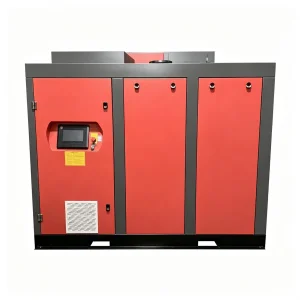
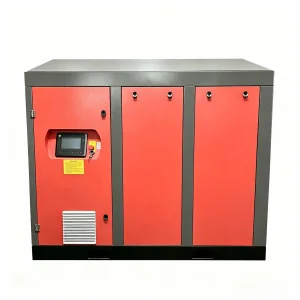
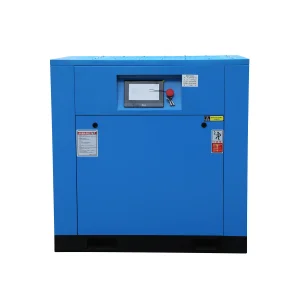
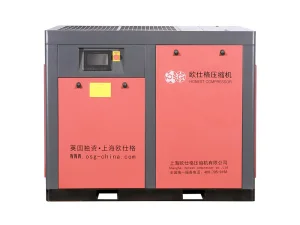
Featured Industrial Air Systems & Compressors (Batch 02)
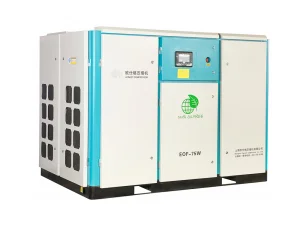
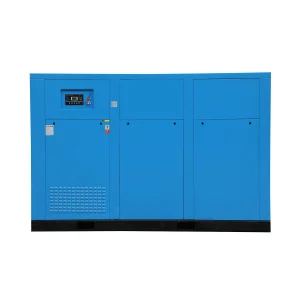
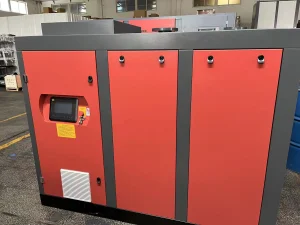
Heavy industrial variable speed compressors, dry screw vacuum solutions, and oil-free blowers engineered for comprehensive compressed air room turnkey projects.
Frequently Asked Questions: Sourcing OEM Air Dryers & Compressed Air Systems
Comprehensive engineering guidance to assist procurement executives, plant engineers, and system integrators.