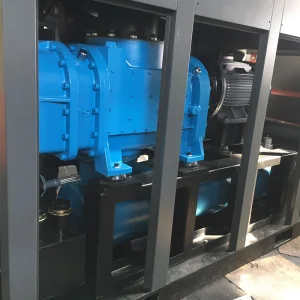
High-Efficiency Compressed Air & Vacuum Solutions
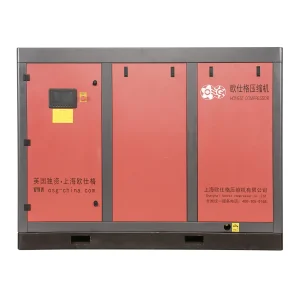
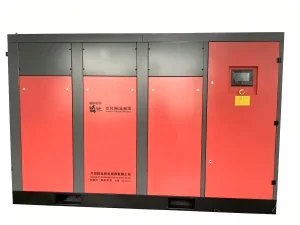
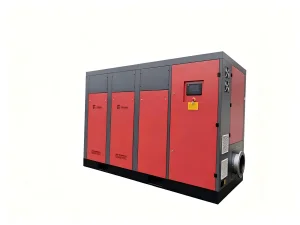
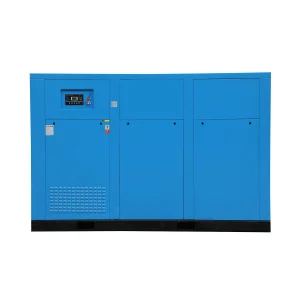
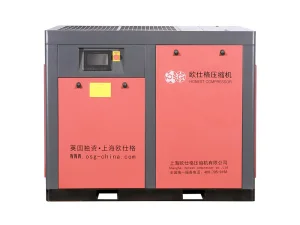
Explore our foundational compressor models, two-stage energy-saving air ends, and vacuum pumps engineered to pair with high-performance refrigerated air drying circuits.
Thermodynamic Frontiers in Industrial Refrigerated Air Dryers
Analyzing psychrometric behavior, heat exchanger flow dynamics, and modern refrigeration cycle optimization to meet stringent ISO 8573-1:2010 Class 4 standards.
All-in-One Aluminum Plate-Fin Heat Exchangers
Traditional copper-tube-in-shell heat exchangers suffer from laminar boundary layer thermal resistances and progressive galvanic corrosion. Modern OEM refrigerated dryers employ integrated, vacuum-brazed 3-in-1 aluminum plate-fin exchangers combining the air-to-air regenerator, air-to-refrigerant evaporator, and centrifugal moisture separator into a singular structural monoblock.
- Counter-flow heat transfer geometry
- Pre-cools inlet air to cut compressor loads
- Anti-freeze cross-flow internal passages
Thermal Mass Cycling & VFD Inverter Technology
Where legacy dryers run refrigeration compressors continuously at fixed displacement—wasting over 60% of rated power under partial-load conditions—next-generation refrigerated air dryers utilize either variable-speed DC inverter hermetic scroll compressors or cold-banking glycol thermal mass reservoirs. The cooling loop disengages once the thermal storage reaches saturation, slashing off-peak power consumption.
- Intelligent load-matching capacity regulation
- Zero cycling degradation on scroll motors
- Dynamic condensation temperature tracking
Transition to Low-GWP Eco-Refrigerants
Driven by the Kigali Amendment and European F-Gas regulations, the industrial air dryer manufacturing sector is rapidly phasing out legacy fluorocarbons like R22 and R404A. Modern OEM production lines are dedicated to environmentally benign refrigerants like R134a, R513A (GWP < 631), and R1234ze, engineered with non-toxic, non-flammable thermodynamic envelopes capable of handling high condensing pressures.
- Zero Ozone Depletion Potential (ODP)
- Optimized volumetric refrigeration effect
- Full conformity with EU F-Gas Phase-Down
Engineering Evaluation Matrix for Global Enterprises
Procuring industrial compressed air dehydration equipment requires auditing key operational factors beyond base purchase price: thermodynamic derating, differential pressure penalties, and drain integrity.
| Evaluation Parameter | Standard Commercial Grade | Honest Compressor Heavy-Duty OEM Grade | Impact on Plant OPEX & Reliability |
|---|---|---|---|
| Heat Exchanger Architecture | Copper pipe bundle inside steel shell; prone to fouling & corrosion. | Vacuum-brazed 3-in-1 aluminum plate-fin monoblock exchanger. | Low ΔP Saves up to 1.5% compressor motor energy per 0.01 MPa pressure preserved. |
| Dew Point Stability under Variable Flow | Fluctuates between +7°C and +12°C at peak intermittent demand spikes. | Continuous +3°C PDP stabilized by precision hot-gas bypass valves (HGBV) or EEV. | ISO 8573-1 Class 4 Prevents moisture condensate pooling inside pneumatic conduits and valve manifolds. |
| Condensate Drainage System | Mechanical float or timed solenoid valves; vulnerable to clogs and air blow-off. | Electronic capacitive zero-air-loss level sensor drains with cleanout ports. | Zero Purge Loss Eliminates air wastage, saving $350–$1,200 annually per drain point in utility electricity. |
| Thermal Derating Capability | Rated only at 35°C ambient and 38°C inlet air; trips at 45°C ambient. | Tropicalized oversized condensing units rated up to 55°C inlet and 50°C ambient. | High Ambient Eliminates high-pressure refrigerant cut-out shutdowns during peak summer operating cycles. |
| Enclosure & Internal Piping | Standard painted mild steel, bare copper piping susceptible to vibration cracks. | Electrostatic powder-coated marine-grade cabinetry with anti-vibration braided couplings. | Extended Life Exceeds 100,000 continuous operating hours in aggressive chemical and coastal atmospheres. |
Engineering Sizing Formula: Real-World Capacity Correction
A frequent error in industrial system design is selecting a refrigerated dryer purely by the air compressor's nominal volumetric output (m³/min or CFM). Inlet air temperature, ambient operating envelope, and line working pressure drastically modulate the heat load inside the evaporator:
Dryer Required Capacity = (Compressor Free Air Delivery) / (C_p × C_t × C_a)
Where C_p is the Working Pressure Correction Factor, C_t is the Compressed Air Inlet Temperature Factor, and C_a is the Ambient Temperature Factor. Our engineering division calculates custom sizing profiles to protect equipment from thermal overloading.
Macro-Sector Industrial Compressed Air Treatment
Tailored dehydration assemblies engineered to satisfy bespoke contamination risk tolerances across automotive, electronics, pharmaceutical, and heavy metallurgical plants.
Automotive & Paint Robotics
Microscopic moisture vapor inside pneumatic spray lines causes pinholing, blistering, and orange-peel blemishes on automotive body panels. Our refrigerated drying systems deliver dry carrier air to ensure defect-free robotic finishing cells.
Fiber Laser Cutting Lines
High-pressure assist air (16–30 bar) must be completely free of liquid moisture and hydrocarbon aerosols to avoid fouling focusing optics and protect laser cutting nozzles from reflective spatter failures.
Electronics & Semiconductors
Used across cleanroom pneumatic pick-and-place actuators and nitrogen generation feed streams. Preventing moisture dropout stabilizes delicate electrostatic balance and prevents internal oxidation of silicon wafers.
Food & Beverage Packaging
Pneumatic bottling, sorting, and sterile sealing lines demand oil-free dry air to prevent microbiological propagation within processing valves, ensuring compliance with strict HACCP and FDA hygiene thresholds.
Localization Support, Global Compliance & Factory Prowess
Operating from our 50,000 m² Shanghai smart manufacturing base, Honest Compressor supports distributors, contractors, and global OEMs in navigating regional pressure equipment and electrical regulations.
International Pressure Codes
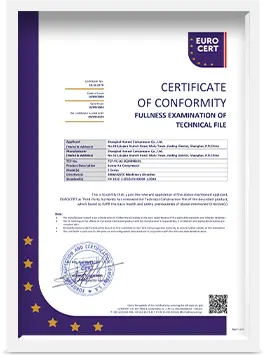
Our pressure vessel welding and brazing protocols are certified under ASME BPVC Section VIII Div 1, European Pressure Equipment Directive (PED 2014/68/EU with CE marking), and UKCA regulations. Every heat exchanger undergoes 100% helium mass-spectrometer leak testing and hydrostatic burst testing before line assembly.
- Full traceability of raw metallurgy
- Dual third-party inspection sign-offs
Electrical Customization
To ensure frictionless deployment across 50+ export jurisdictions, our electrical cabinetry supports customizable dual-frequency, multi-voltage transformer configurations: 380V/50Hz, 400V/50Hz, 460V/60Hz, 230V/60Hz, and 200V/50-60Hz. Control interfaces feature UL 508A and CE compliant components with Schneider and Siemens switchgear.
- NEMA 4 / IP54 & IP65 control enclosures
- Phase-sequence & surge surge suppression
Global OEM/ODM Engineering
We provide comprehensive turn-key private-labeling for international compressor brand owners and engineering houses. Capabilities span custom dimensions for containerized mobile skids, explosion-proof ATEX Zone 1/2 packages, multi-language PLC software, custom sheet metal RAL colors, and dedicated aftermarket spare part kits.
- SolidWorks 3D CAD step file delivery
- Complete sea-worthy vacuum packing
Next-Generation Technology: Towards Zero-Carbon Dehydration
Preview the future of compressed air refrigeration: edge computing diagnostics, microchannel heat transfer, and hybrid desiccant-refrigerated architectures.
AI-Enabled Predictive Dew Point Modulation
By monitoring inlet air enthalpy, real-time CFM flow, and atmospheric ambient changes through multi-node IoT telemetry, our next-generation onboard microcontrollers utilize neural network algorithms to dynamically modulate electronic expansion valves and fan cycle speeds before dew point spikes occur.
Superhydrophobic Microchannel Coating
Partnering with advanced material laboratories, our R&D team is piloting superhydrophobic nanocoatings on internal aluminum heat exchanger fins. This drastically minimizes the droplet contact angle, accelerating liquid condensate shedding into centrifugal drop-catchers and reducing air drag by up to 22%.
Hybrid Cold-Core Dual Dehydration Loops
Bridging the gap between refrigerated dryers (+3°C PDP) and desiccant twin-tower systems (-40°C PDP), hybrid systems use refrigeration to strip 85% of total water bulk before entering a miniature desiccant bed, extending desiccant bead longevity fivefold while consuming 70% less purge air.
Frequently Asked Questions: Industrial Air Dryers
In-depth technical answers addressing sizing, pressure dew point, maintenance, and thermodynamic integration for factory engineers and procurement officers.
Why is a +3°C (37.4°F) Pressure Dew Point considered the thermodynamic benchmark for refrigerated dryers?
A pressure dew point (PDP) of +3°C to +5°C represents the lowest practical temperature achievable using a direct-expansion refrigeration cycle without risking liquid condensate freezing inside the evaporator. Because pure water freezes at 0°C, operating a refrigerated dryer below +3°C introduces the hazard of ice formation on the heat exchanger fins, which constricts compressed air pathways, causes severe pressure drops, and can rupture internal refrigeration passages.
Under ISO 8573-1:2010 purity standards, a +3°C PDP qualifies for Class 4 moisture classification (residual vapor moisture content ≤ 5.95 g/m³ at 7 bar), which is thoroughly sufficient to prevent liquid condensation in over 90% of indoor industrial air distribution networks.
How does differential pressure (ΔP) across an air dryer impact factory operating costs?
Differential pressure (ΔP) across an air dryer is a direct parasitic energy loss. For every 0.1 bar (1.45 psi or 10 kPa) increase in pressure drop across the air dryer, the upstream air compressor must work harder, demanding approximately 1% more electrical energy to deliver the same terminal system pressure to production tools.
While low-cost dryers often produce ΔP figures exceeding 0.035 to 0.05 MPa due to restrictive piping, Honest Compressor's vacuum-brazed 3-in-1 aluminum plate exchangers maintain an ultra-low pressure drop below ≤0.015 MPa. On a 75 kW (100 HP) compressor operating 6,000 hours per year at $0.12/kWh, reducing ΔP by 0.03 MPa yields direct annual electricity savings of nearly $1,600.
What is the operational difference between Non-Cycling and Cycling (Thermal Mass) refrigerated dryers?
Non-Cycling Dryers: The refrigeration compressor runs continuously regardless of the compressed air demand. Under low-load or zero-air-flow conditions, a hot-gas bypass valve (HGBV) diverts hot refrigerant gas back to the evaporator to prevent freeze-up. This maintains a steady dew point but draws nearly 70–80% of full electrical power even when no compressed air is being consumed.
Cycling (Thermal Mass / VFD) Dryers: These units feature a cold storage buffer (such as a glycol-water tank or specialized thermal alloy) or a variable-speed inverter compressor. When air consumption drops, the compressor chills the thermal mass and shuts down completely, or modulates motor frequency to precisely match thermal load. For operations with intermittent production shifts, cycling dryers save between 25% and 50% in drying energy consumption.
Why is zero-air-loss condensate drainage essential compared to traditional timer drains?
Traditional solenoid-actuated timer drains open at preset intervals (e.g., every 5 minutes for 10 seconds). In humid summer months, they may not open long enough, allowing condensate to flood downstream lines; in dry winter months, they open when no water is present, blasting valuable compressed air into the atmosphere.
A single 1/4" orifice timer drain cycling frequently can waste an estimated $600 to $1,500 of compressed air every year. Zero-air-loss electronic drains incorporate capacitive level sensors that detect actual liquid accumulation, opening only when condensate is present and closing just before air escapes—eliminating energy waste and ensuring dependable water removal.
How does ambient temperature and inlet air temperature affect the rated capacity of a refrigerated dryer?
Refrigerated dryers are rated under standard ISO 7183 conditions: typically 38°C (100°F) inlet air temperature, 7 bar (100 psig) working pressure, and 35°C (95°F) ambient temperature. If your compressor discharges air at 55°C (131°F) directly into the dryer or if the compressor room ambient climbs to 45°C (113°F), the moisture loading on the dryer increases exponentially because warmer air holds significantly more water vapor.
In such scenarios, a derating correction factor must be applied. A dryer nominally rated for 10 m³/min might only safely process 5.8 m³/min under harsh tropical conditions without experiencing dew point deterioration. Honest Compressor offers custom high-ambient packages equipped with oversized condensers to maintain rated dew points without thermal tripping.
What protocols and hardware interfaces are available for SCADA integration and smart factory monitoring?
All Honest Compressor industrial refrigerated air dryers can be fitted with advanced PLC microcontrollers supporting standard RS485 Modbus-RTU, Profinet, Ethernet/IP, and CANbus protocols. Remote monitoring dashboards continuously stream critical diagnostic parameters, including Pressure Dew Point (°C), Evaporator Temperature, Condensing Pressure, Ambient Temperature, and Electronic Drain Cycle logs.
Dry contact relays for common faults (high dew point alarm, refrigerant high-pressure trip, sensor failure) come standard, allowing integration into DCS and centralized plant monitoring software.
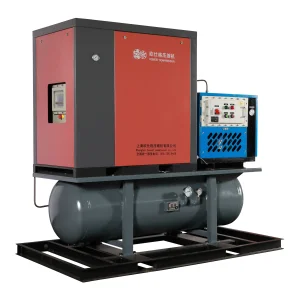
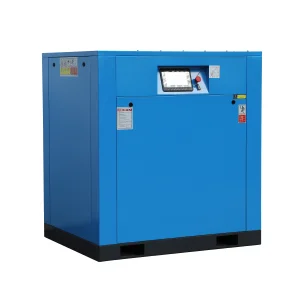
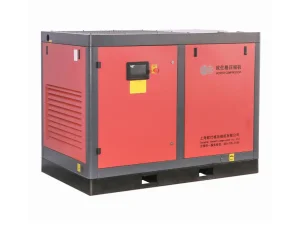
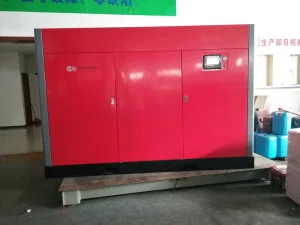
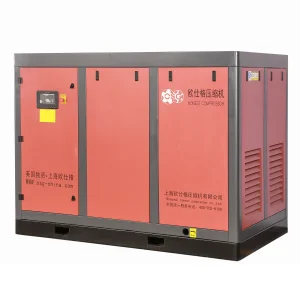
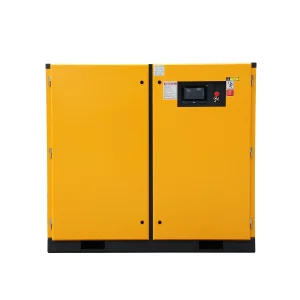
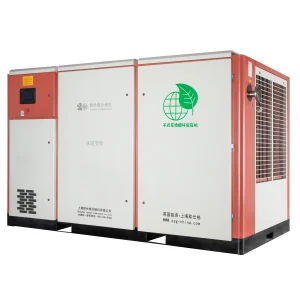
Advanced Industrial Air Generation & Treatment Units
Complete your facility's utility room with high-pressure laser compressors, water-lubricated oil-free rotary screw units, and integrated explosion-proof packages.
Request a Customized Refrigerated Dryer Sizing Review
Connect directly with Honest Compressor’s thermodynamic engineers in Shanghai. Provide your inlet air pressure, ambient conditions, and volumetric flow to receive complete 3D CAD models, certified psychrometric heat load calculations, and OEM pricing within 24 hours.