High-Efficiency Oil-Free Screw Solutions Serving Norway
Pre-engineered screw blowers featuring permanent magnet VFD synchronization, continuous aeration stability, and low lifecycle energy footprints for Norwegian industrial clients.
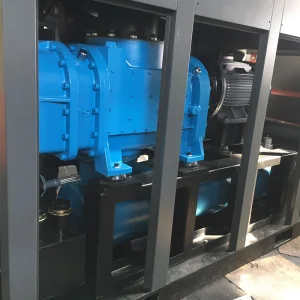
Norway Fjord Edition: Oil-Free VSD Screw Blower & Vacuum System
- Air Purity: ISO 8573-1 Class 0
- Motor Type: IE5 Ultra-Premium PM
- Pressure Rise: 0.3 to 1.2 bar(g)
- Deployment: Recirculating Aquaculture (RAS)
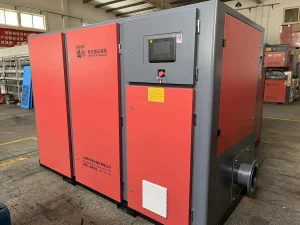
Nordic Climate 30kW Low-Pressure Oil-Free Screw Blower Station
- Rated Power: 30 kW / 40 HP VSD
- Control Logic: Siemens/Schneider PLC Smart Bus
- Thermal Range: -25°C to +45°C Rated
- Target Duty: Municipal & Effluent Basins
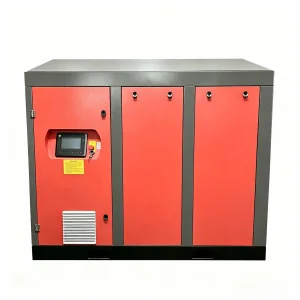
Offshore & Marine ODM PM-VSD Oil-Free Rotary Screw Blower
- Enclosure Rating: C5M Coastal Anti-Corrosion
- Acoustics: <72 dB(A) Silenced Canopy
- Flow Range: Variable Speed 30%–100%
- Application: Feed Barge Pneumatic Loading
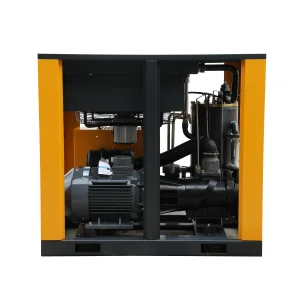
Process Engineering 22kW Variable Speed Rotary Screw Unit
- Specific Energy: Ultra-Low kWh/Nm³ Index
- Drive Coupling: Direct 1:1 Integrated Shaft
- Monitoring: Modbus-TCP / Remote Cloud
- Certification: CE / Machinery Directive 2006/42/EC
Norway Industrial Reality: Decarbonization, Enova Mandates & Marine Rigor
A technical assessment of energy optimization, carbon levies, and the zero-tolerance standard for hydro-carbon contamination in Norwegian processing facilities.
The Transformation of the Norwegian Process Air Sector
Norway represents one of the world's most demanding operating environments for industrial low-pressure compression systems. Driven by national climate targets under the Climate Neutral 2050 framework, strict enforcement by the Norwegian Environment Agency (Miljødirektoratet), and capital co-funding programs managed by Enova SF, Norwegian operators must scrutinize every kilowatt-hour. For decades, tri-lobe external-compression Roots blowers dominated municipal wastewater installations and marine salmon farms. However, their thermodynamic limitations—principally adiabatic inefficiencies causing high discharge temperatures and high specific energy consumption (SER)—have rendered them obsolete in high-tariff, carbon-taxed regimes.
The contemporary Norwegian commercial paradigm demands positive displacement rotary twin-screw technology that provides true internal compression. Operating primarily on renewable hydro and wind energy, Norwegian industrial plants are increasingly evaluated on total lifecycle cost (LCC). In applications such as deep biological nutrient removal (BNR) in municipal treatment plants (e.g., surrounding the Oslofjord basin) and Land-Based Recirculating Aquaculture Systems (RAS) across Vestland, Trøndelag, and Nordland, equipment runtimes exceed 8,000 hours per year. Under such intense duty cycles, electrical power represents 78% to 83% of the 10-year total cost of ownership, dwarfing original capital procurement outlays.
Local Environmental and Climate Stressors
Operating machinery in coastal Norway introduces challenges unseen in continental Europe. Winter ambient conditions regularly plummet to -25°C in interior and northern regions like Finnmark, while seaside processing facilities face extreme maritime humidity, salt mist corrosion (demanding ISO 12944 C5M coastal coatings), and wide barometric pressure shifts. Traditional low-pressure blowers frequently suffer timing gear condensation, seal embrittlement, and localized overheating during sudden loading spikes. Our oil-free rotary screw blowers engineered for Norwegian exporters solve these issues with thermostatic lubricant thermal management, stainless steel internal instrumentation, and specialized sealing arrangements that isolate the compression chamber completely from bearing lubricant reservoirs.
Thermodynamic Shift: Internal Compression vs. Roots Lobe Blowers
A rigorous engineering comparison of polytropic efficiency gains, thermodynamic discharge behaviors, and Class 0 contamination elimination.
| Performance Dimension | Conventional Tri-Lobe Roots Blower | Honest Modern Oil-Free Screw Blower | Norwegian Engineering Impact |
|---|---|---|---|
| Compression Mechanism | External isochoric compression (back-flow shock) | Internal continuous polytropic helical compression | Eliminates energy spikes; smooth air delivery without pressure pulsations. |
| Adiabatic Efficiency (η) | 45% – 58% typical operating average | 75% – 86% across wide operational envelopes | Direct reduction of specific energy consumption (kW/m³/min) up to 35%. |
| Internal Airend Leakage | High slip losses, expanding as differential pressure rises | Tight dynamic rotor clearances with thermal-resistant coatings | Volumetric efficiency stays above 92% across varying pressure ranges (0.3–1.5 bar). |
| Discharge Temperature (ΔT) | High (>110°C at 0.8 bar differential) | Low (<65°C to 80°C with internal stage optimization) | Maintains dissolved oxygen saturation in water; protects sensitive fish biology. |
| Acoustic Signature | 85 – 98 dB(A), severe low-frequency rumble | 68 – 75 dB(A) with integrated pulsation silencers | Complies with strict Norwegian Arbeidstilsynet occupational noise rules. |
| Air Purity | Vulnerable to oil mist seal leakage over time | 100% Certified ISO 8573-1 Class 0 (Dry labyrinth + carbon ring) | Zero risk of biocontamination in food-contact, aquaculture, and pharma silos. |
The global transition from external-compression blowers to high-speed screw airends is accelerated by international net-zero mandates. In traditional Roots-type positive displacement blowers, air enters the casing at intake pressure and is pushed towards the discharge nozzle without changing internal pocket volume. Once the lobe tip uncovers the discharge port, high-pressure air rushes backward into the pocket, causing severe pressure shocks, turbulence, and acoustic emissions. This isochoric thermodynamic process inherently wastes energy as friction and heat.
Conversely, the oil-free screw blower employs male and female helical rotors with precision asymmetric profiles (typically 4/6 or 5/6 lobe configurations). As the rotors counter-rotate, the volume of the inter-lobe flute continuously diminishes from suction to discharge, compressing the air gradually and internally. When the port opens, the compressed gas equalizes smoothly with line pressure. By eliminating back-flow shock, internal compression conserves up to 35% of the mechanical energy typically lost in lobe units, yielding immediate savings for energy-intensive continuous operations.
Engineered Solutions for Critical Norwegian Industries
From deep-sea smolt hatcheries along the Atlantic coast to high-volume pneumatic bulk handling in industrial ports.
Land-Based Salmon Aquaculture (RAS)
Modern Norwegian smolt and post-smolt facilities rely on precise, continuous dissolved oxygen injection, biofilter degassing, and carbon dioxide stripping. Oil-free screw blowers supply Class 0 air ensuring zero hydrocarbon sheen that can ruin biofilter bacterial media or irritate delicate smolt gill filaments.
Municipal Wastewater & Fjord Protection
Treating municipal wastewater across the Western Fjords and Oslofjord basin requires deep diffuse aeration basins. Operating between 0.6 and 1.2 bar(g), our screw blowers maintain high thermal efficiency while tracking fluctuating diurnal oxygen demands through broad PM VFD turn-down ratios down to 25%.
Pneumatic Pellet & Chemical Conveying
Norwegian aquaculture feed barges transport fragile salmon pellets over hundreds of meters to open-pen cages. Low-temperature, low-pulsation oil-free screw air prevents pellet crushing, fat migration, and pipe clogging, dramatically lowering feed dust waste and ocean floor settling.
Biogas Fermentation & Flue Gas Scrubber
Norwegian municipal circular bio-refineries convert organic wastes into high-grade vehicle biomethane. Our dry screw blowers deliver stable low-pressure boost across anaerobic digester spargers and flue gas desulfurization columns with spark-free, Ex-certified safety options.
Deep Technical Specifications & Nordic Sub-Zero Engineering
A breakdown of mechanical, electrical, and materials engineering built into our oil-free low-pressure compressor packages.
Advanced Airend Geometries and Non-Degrading Coatings
The heart of our oil-free screw blower is an airend machined with sub-micron CNC tolerances. In an oil-free screw, the male and female rotors do not contact one another; synchronization is maintained by precision-ground, surface-hardened timing gears located in an isolated oil sump. Because cooling oil cannot be injected into the compression cavity, rotor profile clearances must be tightly controlled to minimize internal slip without risking thermal binding across variable ambient conditions.
Our rotors are treated with multi-layer advanced polymer fluororesin or food-safe nickel-phosphorus thermal dispersion coatings. Unlike traditional paint-based rotor coatings that peel and degrade under thermal cycling, our bonded metallurgical coatings resist moist coastal sea air, acidic process gases, and thermal expansion shocks up to 200°C. This maintains consistent volumetric efficiency over 60,000 continuous hours without air gap widening.
IE5 Ultra-Premium Permanent Magnet Motors with Integrated Inverters
In municipal aeration and biological biofilters, process oxygen demand fluctuates hour-by-hour based on biological loading, effluent temperature, and seasonal rain runoff. Fixed-speed blowers address this by throttling or blowing off excess air—wasting electricity. Honest oil-free screw blowers integrate synchronous reluctance permanent magnet (IE5 PMSM) motors driven by specialized algorithms.
PMSM motors exhibit near-zero rotor copper losses, maintaining flat efficiency curves even when throttled down to 25%–35% of nominal speed. Direct shaft-to-shaft or close-coupled gearing removes belt slip losses (recovering 3%–5% transmission penalty). Controlled soft acceleration prevents electrical grid destabilization on sensitive rural Norwegian utility feeds, while the enclosed liquid- or air-cooling circuits isolate winding insulation from corrosive salt air.
Cold Climate (Nordic Winterization) Package
For installations in interior Norway or high-latitude maritime platforms, our blowers can be equipped with the Nordic Winterization Package. This system incorporates:
- Automated Sump Pre-Heaters: Maintains gear oil at optimal kinematic viscosity prior to startup, eliminating cold-crank bearing wear.
- Integrated Condensate Freeze Prevention: Thermostatically controlled trace heating on discharge check valves, moisture separators, and bypass loops prevents ice blockage.
- Enclosure Louver Thermostats: Variable canopy inlet dampening modulates interior air temperature during -30°C winter periods, preserving seal elasticity.
Equipping a Norwegian Installation or Upgrading an Inefficient Aeration Station?
Our engineering division models specific energy consumption curves, acoustic layouts, and heat recovery integration specifically tailored for Nordic grid standards and Enova grant qualifications.
Send Inquiry NowExport Certified Oil-Free & Rotary Compression Lineup
Fully compliant with European CE machinery standards, EMC electrical regulations, and ISO 8573 air quality certifications for Norwegian commercial operations.
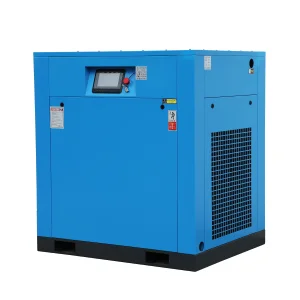
Permanent Magnet VFD Rotary Compressor 11kW • Compact Nordic
- Power: 11 kW / 15 HP
- Control: Smart High-Torque Inverter
- Noise Level: 65 ± 2 dB(A) Whisper Duty
- Application: Marine Workshop & Packaging
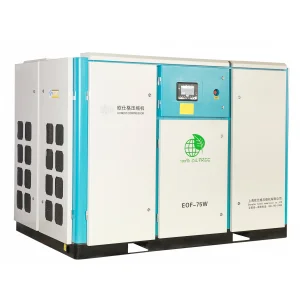
EOF Series 100% Oil-Free Dry Screw Compressor • PM VFD
- Purity Standard: Class 0 Dry Cavity Design
- Rotor Type: Advanced Wear-Resistant Coating
- Pressure Class: 7.0 to 10.5 bar(g)
- Application: Fish Processing & Pharma Cleanrooms
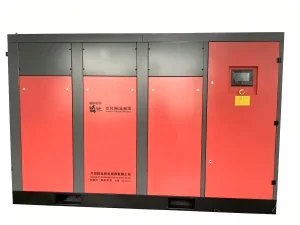
EGV-132A-140 High-Volume Oil-Free PM VFD Screw Blower
- Drive Rating: 132 kW Heavy Duty
- Flow Volume: Large Capacity (up to 70 m³/min)
- Cooling Mode: Optimized Air / Fluid Exchange
- Application: Regional Municipal Wastewater Basins
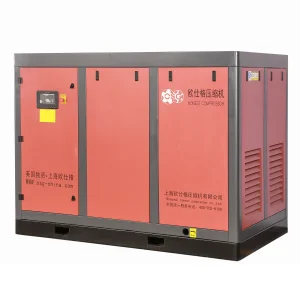
IP55/54 55kW Two-Stage Energy-Saving Screw Compressor
- Shaft Architecture: Dual-Stage Compression Ratio
- Motor Protection: IP55 Heavy Enclosure
- Heat Factor: Inter-Stage Liquid Injection
- Application: Chemical Plants & Shipyard Refit
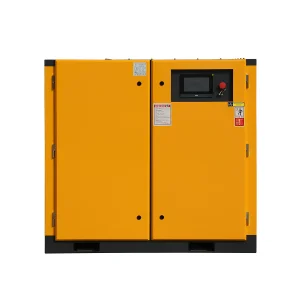
VFD 15kW Smart Inverter Industrial Air Compressor
- Energy Cut: Up to 38% Energy Savings
- Air Delivery: Stable Dynamic Modulation
- Voltage Rating: 400V 50Hz Standard CE
- Application: Automated Robotic Packaging
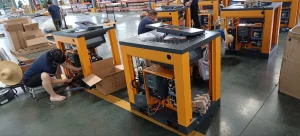
10A-PM Single-Phase Permanent Magnet Frequency Unit
- Electrical: 220V 50Hz (Single Phase Option)
- Footprint: Ultra-Compact Service Space
- Maintenance: Accessible Front-Access Filter Kit
- Application: Fjord Service Stations & Aquaculture Docks
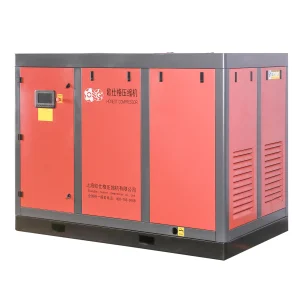
Heavy Process Two-Stage Screw Compressor For Chemical Plants
- Efficiency Rank: National Tier-1 Energy Efficiency
- Compression Stage: Intercooled Double Rotor Pair
- Duty Factor: 24/7/365 Continuous Operation
- Application: Fertilizer & Petrochemical Synthesis
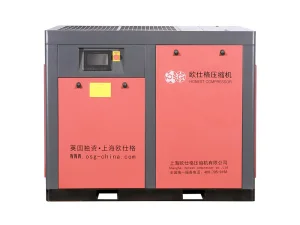
Double Screw Dual VSD PM Compressor • Grid Eco Certified
- Motor System: Dual Synchronous Inverter Drive
- Monitoring: Real-Time Cloud Diagnostics & Telemetry
- Pressure Stability: ±0.01 bar Target Response
- Application: Continuous Heavy Industrial Manufacturing
Engineering FAQ: Oil-Free Screw Blowers in Norway
Specific answers addressing operating principles, lifecycle return on investment, acoustic insulation, and cold-start resilience.
How does internal screw compression outperform tri-lobe Roots blowers in energy efficiency?
Roots blowers function via external isochoric compression where air is moved at inlet pressure and violently compressed by downstream back-pressure shock. This causes severe thermodynamic turbulence and massive thermal dissipation. Our oil-free screw blowers reduce internal inter-lobe flute space prior to discharge, generating true polytropic internal compression. This mechanism saves 25% to 35% in direct electrical consumption at typical Norwegian basin depths (0.5 to 1.2 bar gauge).
How is ISO 8573-1 Class 0 oil-free air maintained without risking aquaculture stocks?
Our airends maintain a physical dry compression chamber separated from the timing gear lubricant sumps by non-contact, atmospheric venting air-labyrinth seals combined with spring-loaded carbon ring assemblies. Because no liquid lubricant enters the compression flutes, zero oil carry-over can occur. Even in the event of seal wear, atmospheric vents route any pressure differential away from the process stream, completely protecting smolt gills and sensitive biofilters.
Can our installation qualify for Enova SF energy efficiency subsidies in Norway?
Yes. Enova SF offers competitive grants for industrial energy reduction projects that verify electrical savings against existing baselines. Replacing antiquated lobe blowers with high-efficiency screw blowers equipped with IE5 Permanent Magnet VFDs typically satisfies Enova's hurdle criteria. We provide calibrated specific energy consumption (kW/m³/min) test logs compliant with ISO 1217 Annex C/E to facilitate your application documentation.
How does the system ensure reliable start-up during -25°C Nordic winter freezes?
Units destined for high-latitude regions incorporate thermostatic lubricant sump heating elements and temperature-controlled enclosure intake louvers. Upon a cold-start command, the PLC verifies minimum lubricant viscosity before engaging the main inverter. Furthermore, automatic zero-load bypass cycling allows the machine to achieve thermal equilibrium before loading process line back-pressure.
What is the typical lifecycle and payback timeframe when replacing lobe blowers?
In continuous 24/7/365 facilities such as municipal biological plants and RAS farms, the energy cost savings generated by a 30% efficiency jump commonly offset the entire capital expenditure differential within 14 to 22 months. Our timing gears, bearings, and coated rotors are designed for a 60,000-hour base bearing L10h design life under proper maintenance conditions.
How does low-noise engineering satisfy Norwegian Arbeidstilsynet regulations?
Conventional Roots blowers emit high-intensity low-frequency pulses (85-98 dBA) that travel through piping and factory walls. Honest screw blowers emit high-frequency, non-pulsating discharge streams that are easily attenuated by our heavy multi-layer acoustic enclosures and integrated micro-perforated silencers, achieving sound levels below 72 dBA at 1 meter without expensive secondary external baffles.
Partner with an Authoritative Screw Blower Manufacturer
Direct supply, tailored OEM/ODM engineering configurations, and comprehensive technical documentation for engineering contractors and plant managers serving Norway.