Precision Engineered Systems
High-Efficiency Screw Compressors & Blowers (Part I)
Explore our export-certified industrial compressed air machinery optimized for ultra-low Specific Power Consumption (kW/m³/min) and rigorous continuous 24/7 duty.
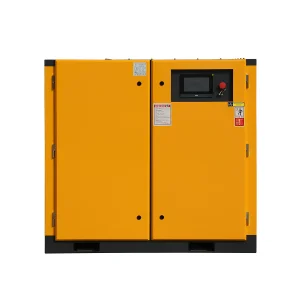
ODM IP55/54 55KW 75HP Factory Price Two Stage Industrial Screw Type Air Compressor Machine Factories, Exporters
View Product Specs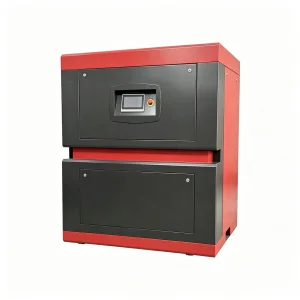
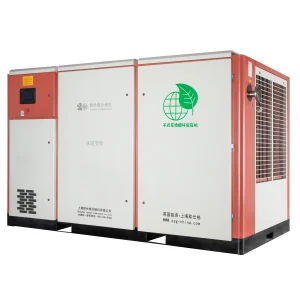
China Oil Cooled Screw Air Compressor 55kw 75hp Industrial Air Compressor Rotary Air Compressor Supplier, Exporter
View Product Specs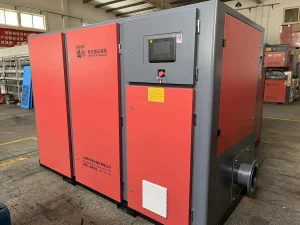
China 30kw Industrial Oil Free Vsd Screw Air Blower Vacuum Pump With Plc Inverter Pm Motor oil free screw blower Supplier, Suppliers
View Product Specs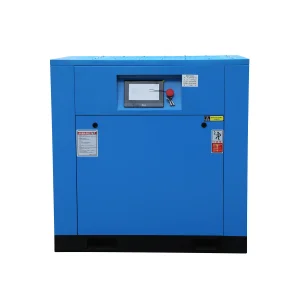
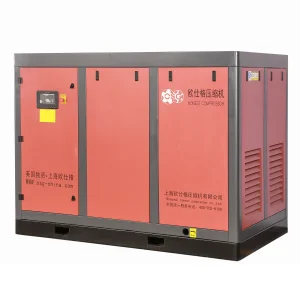
OEM Industrial 15kw/22kw/37kw/55kw/75kw Energy Saving Pm Motor VSD/VFD Rotary Screw Air Compressor Manufacturer, Exporters
View Product Specs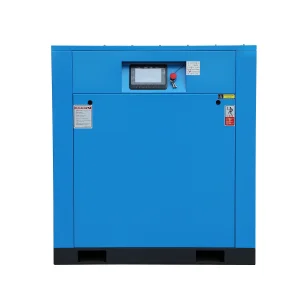
OEM VFD screw air compressor 0.7-1.25mpa Energy Saving up to 30% Manufacturers, Exporter
View Product Specs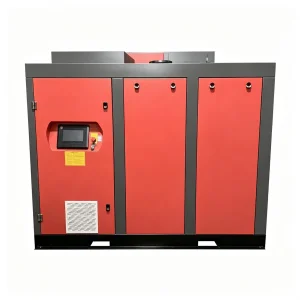
OEM Hot Sale China Factory High Quality Screw Vacuum Pump Permanent Magnet Frequency Conversion Progressive Pump Manufacturers, Factories
View Product Specs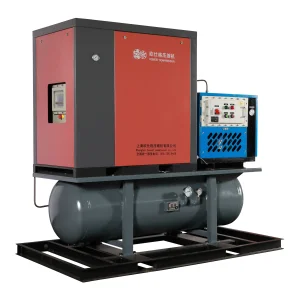
OEM 4-in-1 Explosion-Proof Air Compressor | 7.5-22kW Permanent Magnet Integrated Unit Factory, Exporters
View Product Specs10-15%
Global Industrial Grid Share
77%
10-Year Lifecycle Power Cost
38.2%
Max Two-Stage Energy Savings
Class 0
ISO 8573-1 Zero Hydrocarbon
Thermodynamic Realities & Policy Drivers
Macro-Industrial Solutions & Global Energy Realities
In modern industrial facilities, compressed air is universally acknowledged as the "Fourth Utility" alongside electricity, gas, and water. Yet, it remains inherently the most energy-intensive. Globally, approximately 10% of total manufacturing electricity is consumed by compressor systems, with over 80% of that energy dissipated as thermodynamic thermal reject in poorly engineered single-stage machines.
ISO 50001 & Carbon Accounting Mandates
Under tightening emissions frameworks such as the European Union’s Carbon Border Adjustment Mechanism (CBAM), Scope 1 and Scope 2 energy verification has transitioned from an optional corporate goal to a legal and balance-sheet liability. Rotary screw compressor efficiency directly shifts factory Specific Power Consumption (SPC), mitigating high carbon taxation across imported mechanical components.
- Audited compliance with ISO 50001 energy monitoring
- Measurable Scope 2 indirect emissions abatement
- Verified energy savings certificates for green subsidization
Life-Cycle Cost (LCC) Realignment
Over a standard 10-year operational lifecycle (60,000 running hours), the initial capital acquisition expenditure of an industrial air compressor accounts for merely 10% to 12% of its Total Cost of Ownership (TCO). Maintenance and routine servicing comprise roughly 11%, while pure electrical utility consumption absorbs a staggering 77%. Purchasing strictly on initial procurement CAPEX represents an engineering false economy.
- CAPEX offset within 9 to 14 operational months
- Substantial reduction in unproductive idling wattage
- Lower component thermal stress extending bearing longevity
The Volatility of Variable Industrial Loads
Traditional fixed-speed compressors operate on a crude load/unload intake throttle strategy. When line pressure reaches the upper setpoint, the intake suction valve shuts while the motor spins at full nominal RPM, drawing 40% to 70% of full-load power without delivering a single cubic meter of useful compressed air. Our Permanent Magnet Variable Frequency Drive (PM VFD) dynamically throttles displacement.
- Zero blow-off waste during cyclic manufacturing gaps
- Ultra-tight pressure stability (±0.01 MPa / ±0.1 bar)
- Soft-starting eliminating catastrophic amp inrush peaks
| Compression Architecture | Specific Power (kW/m³/min @ 8 bar) | Part-Load Efficiency (50% Demand) | Isothermal Proximity Index | 10-Year Estimated Power Cost (75 kW Unit) | Efficiency Status |
|---|---|---|---|---|---|
| Legacy Fixed-Speed (Single Stage, Asymmetric 4:6) | 7.2 – 8.1 kW/m³/min | Poor (High unloader blow-off waste, ~65% power draw) | Low (~58% Isentropic efficiency) | $412,000 USD | Phase-out Tier |
| Standard Induction VFD (Single Stage, Inverter-driven) | 6.4 – 7.1 kW/m³/min | Moderate (Rotor slip losses below 30 Hz) | Moderate (~67% Isentropic efficiency) | $338,000 USD | Standard Tier |
| Honest Compressor Ultra PM VFD (Two-Stage Intercooled) | 5.1 – 5.6 kW/m³/min | Exceptional (Vector-controlled IE5 PMSM, 96.8% motor eff.) | High (~82% Isentropic efficiency via inter-stage cooling) | $249,000 USD | GB 19153 Class 1 Top Tier |
Core Thermodynamic Principles
Engineering Architecture: The Physics of Isothermal Approach
True thermodynamic efficiency in rotary screw machinery is governed by the proximity of the compression process to the theoretical isothermal curve. When atmospheric gas is compressed polytropically, enthalpy converts into substantial heat of compression. Without intermediate cooling, air expands dynamically within the rotor flutes, demanding exponentially higher work input per kilogram of compressed medium.
Optimized 5:6 Asymmetric Rotor Geometry
At our Shanghai precision facility, female and male rotors are milled on five-axis German Klingelnberg and Holroyd CNC grinding centers. The proprietary 5:6 tooth profile decreases the transverse seal line length, drastically shrinking the high-pressure "blow-hole" cross-sectional area. This curbs back-leakage of compressed gas to the suction intake, boosting volumetric efficiency (ηv) beyond 95% across broad dynamic RPM bands.
- Sub-micron tolerance clearance control (±2μm)
- Hydrodynamic SKF Explorer duplex cylindrical roller bearings
- Calculated L10 bearing life exceeding 100,000 running hours
Two-Stage Compression with Inter-Stage Injection
By splitting the total pressure ratio between two discrete pairs of rotors running in series, the pressure ratio across each stage is reduced to rstage = √rtotal. For instance, compressing from 0.1 MPa to 0.8 MPa single-stage demands a pressure ratio of 8. In our two-stage architecture, each stage works under a modest ratio of only ~2.83. Intermediate fluid atomization absorbs the heat of compression, yielding significant thermodynamic gains.
- Internal leakage drops by over 60% relative to single stage
- 15% to 20% direct electrical power reduction
- Decreased rotor axial thrust and reduced internal thermal fatigue
IE5 Ultra-Premium Permanent Magnet Synchronous Motors
Honest Compressor integrates ultra-dense NdFeB (Neodymium Iron Boron) permanent magnet rotors rated to 180°C thermal demagnetization resistance. Unlike asynchronous induction motors, PMSM motors have zero rotor copper I²R losses and experience no rotational slip. When paired with high-frequency vector-controlled inverters, efficiency remains virtually flat across a comprehensive 15% to 100% speed regulation range.
- IP65 fully enclosed oil-cooled motor architecture
- Elimination of coupling pulleys, belts, and mechanical gear wear
- Direct coaxial integration: 100% mechanical transmission efficiency
Real-World Operational Demands
Engineered for Demanding Global Industrial Applications
Compressed air specifications diverge dramatically across industrial verticals. A semiconductor fab requires hydrocarbon-free molecular purity, whereas offshore mining and chemical facilities mandate explosion-proof ATEX ratings and high ambient heat tolerances.
Semiconductor & Photovoltaics
Silicon wafer fabrication, cleanroom pneumatics, and solar PV cell deposition require absolute zero hydrocarbon aerosol risk. Our EOF dry-type and water-lubricated series yield certified ISO 8573-1 Class 0 air, eliminating micro-contamination defects in sensitive photolithography lines.
Pharmaceutical & Fermentation
Bioreactor aeration, sterile packaging, and tablet coating demand continuous non-pulsing air streams with zero bacteria-harboring oil mist. Coupled with integrated heat recovery exchangers, our systems supply 75°C sterile water for clean-in-place (CIP) washdown procedures simultaneously.
Petrochemical & Hazardous Zones
Equipped with Ex d IIB T4 / Ex d IIC T4 explosion-proof ratings, reinforced spark-free copper-finned cooling, and encapsulated PLC modules, our 4-in-1 integrated skid systems operate safely within Zone 1 and Zone 2 combustible vapor and chemical refinery facilities.
Automotive & Heavy Stamping
Automated robotic welding, plasma cutting, and pneumatic press feeds generate abrupt cyclic load surges. Our vector-controlled PM VFD systems ramp from low idle to full discharge in milliseconds, maintaining plant manifold pressure without pneumatic tooling stall or line sag.
Global Trade & Quality Engineering
Localized Engineering Support & Global Compliance Assurance
Founded in 2004 as a British-owned manufacturing venture in Malu Town, Jiading District, Shanghai, Honest Compressor operates a state-of-the-art 50,000 m² smart assembly plant. We bridge high-precision Chinese engineering with stringent international trade and safety directives.
International Statutory Certifications
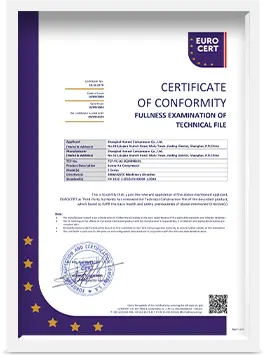
Every compressor unit leaving our Shanghai plant carries full export traceability. We build to European Machinery Directive 2006/42/EC, Pressure Equipment Directive (PED 2014/68/EU), CE electromagnetic compatibility, ASME Section VIII pressure vessel certification for North American jurisdictions, and ISO 9001:2015 / ISO 14001 environmental frameworks.
- Fully compliant with GB 19153-2019 Grade 1 benchmark
- Factory test certificates per ISO 1217:2009 Annex C/E
- Pre-shipment verification via SGS, TUV, and BV audits
Universal Grid & Environmental Adaptability
To assure frictionless integration into diverse national power networks, our engineering team custom-winds motors for universal 3-phase voltages: 208V, 220V, 380V, 400V, 415V, 460V, and 575V across both 50Hz and 60Hz. Micro-channel air-coolers and heavy-duty shell-and-tube water-coolers guarantee full continuous discharge power up to 50°C ambient temperature without thermal tripping.
- Dual frequency inverters (50Hz / 60Hz automatic phase sync)
- High-altitude derating engineering up to 3,500m elevation
- Tropicalized electrical insulation protecting against humidity
Global Spare Parts & Engineering SLA
Through our localized distributor channels across 50+ export destinations in Southeast Asia, Europe, the Middle East, and the Americas, end-users receive swift technical parts replenishment. We stock genuine air filters, synthetic polyalphaolefin (PAO) lubricants, air-oil separation cartridges, and inverter boards with critical SLA response windows.
- Rapid dispatch of consumable service kits within 24 hours
- Remote cloud telemetry for real-time PLC diagnostic triage
- Multi-lingual HMI interfaces (English, Spanish, Russian, Arabic)
Innovation Vectors 2026–2030
Technological Roadmap: The Future of Smart Compression
The convergence of predictive Edge-AI computing, advanced magnetic materials, and thermodynamic heat-capture loop engineering is redefining the boundaries of volumetric compressor efficiency.
Edge-AI Predictive Diagnostics
Embedded high-frequency piezoelectric accelerometers continually capture bearing vibration signatures. Onboard neural models identify micro-spalling and harmonic resonance early, executing automated speed shifts and dispatching proactive maintenance tickets before catastrophic seizure occurs.
SynRM Reluctance Integration
Transitioning into pure Synchronous Reluctance (SynRM) and PM-assisted reluctance architectures completely removes dependence on heavy rare-earth minerals while achieving IE5 efficiency standards even at extreme elevated operating temperatures without risk of rotor demagnetization.
Thermodynamic Heat Recovery
Standardizing plug-and-play calorific heat exchangers into the compressor oil circuit enables plants to capture up to 90% of electrical energy input as 70°C to 85°C hot water for boiler preheating, industrial plating, or facility central hydronic heating, dropping plant fuel consumption.
Cloud Fleet Master Sequencing
Next-gen multi-compressor industrial clusters rely on IIoT gateways communicating via OPC-UA protocols. Centralized algorithms evaluate pressure gradients across distributed headers, dynamically selecting the optimal machine pairing to prevent cascading unload cycles across the plant.
Procurement & Engineering Intelligence
Frequently Asked Questions: Screw Air Compressor Efficiency
In-depth technical answers addressing operational mechanics, thermodynamic sizing parameters, and international procurement standards for plant engineering leaders.
Q: How is Specific Power Consumption (SPC) measured and why is it critical?
Specific Power Consumption (SPC) defines the true electrical input required to generate a given volumetric flow of compressed air at a defined discharge pressure, typically denoted in kW/(m³/min) or kW/100 CFM per ISO 1217 Annex C standards. While overall motor rating (kW) gives the nominal mechanical capacity, SPC reflects aerodynamic and electrical efficiency: two 75 kW compressors can produce wildly different outputs (e.g., 11.8 m³/min vs 14.1 m³/min at 8 bar), resulting in thousands of dollars in utility variance annually.
Q: Why does a Two-Stage screw compressor deliver superior efficiency over single-stage units?
Two-stage compressors divide the compression process into two distinct pressure steps. By cooling the compressed air between the first and second stage with fine atomized oil mist, the thermodynamic curve shifts closer to an ideal isothermal compression line (constant temperature). This reduces intermediate air density volume and thermal work, cutting internal compression losses and rotor blow-hole back-leakage. The thermodynamic gain delivers 15% to 20% electrical savings compared to an equivalent single-stage compressor.
Q: How do Permanent Magnet (PM) VFD compressors prevent idling power losses?
Traditional fixed-speed units regulate intermittent demand by opening an unloader valve, venting internal pressure while spinning the motor unloaded at 100% nominal RPM, which wastes 40% to 70% of full-load electricity. Honest Compressor’s permanent magnet synchronous motors (PMSM) paired with closed-loop vector-controlled inverters dynamically throttle motor speed in exact step with plant pneumatic demand, completely eliminating idling states and maintaining line pressure within ±0.01 MPa.
Q: What is the significance of ISO 8573-1 Class 0 certification in oil-free systems?
ISO 8573-1 defines international air purity classes across particulates, water vapor, and total oil content (aerosol, liquid, and vapor). Class 1 permits up to 0.01 mg/m³ of residual oil. Class 0 represents the strictest tier: total oil content must fall strictly below measurable analytical thresholds (<0.003 mg/m³). For pharmaceutical, semiconductor, and food/beverage plants, Class 0 dry-screw and water-lubricated units provide infallible risk mitigation against systemic batch contamination.
Q: Can Honest Compressor supply tailored voltage, frequency, and extreme climate configurations?
Yes. As a direct Shanghai manufacturer with dedicated R&D engineering lines, we supply custom configurations including 380V/50Hz, 400V/50Hz, 220V/60Hz, 440V/60Hz, and 460V/60Hz. Enclosures can be configured with tropicalized electrical windings, heavy-duty cyclone pre-filtration for dusty quarries, low-ambient anti-freeze oil trace heaters (-20°C), and ATEX-certified explosion-proof electrical switchgear (Ex d IIB / IIC).
Q: What warranty and global after-sales lifecycle support does Honest Compressor provide?
All core machines ship with a standard 12-month complete unit warranty and a 24- to 36-month warranty on the proprietary screw airend block. We provide comprehensive documentation including electrical wiring schematics, P&ID blueprints, and complete spare parts catalogs with standardized part numbers. In-stock preventative maintenance packages (air/oil filters, separator cores, synthetic lubricants) are distributed swiftly through our overseas logistics network.
Export Machinery Series
High-Efficiency Screw Compressors & Blowers (Part II)
Explore the remainder of our engineered product range, including direct-driven two-stage air systems, high-efficiency vacuum pumps, and specialized industrial variable-speed configurations.
OEM Industrial Screw Vacuum Pumps – Oil-Injected (0.35 mbar) & Oil-Free (20–80 kPa) Series, 5.5–110 kW Supplier, Exporter
View Product Specs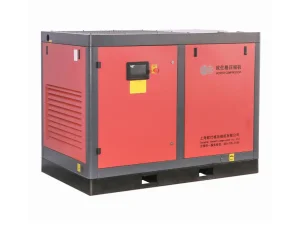
OEM Energy Saving Air Cooling Screw Compressor Two Stage Direct Driven Screw Air Compressor Manufacturers, Exporters
View Product Specs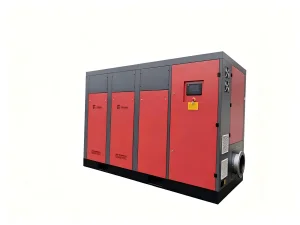
ODM Industrial Screw Vacuum Pump Oil Free High Efficiency Vacuum Pump for Semiconductor & Chemical Industry Manufacturer, Factories
View Product Specs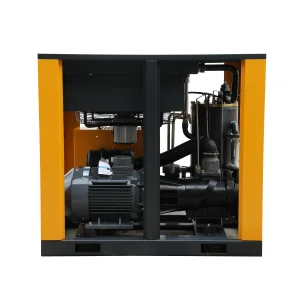
OEM 22kW 30HP Variable Speed Rotary Screw Compressor Factories, Exporter
View Product Specs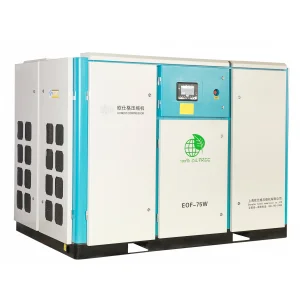
China Honest Compressor -EOF series Oil-Free Dry Type Screw Compressor | 100% Oil-Free PM VFD Manufacturer, Exporter
View Product Specs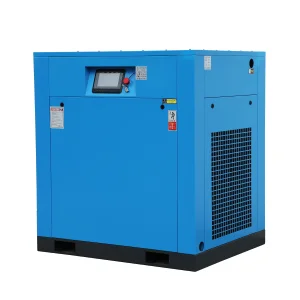
China Permanent Magnet VFD Rotary Screw Compressor 11kW Manufacturer, Manufacturers
View Product Specs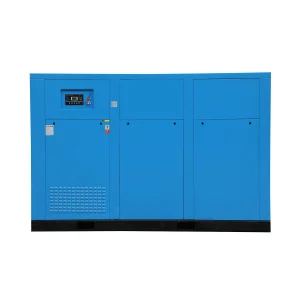
China 110Kw/150Hp Two-Stage Rotary Screw Air Compressor Permanent Magnetic Variable Frequency 380V Air Cooled Exporter, Exporters
View Product Specs