Integrated Screw Compression Systems Ready for Export & Customization
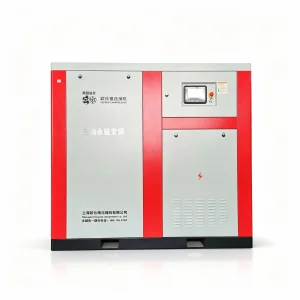
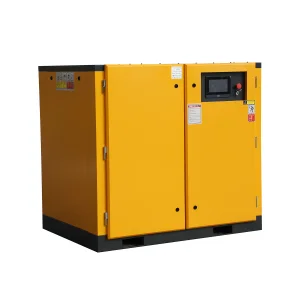
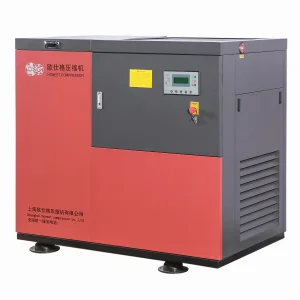
Precision-machined rotary airends matched with engineered drying modules, low-noise acoustic canopies, and automated variable frequency controls for high-demand processing plants.
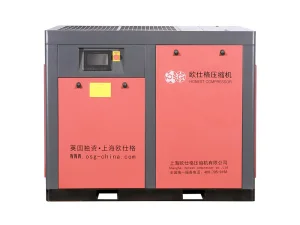
Technological Evolution: The Shift to Integrated Screw Compressors with Built-In Dryers
How modular thermodynamic air treatment is replacing conventional split systems, removing moisture condensation, optimizing pressure dew point stability, and dropping specific power consumption.
Overcoming Moisture Contamination at the Point of Generation
Atmospheric ambient air drawn into an industrial compressor contains vast amounts of vaporized humidity. During standard polytropic compression within twin-screw helical rotors (male-female profile 5:6 configuration), air temperature escalates up to 80°C - 100°C. While this elevation prevents condensation inside the compression chamber itself, the moment compressed air traverses discharge piping and cools, severe moisture fallout occurs.
In traditional industrial plants, air compressors and refrigerated or adsorption desiccant air dryers operated as dislocated, standalone subsystems separated by long interstitial pipes, separate bypass valves, external pre-filters, and receiver vessels. This fragmented setup suffered from recurring friction pressure drops (often 0.5 to 1.2 bar delta-P loss), external leak paths, inconsistent thermal tracking, and excessive factory footprint usage.
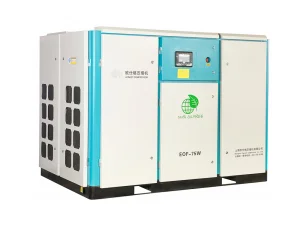
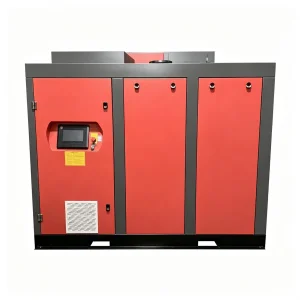
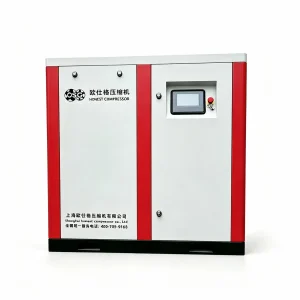
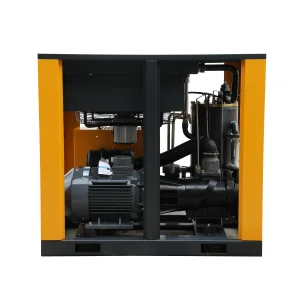
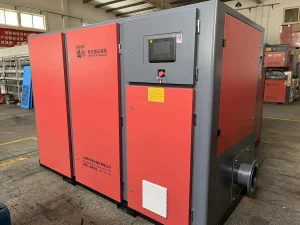
Our engineered ODM Rotary Screw Air Compressor with Integrated Dryer combines the positive displacement airend, high-torque permanent magnet motor, variable frequency drive (VFD), high-efficiency refrigeration evaporator, moisture separator, and high-precision coalescing filtration into a unified, vibration-damped skid chassis. This thermodynamic synergy preserves thermal momentum, stabilizes the pressure dew point (PDP) at 2°C to 7°C (or sub-zero -40°C PDP with integrated twin-tower desiccant modules), and prevents downstream corrosion of pneumatic actuators, solenoid valves, and sensitive production equipment.
Pneumatic systems designed with integrated drying loops eliminate the typical 0.8 bar interstitial pressure loss across external connecting pipe manifolds, yielding immediate permanent energy savings of up to 6-8% in continuous duty facilities.
Thermodynamic Equilibrium Formula
Specific Energy Requirement (SER) = P_in / Q_actual [kW/(m³/min)]
By regulating moisture removal before distribution networks, internal air density is maximized and line friction losses are drastically curtailed, guaranteeing lowest SER per ISO 1217 Annex C & E standards.
Synchronous Inverter Integration
Integrated VSD technology modulates the rotational velocity of both the main compressor rotor pair and the drying unit’s refrigeration cycle. When plant demand dips, the system reduces Hertz rather than cycling off, preventing high inrush current spikes and eliminating empty-load power draw.
Pre-Cooled Low Delta-P Exchanger
Aluminum plate-fin heat exchangers feature an air-to-air regenerator coupled with an air-to-refrigerant loop. Incoming warm discharge air is pre-chilled by cold outflowing dry air, minimizing refrigeration compressor load while elevating final discharge temperature to stop external pipe sweat.
Class-Leading Micro-Filtration
Equipped with high-capacity coalescing particulate filters (0.01 µm filtration down to 0.003 mg/m³ residual oil aerosol content). The integrated configuration guarantees instant plug-and-play compliance with ISO 8573-1:2010 Class 1:4:1 purity criteria right out of the crate.
Total Cost of Ownership (TCO) & Global Procurement Strategic Matrix
Navigating capital outlay against 10-year operational expenditure: Comparative engineering trade-offs between split configurations and integrated rotary screw stations.
| Evaluation Parameter | Conventional Split Compressor + External Dryer | Integrated ODM Rotary Screw Compressor With Dryer | Operational Strategic Advantage |
|---|---|---|---|
| Installation Complexity & Labor | Multiple interconnecting pipe joints, separate electrical wiring, independent foundation pads. | Single-point power connection, factory-plumbed internals, compact all-in-one footprint. | Reduces mechanical field assembly labor costs by 65%. Eliminates onsite pipe welding. |
| System Delta-P (Pressure Drop) | 0.6 bar to 1.2 bar pressure drop through external pipe elbows, joints, and filters. | Optimized internal aerodynamic routing with total drop under 0.15 bar. | Lower operating pressure setpoint saves ~7% electrical input continuously. |
| Footprint Allocation (m²) | Requires large floor area (minimum 6.5 m² including safety corridors between units). | Compact enclosed cabinet design requiring only 2.2 m² total plant floor space. | Recovers high-value manufacturing floor real estate for primary production machinery. |
| Thermal Coordination & Dew Point | Uncoordinated controls often cause dryer freezing or thermal overload under sudden surges. | Integrated microcomputer controls compressor and dryer cooling synchronously. | Guarantees unyielding pressure dew point stability across 10% to 100% capacity flow. |
| Maintenance Management | Split maintenance schedules, multiple vendor warranties, asynchronous filter changes. | Unified preventative service schedule, standardized quick-release access panels. | Streamlined spares inventory (oil filters, air filters, separator cartridges, desiccant). |
| 10-Year Total Cost of Ownership | Elevated (Higher initial civil installation, unmonitored air leakage points, high idle kW). | Lowest lifecycle cost profile via VFD dynamic matching and tight pressure bandwidth. | Typical ROI payback achieved within 11 to 16 months of continuous multi-shift production. |
Capex vs. Opex Balance
Procurement teams often over-index on initial equipment purchase quote (Capex), which merely accounts for 10-12% of total 10-year machine cost. Energy consumption represents over 75-80% of expenditure. Our permanent magnet variable frequency designs prioritize ultra-low Specific Power Input (kW/m³/min), drastically shrinking long-term electricity overhead.
Pressure Bandwidth Tightening
Fixed-speed machines operate across wide load/unload deadbands (typically 1.5 to 2.0 bar delta), forcing over-pressurization to satisfy line minimums. Every 1 bar of artificial over-pressurization requires 7% more motor kW input. Our PID-driven integrated stations hold pressure tolerances within ±0.1 bar, unlocking massive recurring energy savings.
Global Compliance & Certification
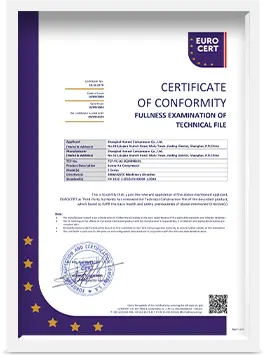
Export-grade air compressor manufacturing requires rigorous compliance adherence. Every unit from our Shanghai facility is built under audited ISO 9001 and ISO 14001 systems, carrying full CE conformity, ASME/CE-PED certified pressure vessels, UL/CSA electric cabinet architectures, and Class 0 certified air purity documentation.
China Factory 4.0: Supply Chain Resilience, Automation & Precision Machining
From raw grey ductile iron to sub-micron CNC ground screw profiles: Inside our 50,000 m² Shanghai smart manufacturing plant delivering rapid-turnaround ODM scalability.
High-Precision Airend Engineering & Rotor Metallurgy
The core of every rotary screw air compressor is its male-female rotor profile. Our facility utilizes multi-axis CNC rotor profile grinding centers imported from Germany and the UK (Kapp Niles / Holroyd), achieving micron-level machining precision. Tight clearances between the asymmetrical screw lobes (5 lobes male, 6 lobes female) drastically reduce thermal slip and backflow leakage during high compression stages.
Rotors are machined from forged high-tensile 40Cr steel, hardened, dynamically balanced under ISO 1940 Grade G2.5 standards, and surface-treated for anti-friction resilience. Air end housings are cast in high-density meehanite grey cast iron, stabilized through artificial and natural vibration aging cycles to prevent structural deformation across decades of 24/7 operating stress.
Smart IoT Predictive Maintenance Controller
Integrated microprocessors continuously stream telemetry data over RS485 Modbus, CANopen, or 4G/5G industrial IoT gateways. Vibration sensors, bearing temperature probes (PT100), differential pressure transducers, and dew point sensors enable real-time condition monitoring, remote diagnosis, and predictive maintenance dispatch.
Vertical Integration & Accelerated ODM Customization
Unlike assembly shops relying on outsourced parts bins, our Shanghai production facility controls over 85% of critical component manufacturing in-house:
- In-House Permanent Magnet Motor Production: IE4 and IE5 ultra-premium efficiency PM synchronous motors featuring 180°C rare-earth NdFeB permanent magnets with zero demagnetization risk.
- Direct-Drive Coaxial Alignment: Elimination of flexible belts or speed-increasing gearboxes. The motor rotor mounts directly onto the compressor male rotor shaft, maintaining 100% mechanical transmission efficiency with zero belt slip.
- Robotic Sheet Metal Fabrication: Automated fiber laser cutting and CNC robotic bending cells produce custom acoustic enclosures, special outdoor IP55/NEMA 4X weatherproofing, and tailored brand aesthetics within 72 hours.
- Climate-Controlled Performance Testing Chambers: Every machine runs continuous full-load, variable-load, high-ambient (45°C), and electrical endurance testing before export crating.
1. Precision Casting
Metallurgical spectral analysis and ultrasonic flaw inspection for defect-free ductile casings.
2. CNC Rotor Grinding
Kapp Niles ultra-precision multi-axis grinding ensuring micro-inch clearance repeatability.
3. Robotic Assembly
Dust-controlled cleanroom assembly with digital torque verification and auto-lubrication.
4. Helium Leak Detection
100% circuit testing preventing refrigerant and high-pressure air micro-leakages.
Engineered Application Scenarios: Moisture-Critical Industrial Sectors
Tailoring pressure, flow rates, filtration grades, and drying technologies across distinct industrial process environments worldwide.
16-25 Bar Fiber Laser Cutting
Modern ultra-high-power fiber laser cutting heads (12 kW to 60 kW) utilize compressed dry air as an economic assist gas instead of costly liquid nitrogen. Air must be completely oil-free, dust-free, and dehydrated below 2°C PDP to protect precision optical focusing lenses and prevent edge oxidation.
Pharma & Sterile Food Packaging
In pneumatic transport of powders, blister packaging, and pharmaceutical bottling lines, any oil or liquid water vapor can ruin entire production batches and trigger mold growth. Our water-lubricated Class 0 oil-free screw systems paired with desiccant dryers deliver zero oil carryover and dry air down to -40°C PDP.
Automotive Robotic Spray Painting
Automated automotive paint application demands strictly laminar airflow and absolute moisture elimination. Microscopic droplet aerosols cause cratering, bubbling, and fish-eye blemishes on automotive bodywork. Integrated air drying systems guarantee continuous dew point stability under cyclic robotic duty.
Semiconductor & Electronics Cleanrooms
Surface-mount technology (SMT) pick-and-place nozzles, wafer handling, and PCB cleaning processes cannot tolerate micro-particulates or corrosive moisture. Integrated drying skids with active multi-stage coalescers protect sensitive pneumatic nozzles from seizing, ensuring 99.99% assembly yield rates across high-speed semiconductor manufacturing lines.
Chemical & Petrochemical Hazardous Environments
Ex d IIB / IIC explosion-proof customized rotary screw units engineered with integrated explosion-proof dryers, cast-iron encapsulated control modules, and intrinsically safe instrument loops. Built to operate reliably in refineries, volatile solvent handling plants, and fertilizer plants where flammable vapors require heavy ATEX/IECEx certification.
Engineering FAQ: Integrated Rotary Screw Compressors With Dryers
Detailed answers addressing thermodynamic efficiency, dew point calculations, OEM/ODM voltage configurations, and preventative maintenance protocols.
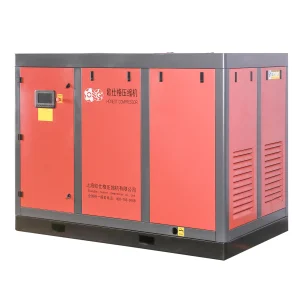
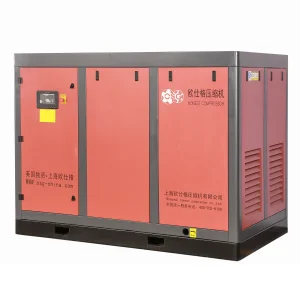
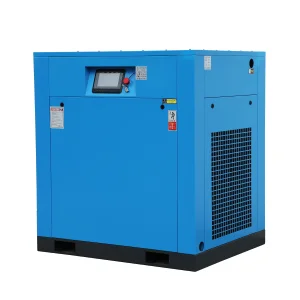
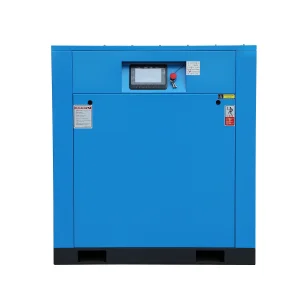
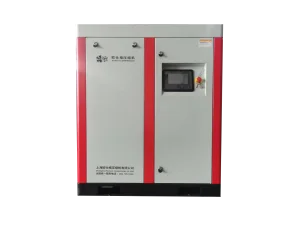
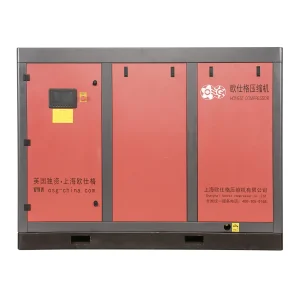
High-Capacity Industrial Air Compressors & Specialized Equipment
Heavy-duty two-stage chemical duty models, high-efficiency blowers, and smart variable frequency rotary compressors designed for demanding factory applications.

Start Your Engineering Customization Project With Honest Compressor
From bespoke pressure vessel design and proprietary controller programming to white-label branding and rapid global export logistics.
1. Technical Inquiry & Load Audit
Provide your target FAD (Free Air Delivery in m³/min or CFM), operating pressure, site ambient temperatures, supply voltage, and target ISO 8573 air purity class.
2. 3D CAD & Thermodynamic Sizing
Our engineering team develops complete general arrangement 3D drawings, piping schematics, and thermodynamic load balance calculations within 48 hours.
3. Rapid Prototyping & Trial Run
Customized prototypes are produced in our Shanghai facility, undergoing 72-hour full-load stress testing, vibration analysis, and dew point stability audits.
4. Export Delivery & Lifecycle Support
Heavy export crate packaging, comprehensive customs compliance documentation, and guaranteed spare parts support dispatched within 24 hours.
Need a Tailored System Sizing or Direct ODM Quotation?
Contact our senior application engineering team in Jiading District, Shanghai. We review compressor sizing, flow requirements, pressure dew point goals, and OEM branding programs.