OEM Air Compressor Explosion Proof Suppliers & Factory
Industrial-Grade Ex d IIB/IIC Rotary Screw Solutions Engineered for Hazardous Explosive Atmospheres, Flammable Vapor Mitigation, and Total Operational Risk Elimination
Primary OEM Explosion-Resistant & Heavy-Duty Compressors
Engineered to counteract pressure deflagration, autoignition, and volatile ambient gas hazards in critical chemical, gas processing, and mining infrastructure.
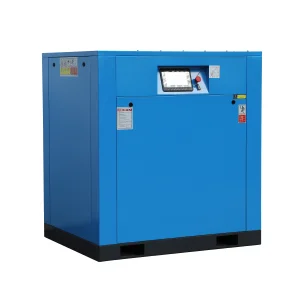
OEM 30kW 40HP Permanent Magnet VFD Air Compressor Manufacturers, Factories
Explore Product Spec
OEM Industrial 15kw/22kw/37kw/55kw/75kw Energy Saving Pm Motor VSD/VFD Rotary Screw Air Compressor Manufacturer, Exporters
Explore Product Spec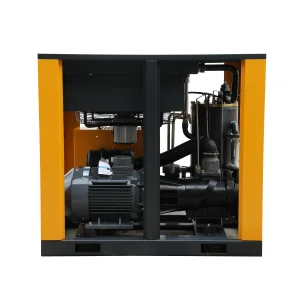
OEM 22kW 30HP Variable Speed Rotary Screw Compressor Factories, Exporter
Explore Product Spec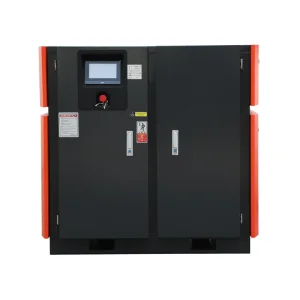
China Horizontal two-stage pressure screw air compressor Two Stage Screw Air Compressor Electric Screw Air Compressor Price Suppliers, Exporters
Explore Product Spec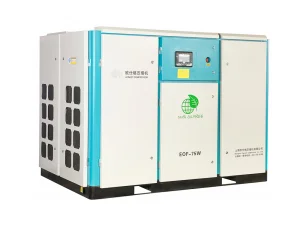
China 55kw to 315kw Oil free screw air compressor with dry type fixed speed or VSD PM type Suppliers, Exporters
Explore Product Spec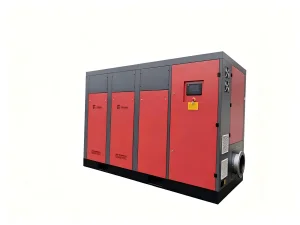
ODM Industrial Screw Vacuum Pump Oil Free High Efficiency Vacuum Pump for Semiconductor & Chemical Industry Manufacturer, Factories
Explore Product Spec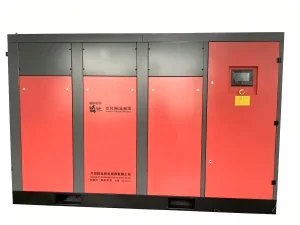
China EGV-132A-140 Oil-Free Permanent Magnet VFD Screw Blower Manufacturers, Exporters
Explore Product Spec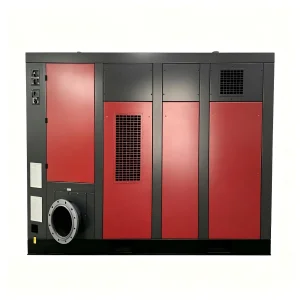
OEM High Precision Operational Safety Micro Oil Screw Vacuum Pump for Vacuum Industry Supplier, Exporters
Explore Product SpecThe Engineering Physics of Air Compressor Explosions: Root Causes and Prevention
Industrial air compressors are high-energy thermodynamic systems where mechanical compression, concentrated oxygen, and thermal dissipation converge. Understanding the exact mechanical and chemical pathways that lead to internal combustion or catastrophic vessel ruptures is the foundational step in engineering fail-safe OEM machinery.
In industrial environments, catastrophic compressor failures generally stem from two primary phenomena: internal pneumatic-chemical deflagrations within the oil-separation/air receiver circuit, and external ignition of hazardous surrounding atmospheres (gases, vapors, or combustible dusts). When mineral or non-fire-resistant synthetic lubricating oils undergo extreme thermal stress inside rotary screw compression chambers, rapid oil breakdown occurs.
Thermal Degradation & Oil Mist Autoignition
As lubricating oil passes through high-friction screw profiles under polytropic compression, operating temperatures exceeding 100°C can trigger volatile hydrocarbon cracking. In the presence of pressurized oxygen (where oxygen partial pressure scales directly with line pressure, e.g., 8–13 bar), the flashpoint and autoignition temperature of lubricating aerosols drop significantly, creating volatile conditions within air-oil separation vessels.
Exothermic Carbonaceous "Glow Plug" Deposits
Deposits of oxidized carbon form on discharge valves, non-return check seats, and air receivers over extended cycles. These porous carbon cakes absorb volatile hydrocarbons and undergo exothermic self-heating. Once reaching critical mass, they form glowing embers that act as internal glow plugs, igniting dense oil mists and initiating high-velocity pressure waves.
Electrostatic Discharge in Dielectric Separation
High-velocity travel of dielectric synthetic oil aerosols across borosilicate micro-glass fibers inside oil separator cartridges generates heavy static electrical potentials. Without precision copper grounding paths and static-dissipating conductive bonding, high-energy electrostatic sparking can ignite localized stoichiometric vapor mixtures inside receiver tanks.
The OEM Technical Solution: Breaking the Combustion Triangle
By combining Class 0 dry-type oil-free technologies (which entirely remove the fuel source) and two-stage compression with intermediate cooling (which keeps discharge temperatures substantially below the thermal cracking threshold of 90°C), Honest Compressor eliminates internal explosion potential directly at the engineering level.
Macro-Industry Solutions for Explosive & Hazardous Environments
Global industries operating in environments classified under ATEX 2014/34/EU, IECEx, or NEC 500/505 Class I/II require bespoke air compression architectures. Standard commercial compressors present unacceptable ignition risks. Our Shanghai facility designs and manufactures certified, heavy-duty explosion-proof skids tailored to mission-critical applications.
Petrochemical & Refinery Complexes
Continuous flare gas recovery, catalyst regeneration, and instrument control in Zone 1 (Ex d IIB/IIC T4) areas require flameproof encapsulation. Systems feature heavy cast-iron flame paths, explosion-proof solenoid valves, encapsulated motors, and redundant high-temperature fail-safe dump valves to isolate machinery from hydrocarbon vapor surges.
Offshore Marine & Floating FPSO Facilities
Exposed to corrosive marine mist and volatile offshore gas pockets, offshore systems incorporate 316L stainless steel piping, C5-M anti-corrosion exterior coatings, IP66 explosion-proof control consoles, and dual vibration-isolated baseframes engineered to absorb dynamic hull deflections without rotor misalignments.
Lithium-Ion Battery Gigafactories
Electrolyte filling and electrode drying require dry rooms with dewpoints below -50°C in the presence of flammable solvents like Dimethyl Carbonate (DMC). Our 4-in-1 integrated PM VFD explosion-proof series guarantees zero solvent vapor penetration alongside Class 0 ISO 8573-1 air delivery.
Underground Mining & Methane Drainage
Underground coal extraction requires MSHA and ATEX Group I M2 flameproof certifications. Units feature rugged low-profile steel canopies, explosion-proof electric motors, intrinsic safety barriers for PLC I/O instrumentation, and integrated methane-triggered automatic pneumatic trip stops.
Hydrogen Generation & Fuel Cell Testing
Hydrogen's extremely low minimum ignition energy (0.017 mJ) necessitates strict Group IIC explosion-proofing. Our specialized gas compressor modifications incorporate hermetically sealed gas chambers, non-sparking copper-beryllium rotor clearances, and inert nitrogen purging envelopes.
Engineering Taxonomy: Standard Industrial vs. OEM Explosion-Proof Systems
A comprehensive comparison illustrating the engineering modifications, material selections, and thermodynamic safety thresholds engineered into Honest Compressor's OEM hazardous-location machinery.
| System Module | Standard Commercial Compressor | OEM Explosion-Proof (Ex d IIB/IIC T4) | Safety Engineering Principle |
|---|---|---|---|
| Prime Mover / Motor | Standard IP55 TEFC induction motor | Certified Ex d / Ex db flameproof cast iron enclosure | Internal flame propagation containment without external ignition |
| Discharge Temp Control | Single thermal sensor (Trip at 105°C–110°C) | Triple redundant PT100 sensors (Trip at ≤90°C) | Prevents lubricant cracking and autoignition point triggers |
| Power Regulation (VFD) | Standard cabinet mounted frequency converter | Explosion-proof potted inverter or pressurized Ex p panel | Isolates high-frequency switching arcs from flammable ambient gases |
| Air Separation Vessel | Standard carbon steel pressure vessel | ASME VIII / CE-PED vessel with internal spark-arresting mesh | Eliminates internal static charge build-up and handles deflagrations |
| Rotary Airend Design | Standard steel-on-steel profile clearances | Teflon/Food-grade PTFE or bronze-coated non-spark rotors | Eliminates mechanical friction spark risks during bearing runout |
| Filtration Media | Standard non-conductive cellulose or glass fiber | Antistatic braided grounding wire integrated filtration | Continuous grounding path to ground bus (resistance <10 Ω) |
Technology Roadmap: The Future of Explosion Safety (2025–2035)
The transition toward carbon neutrality, hydrogen infrastructure, and automated chemical processing is reshaping rotary compressor design. The next decade of industrial explosion prevention moves beyond passive containment into predictive intelligence and intrinsic thermodynamic safety.
AI Thermodynamic Edge Diagnostics
Next-generation compressors integrate high-frequency acoustic emission sensors and neural network edge processors. By monitoring micro-vibration shifts down to 0.05 mm/s and temperature gradients across bearing caps in real time, the unit predicts rotor rubbing or thermal anomalies before temperatures hit flashpoint thresholds.
Supercritical Water-Lubricated Compression
Water-lubricated single and twin-screw designs use purified water as the lubricating and cooling medium inside the compression pocket. Water's high specific heat capacity guarantees isothermal compression behavior (≤50°C discharge temperatures), completely eliminating combustible oil fuels from industrial air systems.
Direct-Drive Magnetics in Purged Casings
Eliminating high-wear mechanical gearboxes and belt drives reduces friction-sparking variables. Direct-coupled IE4/IE5 permanent magnet motors running inside certified positive-pressure nitrogen-purged (Ex p) casings allow high-efficiency variable-speed operation without overheating risks in Zone 1 environments.
Procurement Economics: TCO Dynamics and Risk Amortization
When engineering procurement teams evaluate explosion-proof machinery, the initial purchase price accounts for only 10% to 15% of the machine's ten-year Total Cost of Ownership (TCO). Electrical power consumption accounts for over 75% of lifecycle costs, while safety failure liabilities represent unlimited operational downside.
Procuring substandard or adapted non-explosion-proof compressors carries immense financial and legal exposure. Insurance premiums for petrochemical and heavy manufacturing sites increase significantly when uncertified pressurized equipment operates in classified hazardous zones. A single safety trip, vent breach, or internal flare incident can cause facility shutdowns averaging $120,000 to $450,000 per hour in lost output.
The PM VFD Financial Advantage in Hazardous Zones
Historically, explosion-proof compressors were limited to fixed-speed configurations due to thermal dissipation constraints within flameproof enclosures. Honest Compressor's advanced Ex d IIB/IIC variable frequency motor drives overcome this barrier, adjusting flow precisely to plant demand and yielding 20% to 40% electrical energy savings. For a 75 kW installation running 6,000 hours annually at $0.12/kWh, this delivers over $13,500 in direct electricity savings per year.
Insurance & Risk Mitigation
Full compliance documentation, third-party CE-PED testing, and ISO certification satisfy international industrial underwriters (such as FM Global and Lloyd's Register), lowering property loss insurance premiums and streamlining municipal safety inspections.
Turnkey OEM Customization
We provide flexible OEM/ODM integration including bespoke skid dimensions, dual-voltage power setups (380V/400V/415V/460V/690V at 50/60 Hz), explosion-proof drying modules, and multi-language PLC software (English, Spanish, Russian, Arabic).
Uptime Reliability Guarantee
Engineered with British technical heritage and assembled in our 50,000 m² Shanghai plant, all units undergo rigorous 8-hour continuous run-in and full-load pressure testing before crating, ensuring smooth plug-and-play installation on-site.
Frequently Asked Questions: Explosion-Proof Compressors
Detailed technical and commercial answers addressing common engineering queries regarding hazardous-location rotary screw air compressor installation, safety certifications, and life-cycle maintenance.
What is the primary difference between Ex d (Flameproof) and Ex p (Purged) compressor enclosures?
Ex p (Pressurized/Purged) maintains a continuous positive pressure of clean air or inert gas (such as Nitrogen) inside the enclosure, physically preventing flammable ambient vapors or combustible dusts from entering the cabinet in the first place. Ex d is standard for heavy rotating components and motors, while Ex p is frequently chosen for large PLC and inverter control cabinets.
Can standard lubricated screw compressors be retrofitted for hazardous zone operation?
How does two-stage compression prevent oil autoignition risks compared to single-stage units?
What maintenance routines are vital for preventing compressor receiver tank explosions?
- Oil Carryover & Separator Integrity: Regularly monitor pressure differential across the air-oil separator; elevated delta-P indicates media saturation and risk of high-velocity mist carryover.
- Condensate & Sludge Purging: Test automatic zero-loss drain valves daily to prevent moisture-hydrocarbon emulsification.
- Lubricant Condition Auditing: Periodically test synthetic fluids for Total Acid Number (TAN) and antioxidant depletion to avoid operating with degraded oil prone to carbonaceous deposits.
Does Honest Compressor provide custom branding and localized engineering for OEM distributors?
Advanced Two-Stage, Oil-Free & Vacuum Compressor Systems
Comprehensive solutions spanning precision laser cutting, chemical vacuum processing, and clean oil-free industrial aeration.
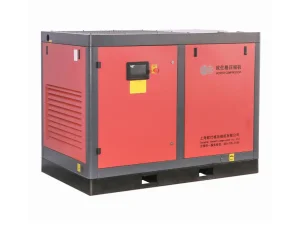
OEM Energy Saving Air Cooling Screw Compressor Two Stage Direct Driven Screw Air Compressor Manufacturers, Exporters
Explore Product Spec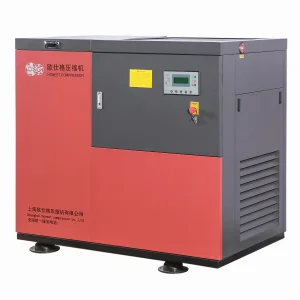
China 20bar pressure Screw Air Compressor for laser cutting machine Supplier, Suppliers
Explore Product Spec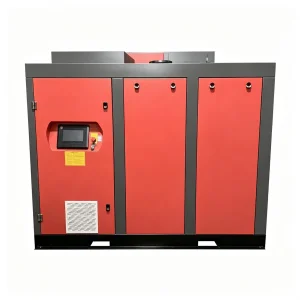
OEM Industrial Screw Vacuum Pumps – Oil-Injected (0.35 mbar) & Oil-Free (20–80 kPa) Series, 5.5–110 kW Supplier, Exporter
Explore Product Spec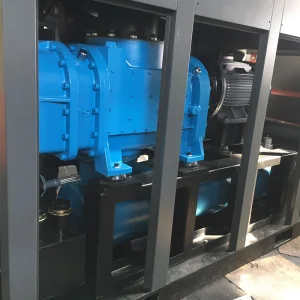
OEM Industrial Oil Free Vsd Screw Air Blower /Vacuum Pump With Inverter and Pm Motor Manufacturer, Exporter
Explore Product Spec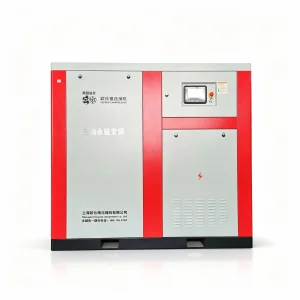
China Oil-Free Water Lubricated Screw Air Compressor EOWV-45A/W Suppliers, Exporter
Explore Product Spec
ODM Industrial Oil Free Vsd Screw air Blower Vacuum Pump with Plc Inverter Pm Motor Factories, Exporters
Explore Product Spec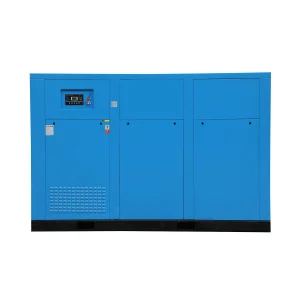
China 110Kw/150Hp Two-Stage Rotary Screw Air Compressor Permanent Magnetic Variable Frequency 380V Air Cooled Exporter, Exporters
Explore Product Spec